We expect rockets and other space technology to remain on the cutting edge of what’s possible, so why should spacesuits be any different? The short answer: they shouldn’t, which is why the company responsible for designing the classic spacesuits for NASA’s Apollo program has just unveiled its next-gen prototype astronaut suit for future space missions.
Called Astro, the suit was developed by ILC Dover, and incorporates Collins Aerospace‘s prototype life support backpack. The spacesuit system was shown off as part of the celebrations for the 50th anniversary of the Apollo 11 lunar mission.
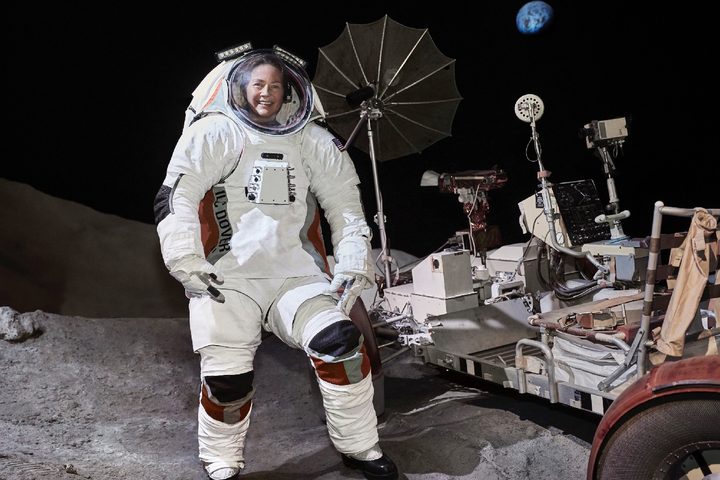
Among its innovations are new motors and electronics which reduce the suit’s size and weight, while also allowing it to be fitted with additional avionics and data capabilities. This includes a digital display system that lets astronauts use voice controls, access real-time data and communicate using HD video. The suit’s upper torso segment can be easily resized without the use of tools. As a result, only two sizes of suit will need to be produced to fit every astronaut body type. The suit additionally boasts improved mobility joints for traversing of hazardous terrain, along with CO2 removal technology for extended-duration surface missions.

“One of the objectives for returning to the moon is to explore and exploit [its] resources to establish a sustainable deep spaceport and refueling depot,” Shawn Macleod, Associate Director of Strategy for ISR & Space Solutions at Collins Aerospace, told Digital Trends. “This drives the need for astronauts to perform field work on the moon’s surface. This next generation of spacesuits will need to be much lighter weight and designed with greater pressurized mobility. Suits will need to be flexible and durable enough for astronauts to bend over, dig holes, traverse hazardous terrain, bash rocks, collect and stash samples, and look closely at rock specimens.”
Ahead of being used in space, the prototype suit has been put through its paces here on Earth. “Our materials engineers have tested various fibers and material constructions to understand what materials are safe, durable and will work together in a spacesuit,” Patty Stoll, senior director and division manager of Space Systems at ILC Dover, told us. “Each material in ILC Dover’s spacesuits go through a number of tests including strength, wear, and cycle testing. During the manufacturing process further testing is performed to ensure the strength requirements are still being met and that the components are airtight. Once the individual spacesuit components have completed manufacturing and are assembled together, ILC Dover performs manned cycle testing on the complete spacesuit to evaluate durability, comfort, and mobility.”
With the next few years promising to be plenty exciting for space exploration, we’re pleased that tomorrow’s astronauts will be looking their very best.