  1. Home
  2. Emerging Tech
  3. News

Spitzer studies hellish planet with surface temperature of thousands of degrees

Add as a preferred source on Google

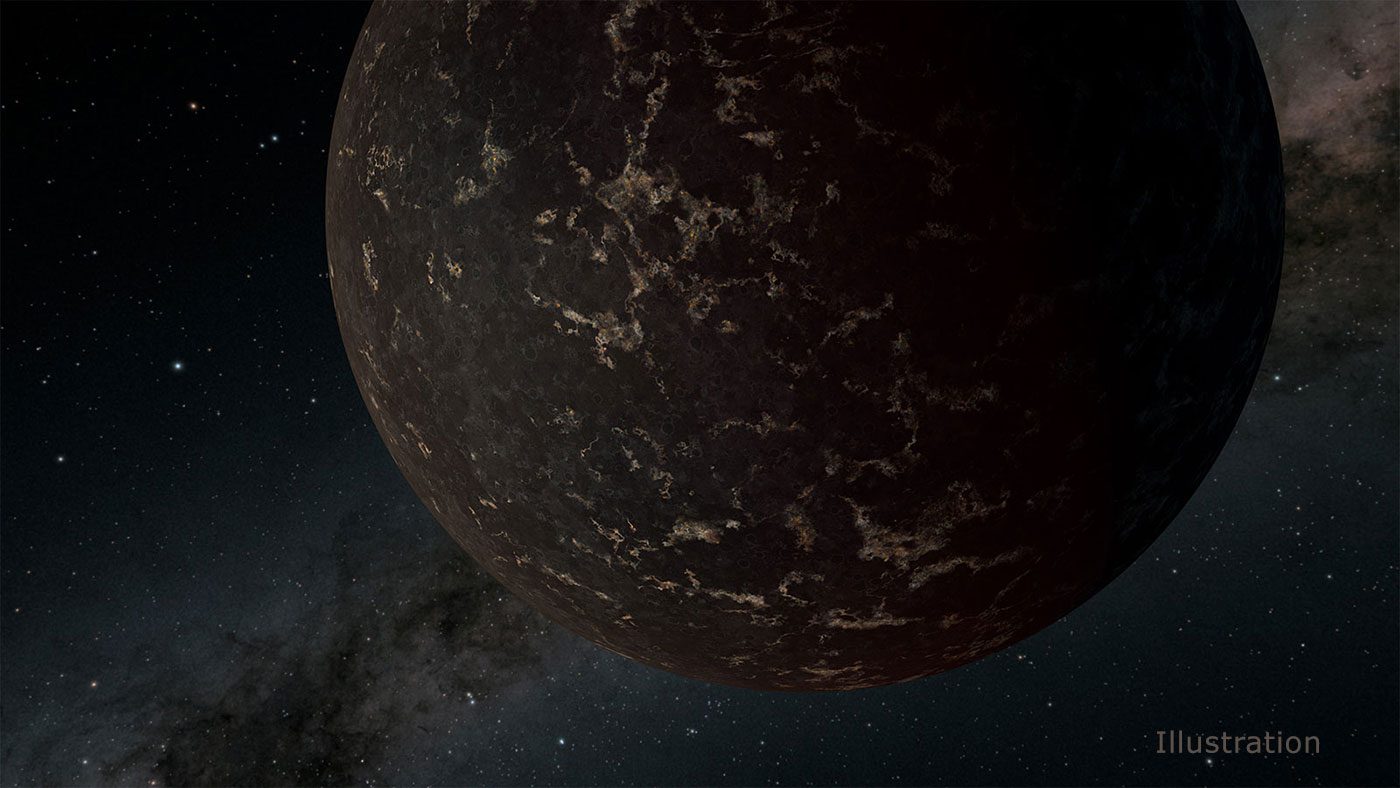
This artist’s illustration depicts the exoplanet LHS 3844b, which is 1.3 times the mass of Earth and orbits an M dwarf star. The planet’s surface may be covered mostly in dark lava rock, with no apparent atmosphere, according to observations by NASA’s Spitzer Space Telescope. NASA/JPL-Caltech/R. Hurt (IPAC)

Astronomers have examined a planet that can only be described as a rocky hellscape: Heat of thousands of degrees, lava on the surface, and almost no atmosphere. Using the Spitzer telescope, a team was able to take a look at the close-up conditions of planet LHS 3844b, located 48.6 light-years from Earth and in orbit around an M dwarf star.

Recommended Videos

The planet completes an orbit in just 11 hours, which means it is very close to its star. It’s highly likely this means the planet is “tidally locked,” where one side of the planet always faces the star and is heated to 1,410 degrees Fahrenheit (770 degrees Celsius). It is this tremendous heat that made the planet visible to Spitzer, as it radiates large amounts of infrared light.

The other side of the planet faces away from the star and is much cooler. However, the astronomers saw very little heat transferred from one side to the other, which suggests there is almost no atmosphere. If atmosphere was present, winds would distribute the temperature more evenly.

“The temperature contrast on this planet is about as big as it can possibly be,” Laura Kreidberg of the Harvard and Smithsonian Center for Astrophysics, lead author of the new study, said in a statement. “That matches beautifully with our model of a bare rock with no atmosphere.”

M dwarfs are particularly exuberant when they are young, giving off lower levels of light overall than stars like our sun, but high levels of ultraviolet light. Ultraviolet light is damaging to life and can contribute to striping away a planet’s atmosphere. This is exacerbated by M dwarfs’ high frequency of flares which send out bursts of radiation, further eroding the atmosphere.

“We’ve got lots of theories about how planetary atmospheres fare around M dwarfs, but we haven’t been able to study them empirically,” Kreidberg said. “Now, with LHS 3844b, we have a terrestrial planet outside our solar system where for the first time we can determine observationally that an atmosphere is not present.”

However, just because we’ve identified one planet orbiting an M dwarf which has lost its atmosphere, that doesn’t mean this is necessarily the case on other planets. “I’m still hopeful that other planets around M dwarfs could keep their atmospheres,” Kreidberg said. “The terrestrial planets in our solar system are enormously diverse, and I expect the same will be true for exoplanet systems.”

Georgina Torbet
Georgina has been the space writer at Digital Trends space writer for six years, covering human space exploration, planetary…
Meta’s Brain2Qwerty v2 turns thoughts into text, and it doesn’t need brain implants
The latest AI model decodes brain signals into coherent sentences using external scanners.
Meta Brain2Qwerty v2 Featured

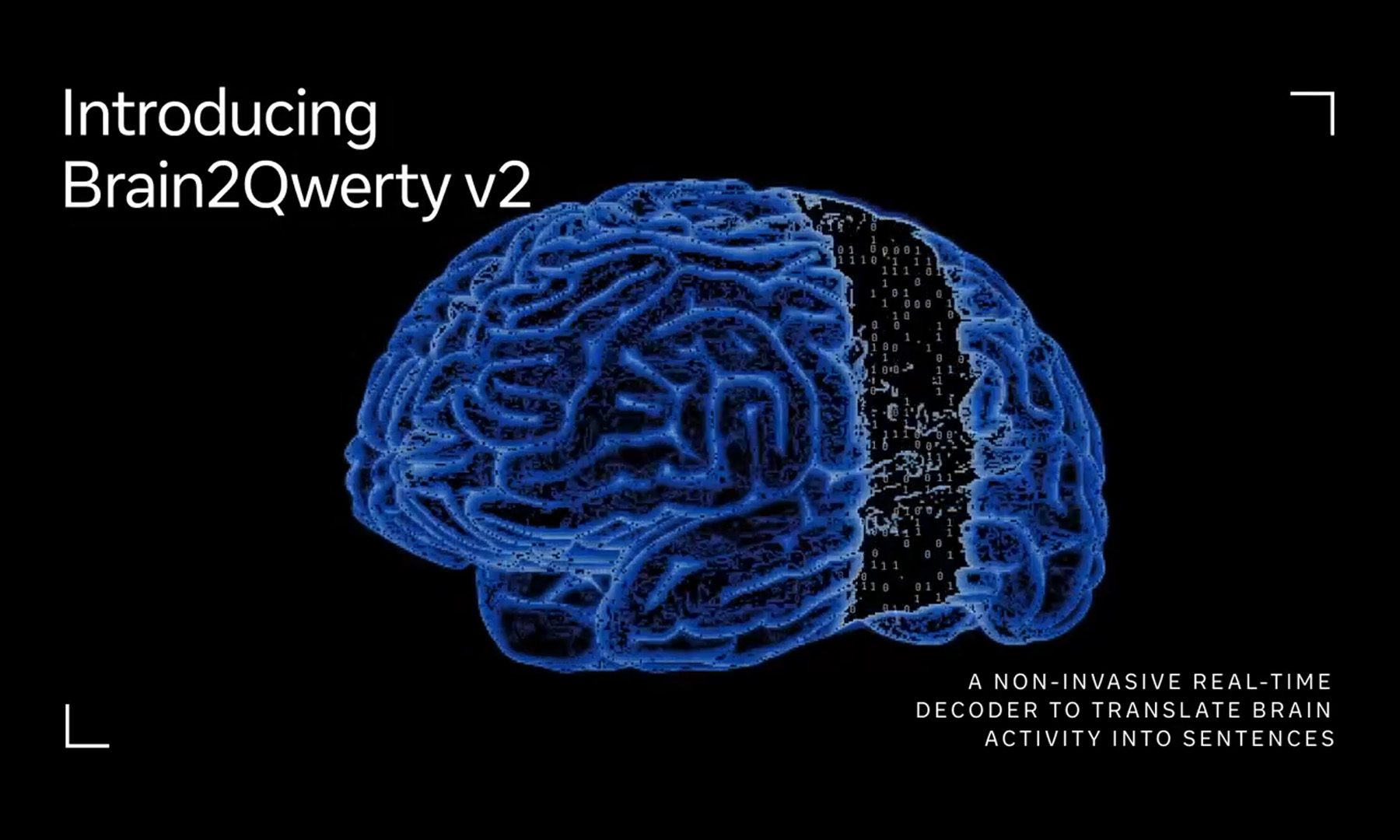
Artificial intelligence is getting surprisingly good at understanding humans. Now, Meta wants it to understand our brains too. The company has unveiled Brain2Qwerty v2, an upgraded AI system that can translate brain activity into full sentences, all without requiring brain implants or surgery. The goal isn't mind reading for the masses. Instead, it's to help people who have lost the ability to speak communicate again.

How a Brain-powered keyboard works

Read more
AI chatbots can often feed into your delusions. Researchers say you should look for three signs
Experts warn that chatbot design choices can reinforce unhealthy beliefs in vulnerable users.
ChatGPT on a smartphone

Artificial intelligence chatbots have become incredibly good at sounding human. But a new review paper by psychiatrist Marc Augustin and fellow researchers Thomas A. Pollak and Helen Morrin, published in NPP—Digital Psychiatry and Neuroscience, argues that existing AI research points to an overlooked psychological risk. The paper, highlighted by The Wall Street Journal, reviews previous studies and proposes a framework explaining how three common chatbot behaviors can combine to reinforce delusional thinking in vulnerable users, creating what the authors call an "amplification spiral."

Researchers say these are the three warning signs

Read more
Lost access to your crypto wallet? Don’t Google your way out of it
Security researchers warn that fake recovery tools are becoming the latest trap for crypto owners.
Bitcoin crypto wallet featured

Forgetting the recovery phrase to a crypto wallet can be stressful enough. Unfortunately, that's exactly the moment scammers are waiting for. A new warning highlights a growing scam in which cybercriminals disguise malware as cryptocurrency recovery software, tricking desperate users into handing over far more than just access to their wallets.

The fake recovery tool that's actually malware

Read more