  1. Home
  2. Emerging Tech
  3. News

Astronomers think microbes could be changing Venus’ atmosphere

Add as a preferred source on Google

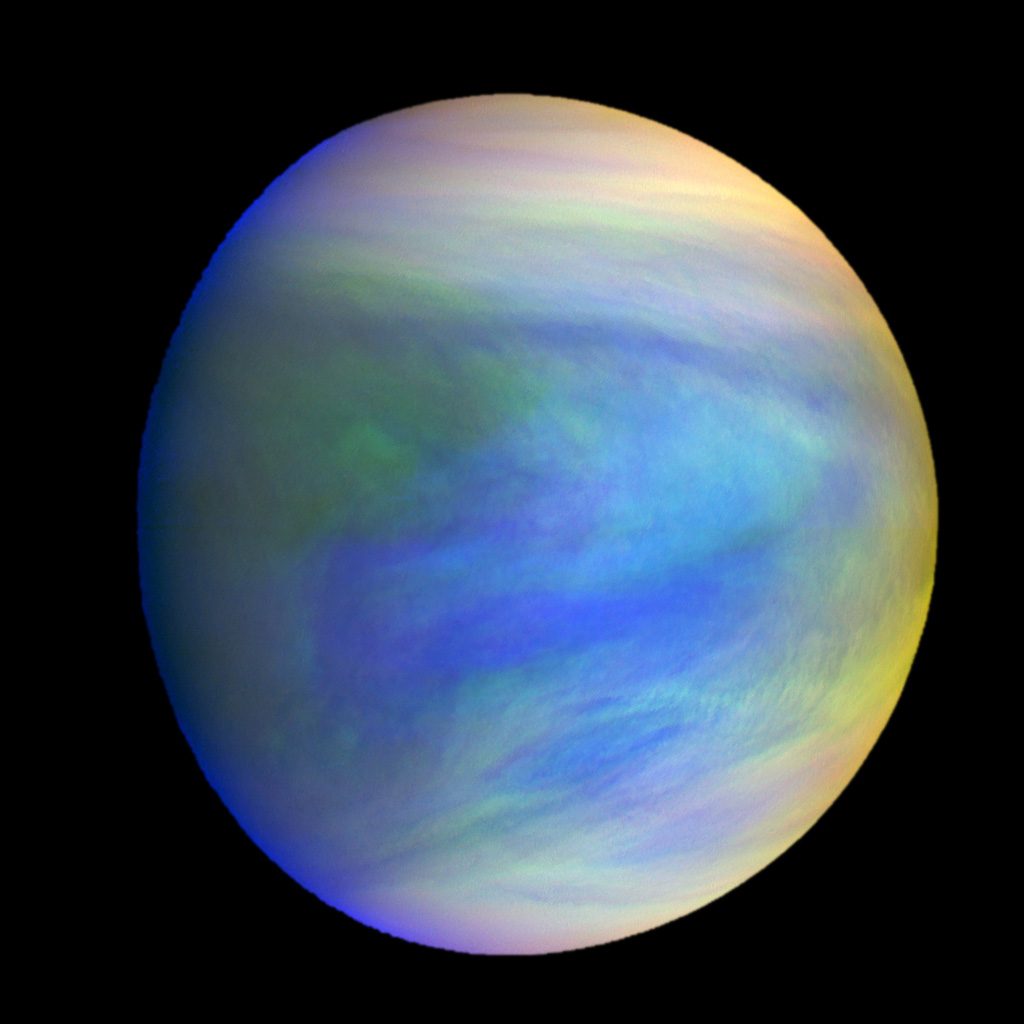
A composite image of the planet Venus as seen by the Japanese probe Akatsuki. Image from the Akatsuki Orbiter, built by Institute of Space and Astronautical Science/Japan Aerospace Exploration Agency

Venus may be our neighbor in the solar system, but there’s still a lot we don’t know about the planet. One particular mystery which has been puzzling astronomers for years is what exactly in going on in its clouds. Now, a new study suggests the weather on the planet could be affected by microorganisms similar to those which live in our atmosphere.

Recommended Videos

The clouds on Venus are thick and acidic, being composed mostly of sulfuric acid. They are also opaque and highly reflective, so they obscure most of the planet. This makes it hard for astronomers to get a clear look at the surface. “The difference between Earth and Venus is that on Earth most of the energy from the sun is absorbed at ground level while on Venus most of the heat is deposited in the clouds,” Sanjay Limaye, co-author of the new study, said in a statement.

The strange thing is that Venusian clouds have mysterious dark blotches within them, which scientists term “unknown absorbers.” These dark patches absorb ultraviolet and some visible light from the sun, which has profound effects on the planet’s weather. But researchers still aren’t sure exactly what these blotches are made of. “The particles that make up the dark splotches, have been suggested to be ferric chloride, allotropes of sulfur, disulfur dioxide, and so on, but none of these, so far, are able to satisfactorily explain their formation and absorption properties,” Yeon Joo Lee, the senior author of the study, explained in the same statement.

One bold suggestion for what the patches could be is that they are microorganisms of some kind. The authors point out that the particles they are studying are about the same size as the microorganisms in Earth’s atmosphere, and they have the same light-absorbing properties too. Even the great Carl Sagan suggested that the environment of Venus could be conducive to life.

Whatever the patches turn out to be, scientists are certain that they are affecting the planet’s atmosphere. Lee and colleagues have been observing the Venusian clouds using instruments like Japan’s Akatsuki probe and the European Space Agency’s Venus Express to see how they change over time, particularly in terms of the reflectivity of the clouds (called the albedo). In a roughly ten year period beginning in 2006, the amount of ultraviolet light reflected was halved and then returned to its original level. This meant much more solar radiation was absorbed at some points than at others, which affected the weather — especially in the upper atmosphere where winds can reach 200 miles per hour or more.

These results don’t only tell us more about the strange atmosphere on Venus, however. Environmental scientists say they can also teach us about the way solar radiation could affect the climate here on Earth.

The findings are published in The Astronomical Journal.

Georgina Torbet
Georgina has been the space writer at Digital Trends space writer for six years, covering human space exploration, planetary…
Claude can now join your Slack channels and work alongside your team
Laptop running Claude Fable

For years, AI assistants have been siloed. You open ChatGPT, Claude, Gemini, or Copilot, type a prompt, get an answer, and move on. Anthropic's new Claude Tag feature takes a different approach. Instead of making employees jump into a separate AI chat every time they need help, it brings Claude directly to where many teams already spend their day: Slack.

Add Claude to a channel, grant it access to needed tools, and tag @Claude for help — whether analyzing data, writing reports, reviewing code, or investigating incidents. But Claude Tag isn't just another chatbot integration. Its key differentiator is that Anthropic positions it as a digital coworker for your team, enabling seamless collaboration where multiple users can jointly interact with the same AI within their work environment.

Read more
Getty Images accused AI of wholesale theft. It’s now an official ChatGPT image partner.
Advertisement, Shop, Clothing

The AI industry's most fascinating stories often come from unlikely alliances, and this is certainly one of them. Getty Images, a company that has spent years raising concerns about how AI models are trained and how creative work is used, is now officially partnering with OpenAI.

The new agreement will allow Getty Images' licensed content to appear across ChatGPT's search and discovery experiences. That means users may begin seeing Getty's professionally licensed photos and visual assets integrated into ChatGPT responses, adding more visual context to searches and AI-generated answers. Getty says the goal is to make AI-powered search more useful and trustworthy by relying on high-quality, licensed content rather than the murky sourcing practices that have sparked countless debates across the AI industry.

Read more
Timekettle’s new X1 Meeting Hub does real-time translation for 50 people and fits in your pocket
Fifty participants, five languages, one 199-gram hub, and no booth required.
Electronics, Screen, Computer Hardware

Professional conference interpretation setups are notoriously painful. Dedicated booths, trained interpreters, bulky hardware, and a bill at the end of every month that makes you rethink whether the meeting was even required in the first place. 

Timekettle wants to collapse all of that into a single hub that weighs 199 grams (less than modern flagship smartphones). The company just launched the X1 Meeting Interpreter Hub. 

Read more