In the U.S. in 2018, 53 children died from heatstroke inside a car. Lawmakers have claimed that more than 800 children have lost their lives in the same way in the last 20 years.
These shocking statistics have finally prompted major automakers to make a unified commitment to install rear-seat reminder systems into all new cars and trucks by 2025 at the very latest.
Automakers from two trade groups — the Auto Alliance and the Association of Global Automakers — made the promise this week, with signatories including Ford, General Motors, Honda, Hyundai, Toyota, and Volkswagen.
A number of automakers have already been fitting the technology into some of their vehicles, though the way it works can vary.
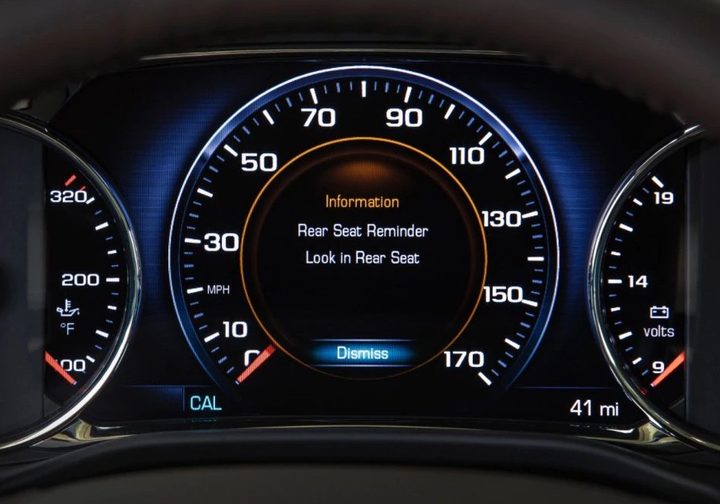
General Motors’ system, for example, operates by monitoring the rear doors of the vehicle and activates if one of them is opened or closed shortly before the vehicle’s engine starts. Later, when the engine is turned off, the vehicle emits five chimes and displays a message on the instrument cluster saying: “Rear Seat Reminder / Look in Rear Seat,” prompting the driver to check the back seat.
Others use ultrasonic sensors capable of detecting movement, sending an alert to the driver’s smartphone and sounding the horn if it notices any movement at the end of a journey.
The Auto Alliance said that while the technology for the rear-seat reminder system may continue to vary between automakers, any future systems will at the very least offer prompts to the driver that include a combination of auditory and visual alerts after the engine is turned off.
The move comes as U.S. lawmakers have been edging toward introducing legislation forcing automakers to use the system in their cars and trucks. But the Auto Alliance said this week that the voluntary move by the industry “will give new car buyers access to the safety features faster than would have been possible under a government rule-making process,” adding that such legislative efforts can take as long as eight years to finalize.
“Automakers have been exploring ways to address this safety issue and this commitment underscores how such innovations and increased awareness can help children right now,” David Schwietert, interim president and CEO of Auto Alliance, said in a release. “Automakers have come together to develop a pathway forward, which not only incorporates existing systems, but also supports new, innovative approaches.”
In a recent article, Consumer Reports pointed out that many parents believe they would never forget that their child is in the back of the car. But it added that with the stresses and distractions of everyday life, anyone’s memory can falter, potentially leading to tragic consequences. The auto industry is aiming to prevent future incidents with the continuing rollout of its rear-seat safety systems.