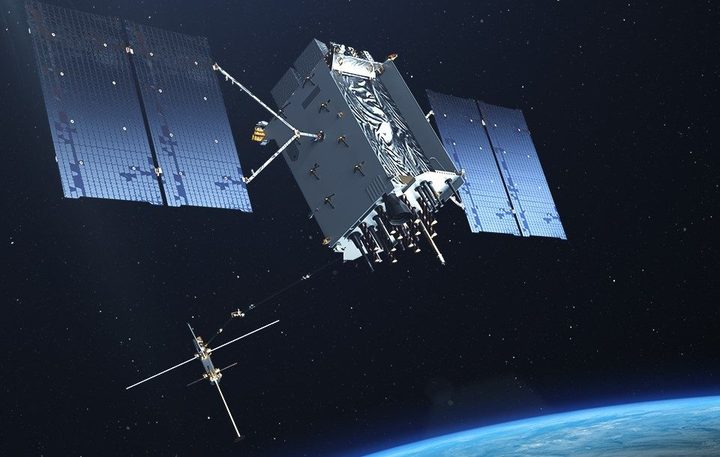
Since 1993, the US Air Force has made its Global Positioning System (GPS) available to the world, and ever since then that technology has found its way into many facets of our everyday lives. It’s in our cars, in our phones, and even in our watches. It’s not surprising then that the United States continues to invest in the development of the technology for both civilian and military use — and that investment is beginning to pay off.
With two satellites in orbit and eight more in various stages of development, the latest iteration, GPS III, already is in the process of being deployed. Here’s what you can expect when the next generation of GPS goes fully operational in 2023.
More bang for the buck
The first GPS III satellite launched by Lockheed Martin cost an estimated $529 million to build. And with nine more satellites planned, the GPS III project will climb to a whopping $5.5 billion when all is said and done. Some of this upfront cost will be offset by the satellite’s outstanding longevity. Unlike the early GPS satellites which have a design life of 7.5 years, the new GPS III satellites will last 15 years — twice as long as the oldest satellites in orbit and 25 percent longer than the newest satellites in the GPS fleet. Not only will the GPS II satellites last longer, but they also won’t get obsolete as quickly. The new GPS III satellite system was designed to adapt as new technology develops and mission objectives change.
Three times more accurate

The existing GPS II system is accurate, but GPS III is going to take things to a whole new level. The next generation of GPS is expected to be 3 times more accurate than existing GPS technology. That means the 5 to 10-meter accuracy you see now with existing GPS technology will be slashed to 1 to 3 meters. The signal also will be more powerful, allowing it to overcome annoying interference that degrades the signal.
What that means to you is your smartphone or other navigation device will be able to pinpoint your location with even more accuracy and reliability than before. No more following the wrong route because your GPS has you on a nearby street.
Improved navigation for everyone
Not only will GPS III boost accuracy, but it also will expand the technology to more people. The key to this expansion is the new L1C civilian signal, which is interoperable with other international global navigation satellite systems (GNSS). The L1C signal shares the same center frequency as Europe’s Galileo network, Japan’s QZSS and China’s Beidou. In fact, signal designs teams from Japan and Europe worked with the US to ensure this compatibility. In the future, GPS receivers will be able to collect location data from multiple global navigation satellite systems at once and use that info to provide drop-dead accurate tracking.
Flexing our military might
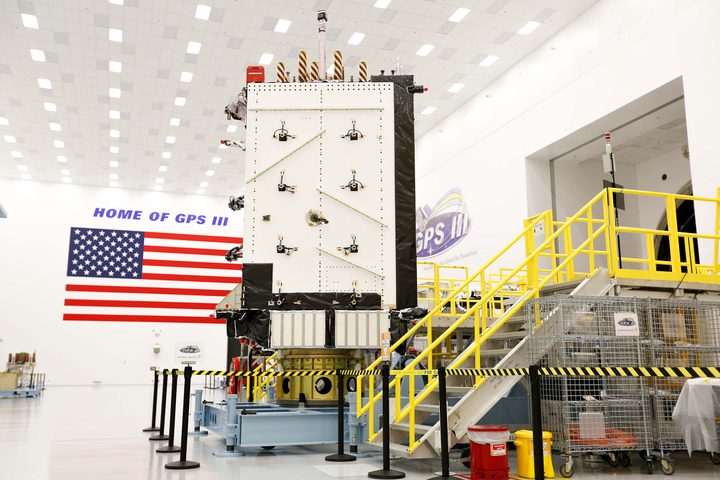
With all these civilian improvements, it’s easy to forget that GPS is first and foremost a military technology. On the ground, the government is installing new command centers capable of controlling the existing GPS satellite fleet along with the new GPS III satellites. This Next Generation GPS Operational Control System (OCX) is being built and programmed by Raytheon and has been delayed until 2022 or 2023. In the meantime, Lockheed is upgrading existing command centers with the programming necessary to communicate with the fleet of GPS III satellites. Lockheed can continue to launch satellites and test them while it waits for OCX to be completed.
In the sky, GPS III will transmit encrypted M-Code signals that are more powerful than existing military signals. Not only will these signals be more reliable for military operations, but they also will be eight times more resistant to jamming. The military side of the GPS III technology won’t go live until the OCX system is functional.
Delays, then relentless forward progress
After years of delay, the GPS III system is finally making strides. The first GPS III satellite, dubbed “Vespucci,” was launched in December 2018, and the second “Magellan” took flight in August 2019. Next in line is the third GPS III satellite, which has passed testing is slated for launch in January 2020 on top of a SpaceX Falcon 9 rocket. Lockheed isn’t standing idle while it tests the two orbiting satellite preps the third satellite for launch, the company is continuing to build the remaining GPS III satellites in assembly-line fashion. It plans to continue to spit out satellites at a steady pace until all ten birds are in the air and operational, hopefully by 2023.
What’s in the future?
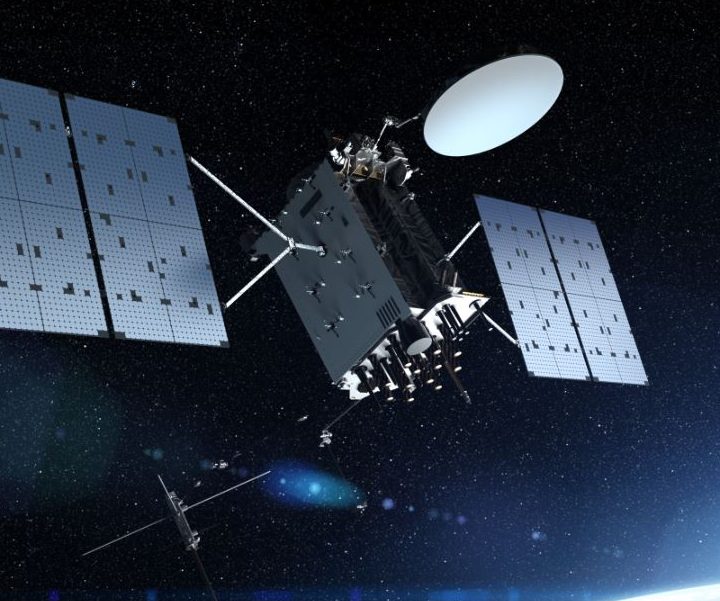
Following GPS III, Lockheed is contracted to work on 22 GPS III Follow-On (GPS IIIF) satellites. Slated to launch starting in 2026, these satellites will include a fully digital navigation payload search and rescue payload. They also will have a second antenna that will provide regional military support. Each satellite will be able to transmit two distinct signals from its two antennas. One is a full earth signal which already is also broadcast by existing GPS IIR-M satellites, and the second is a new regional specific signal from a directional “spot beam” antenna. In times of conflict, the earth wide beam can be turned off and the regional beam used to provide navigation.