The Honor MagicWatch 2 is a frustrating little thing. On the one hand, it’s entirely derivative of the already available Huawei Watch GT2, and on the other, it’s a dependable fitness-orientated smartwatch that offers great value and strong battery life. Because the design is something we’ve seen before, it doesn’t feel as fresh as it really should, but as a fitness companion, it’s great.
Is this enough for us to forgive the Honor MagicWatch 2 for a familiar design and recommend it?
Design

I really wish Honor had gone in its own direction with the design of its new smartwatch, instead of essentially rebadging the Huawei Watch GT2 (Honor is owned by Huawei). If you’ve seen the Watch GT2, you’ll notice immediately that the Honor MagicWatch 2 is almost identical. The main difference is the curvature on the glass over the screen: It’s more pronounced on the GT2 and flatter on the MagicWatch 2. Otherwise, it’s the same: There are two buttons — the top one with a snazzy red flash around it — on the side of the 46mm body and a 1.4-inch screen adorning a body made out of stainless steel.
The version I’ve been wearing is black with a black silicone strap, and it’s the more uninteresting of the two models you can choose. The polished stainless steel body matched with a brown leather strap is quite attractive, without being a statement watch. The design itself is a good one, with Honor and Huawei pulling off the double-button look better than some others. I just didn’t need to see it again.

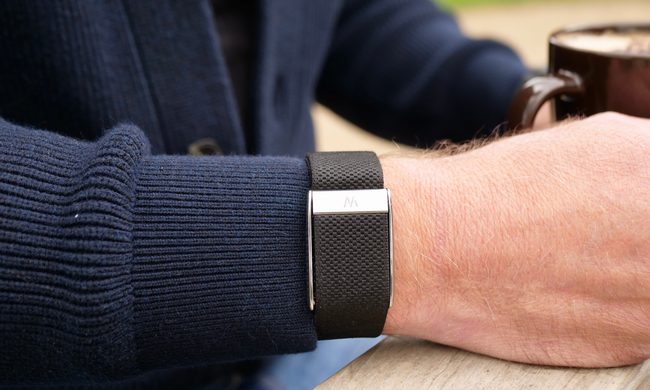
On the front is a 1.4-inch AMOLED touchscreen with a 454 x 454 pixel resolution, and in total the watch weighs 41 grams. On the wrist, it’s comfortable and lightweight, and the silicone strap — while a bit boring to look at — is soft and wearable, doesn’t get sweaty after wearing it to the gym, and has tons of adjustability. It’s on quick-release pins too, so you can swap it out for something else if you prefer. Like the Watch GT2, the MagicWatch 2 looks like a sporty traditional watch from a distance, and you can select an always-on screen if you want, although this does impact battery life.
Overall, the Honor MagicWatch 2 is a pretty smartwatch that neatly treads the line between technology and fashionable, traditional wrist wear. The problem is, we’ve seen it before, and that makes it less exciting than it could be.
Fitness and notifications

Honor uses its own software on the MagicWatch 2, rather than Wear OS from Google, for example, and it’s both a blessing and a curse. It’s a blessing because Wear OS is not very good and isn’t missed; but without it, there’s no Google Play access for third-party apps. You can’t add Spotify, for example.
This means you must rely on Huawei Health, the app that tracks all your health data and is used to sync the wearable with your smartphone. It’s available for iOS and Android, and in my experience is reliable and easy to use. The MagicWatch 2 tracks steps, calories, and your heart rate. Open the app on your phone and you can activate training plans based on indoor and outdoor runs, walking, cycling, or general training. These are also all available on the watch with a quick press of the lower button. The watch does not have GPS, so it relies on your phone’s connection.

I really like Huawei Health, especially when matched with the fitness tracking on the watch. It’s comprehensive in its data collection, and clearly presents it all for your benefit. For example, a 30-minute session on the treadmill shows calories burned, distance, pace, cadence, steps, and heart rate, as well as aerobic training measurement and recovery time. The aerobic training effect helps you understand how hard you’re working, where you need to improve, and the amount of time you should wait before exercising again.
This granular, informative data is available for many different workout types. It’s helpful, understandable, and motivational, making fitness tracking and Huawei Health a strong reason to purchase the Honor MagicWatch 2.
Software

Notifications are activated in the Health app, and should be considered haphazard. The controls let you specify which apps can send notifications to the watch, and although the notifications do show up in the watch’s pull-up notification panel, they don’t all arrive with a vibration. Emails seem to be fine, but apps including Twitter, Messenger, and Line were less reliable. When notfcations do arrive, you can’t interact with them in any way. I was always alerted to incoming calls, though, which is helpful when my phone is in my bag.
The MagicWatch 2 uses the Kirin A1 processor, newly introduced in the Watch GT2 and the Freebuds 3. Performance is average. Swapping screens left-to-right to view different fitness menus is smoother than pulling up notifications or scrolling through the menu, but none are as fast or slick as WatchOS on the Apple Watch, for example. Interactions just feel slightly stunted and not as fast as they should be. This is not unique to the MagicWatch 2 — it’s the same situation on the Watch GT2.
One excellent new addition to the MagicWatch 2 is the chance to connect a set of Bluetooth headphones to the watch and listen to music stored locally on the wearable. This was missing from the original Huawei Watch GT. Here, music is transferred from your phone through the Huawei Health app by Bluetooth. It takes a while, especially if you’re syncing a lot of music; but it’s worth it. With wireless headphones and music on board, the MagicWatch 2 becomes a powerful all-in-one fitness companion.
Price and availability

Honor seems to be relying on price to sell the Magic Watch 2 over the Watch GT2, rather than making it stand out on its own. The Honor MagicWatch 2 is yours for 190 euros ($210 U.S.) if you choose the 46mm model seen here, or 180 euros ($200) for the 42mm model. Honor began to sell the watch throughout Europe on December 12. No availability in the U.S. has been announced.
Note this price is considerably less than the Huawei Watch GT2, as you’ll pay 250 euros (about $280 U.S.) for the 46mm model. Remember, they are almost identical to each other, so if you’re tempted by the Watch GT2, you can save plenty by buying the MagicWatch 2 instead.
Conclusion


Is the fitness tracking enough to overcome the derivative design? No. Because Huawei Health and the fitness tracking is the best part — the software is a bit slow, and the notifications are unreliable otherwise — you can buy an Honor fitness band for very little and get the same benefit. If software updates can improve the smartwatch side of the MagicWatch 2, then this may change, and it’s definitely a better value than the Huawei Watch GT2.
Ultimately, the wealth of wearables from both Honor and Huawei is a little confusing, as all repeat many features and share similar designs, and all suffer from similar problems. The Honor Band 5 or Honor Band Sport are cheap, and do much of what the MagicWatch 2 can do, and are probably the better purchase to enjoy the excellent Huawei Health fitness and sleep tracking features until the software is improved.