  1. Home
  2. Emerging Tech
  3. News

European planet-hunting satellite CHEOPS captures its first image

Add as a preferred source on Google

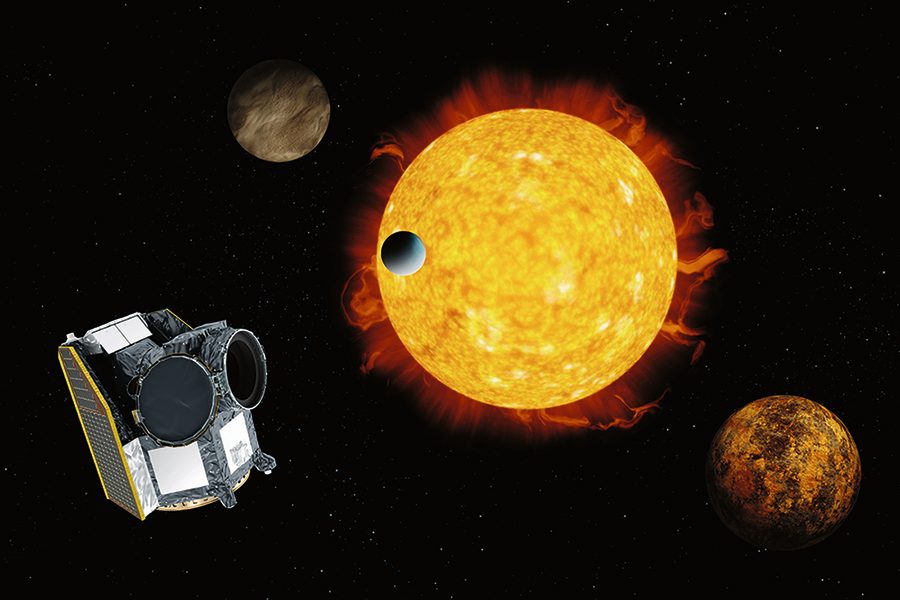
Illustration of CHEOPS, ESA’s first exoplanet mission
Illustration of CHEOPS, ESA’s first exoplanet mission ESA / ATG medialab

The European Space Agency (ESA)’s new exoplanet-hunting satellite, CHEOPS, has taken its first image of a target star. The satellite was launched in December last year and opened the cover to its camera last week, and now it has begun imaging distant stars to search for telltale signs of planets orbiting around them.

Recommended Videos

Waiting for the first image was somewhat fraught for the scientists working on the project, as they could not be sure that the camera and other instruments were working perfectly until they saw the data come in.

“The first images that were about to appear on the screen were crucial for us to be able to determine if the telescope’s optics had survived the rocket launch in good shape,” explains Willy Benz, Professor of Astrophysics at the University of Bern and Principal Investigator of the CHEOPS mission. “When the first images of a field of stars appeared on the screen, it was immediately clear to everyone that we did indeed have a working telescope.”
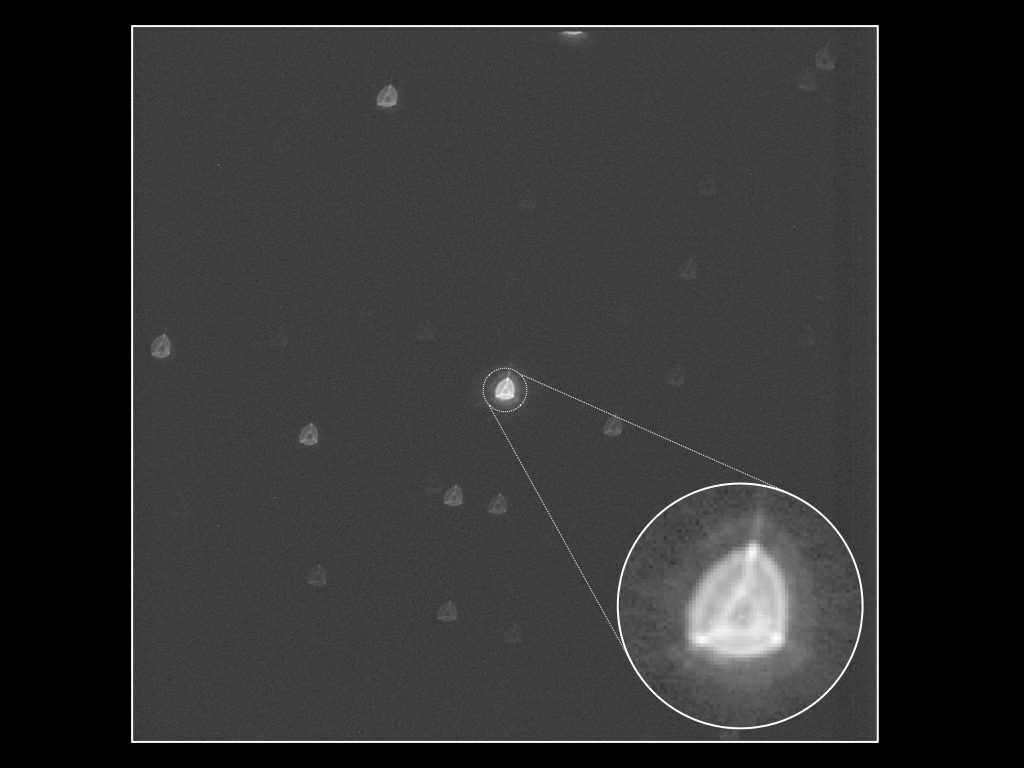
First image of the star chosen as target for CHEOPS after cover opening.
First image of the star chosen as a target for CHEOPS after cover opening. The star, at the center of the image, is located at a distance of 150 light-years from us, in the constellation of Cancer. Illustration of CHEOPS, ESA’s first exoplanet mission

The captured image, shown above, may look rather blurry. But this isn’t a mistake or a problem — the telescope is deliberately defocused. Counterintuitively, this actually makes the image more precise as the light from sources like stars is spread over more pixels, which lessens the variations caused by the movements of the spacecraft.

“The good news is that the actual blurred images received are smoother and more symmetrical than what we expected from measurements performed in the laboratory,” Benz explained. “These initial promising analyses are a great relief and also a boost for the team.”

CHEOPS detects exoplanets through the transit method, in which it monitors the brightness levels of stars to look for periodic dips. If there are regular dips in brightness, that suggests that something — like an exoplanet — is orbiting around the star and periodically blocking its light. This is the same method used by NASA’s planet-hunter, TESS.

With CHEOPS capturing images, there will be more tests of its systems over the next two months to ensure everything is working smoothly. “We will analyze many more images in detail to determine the exact level of accuracy that can be achieved by CHEOPS in the different aspects of the science program,” said David Ehrenreich, CHEOPS project scientist at the University of Geneva. “The results so far bode well.”

Georgina Torbet
Georgina has been the space writer at Digital Trends space writer for six years, covering human space exploration, planetary…
China’s UBTech unveils eerily lifelike companion robots, and yes, they want to move in with you
UBTech's new humanoid robots are built for companionship, using emotion-aware AI, long-term memory, and humanlike expressions to become part of your everyday life.
UBTech Uworld U1 series robot launch

A humanoid robot designed to live in your house, learn your habits, and pick up on your mood without being prompted is no longer science fiction. Shenzhen-based UBTech Robotics unveiled its Uworld U1 series this week, introducing three robots built for companionship rather than factory work or household chores.

A body that moves like yours, and a brain that reads how you feel

Read more
This $249 LED sign wants to fix your work-life balance
My productivity isn't worth $249... or is it?
Flipper Busy Bar

Flipper Devices has built a reputation among hackers and hardware enthusiasts with the Flipper Zero, a pocket-sized gadget capable of interacting with RFID, NFC, Bluetooth, and other wireless protocols. Now, the London-based company is taking a very different approach.

Its latest product, the Busy Bar, is a desktop productivity display designed to help users stay focused, signal their availability, and automate parts of their workflow. After being teased last year, the device is finally going on sale on July 14. While the concept is genuinely clever, its starting price of up to $249 may make many buyers think twice.

Read more
FAA clears the runway for Mach flights that could cut travel times nearly in half
New regulations could dramatically reduce travel times while keeping sonic booms under control.
Supersonic Flight Time

The dream of flying faster than the speed of sound just took a major step forward. The Federal Aviation Administration (FAA) has announced a proposed rule that would create the first noise-based certification standards for a new generation of supersonic passenger aircraft, removing one of the biggest regulatory hurdles standing in the way of commercial Mach 1+ flights.

The goal is simple: fly faster without the boom

Read more