  1. Home
  2. Emerging Tech
  3. News

Europe’s newest planet-hunting satellite opens its eyes for the first time

Add as a preferred source on Google

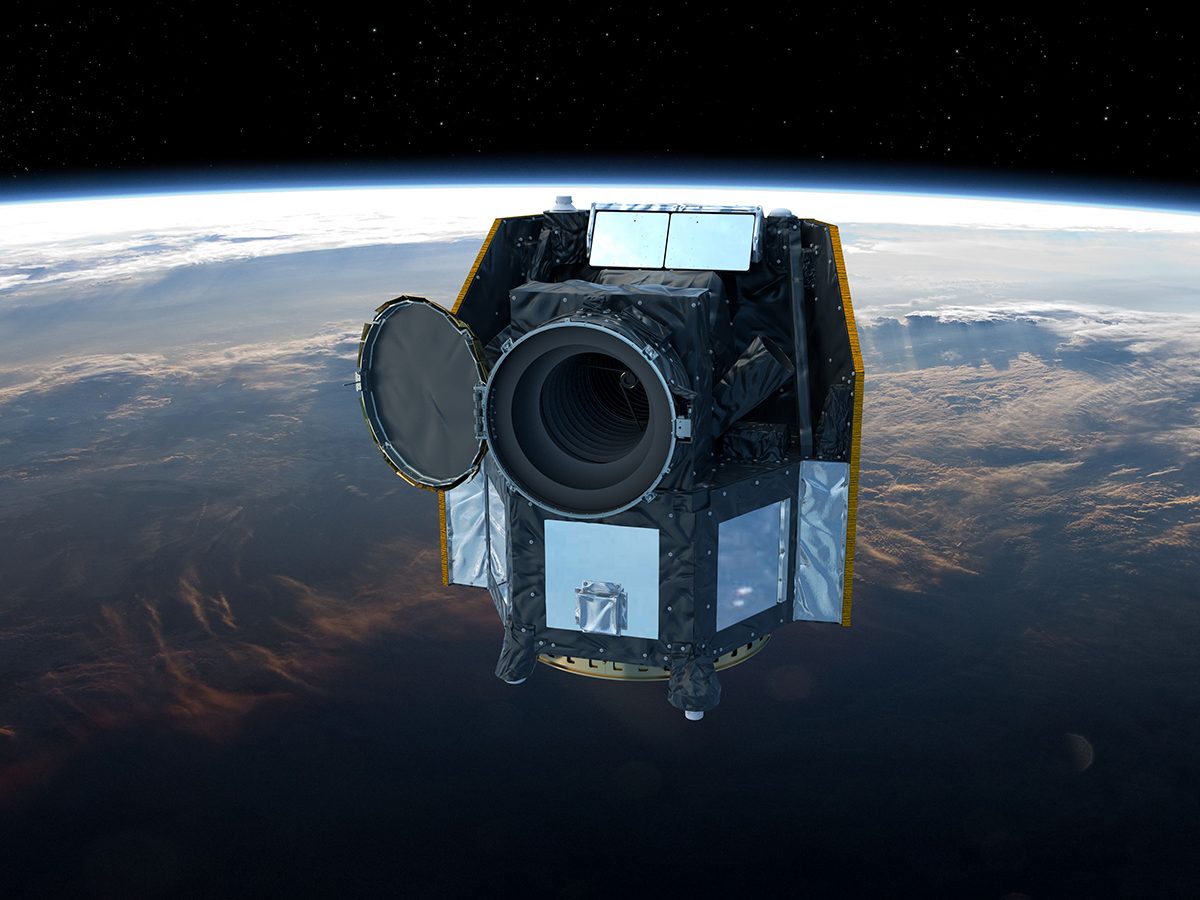
Artist's impression of CHEOPS
Artist’s impression of CHEOPS ESA / ATG medialab

The European Space Agency (ESA)’s new exoplanet-hunting instrument, the CHaracterizing ExOPlanet Satellite (CHEOPS), has opened its eyes to observe the universe for the first time.

Recommended Videos

The ESA launched the CHEOPS satellite in December last year. Since then, it has been orbiting the Earth at an altitude of 700 kilometers (435 miles) while scientists performed various tests to make sure all the components were working as they should.

“Shortly after the launch on December 18, 2019, we tested the communication with the satellite,” Willy Benz, professor of astrophysics at the University of Bern and Principal Investigator of the CHEOPS mission, explained in a statement. “Then, on January 8, 2020, we started the commissioning, that is, we booted the computer, carried out tests, and started up all the components.”

The tests went well, with no issues reported. But there was still one big challenge for Benz and his colleagues: Opening the cover of the space telescope, which protects the instrument during launch. “We were now looking forward excitedly and with a bit of nervousness to the next decisive step: the opening of the CHEOPS cover,” Benz said.

On Wednesday, January 29, the cover was opened for the first time. “The cover was opened by sending electricity to heat an element which held the cover closed,” Benz explained. “The heat deformed this element and the cover sprung open. A retaining fixture caught the cover. Thanks to the measurements of the sensors installed, we knew within minutes that everything had worked as planned.”

Now CHEOPS can begin its mission of observing exoplanets, in particular, to search for habitable planets. “In the next two months, many stars with and without planets will be targeted in order to examine the measurement accuracy of CHEOPS under different conditions,” Benz said.

We shouldn’t have to wait long to see the first CHEOPS images of space. CHEOPS has taken hundreds of images already, even though these were all black because the cover was closed, so the scientists have already been able to calibrate the instrument.

Even though it will take a while for the researchers to confirm that the CHEOPS satellite is operating correctly in every way, there should be images available to view soon, according to David Ehrenreich, CHEOPS project scientist at the University of Geneva: “We expect to be able to analyze and publish the first images within one or two weeks,” he said.


Georgina Torbet
Georgina has been the space writer at Digital Trends space writer for six years, covering human space exploration, planetary…
Starlink V5 is here, and it’s lighter, smarter, and far more efficient
The next-generation satellite internet kit promises improved efficiency while maintaining high-speed connectivity.
Starlink V4 vs V5

Not every hardware upgrade needs to be about speed. With Starlink V5, SpaceX is betting that a lighter design and lower power consumption matter just as much. The company has officially introduced its next-generation Starlink V5 kit, featuring a smaller and lighter design with significantly improved power efficiency.

Smaller, lighter, and far more efficient

Read more
Frontier joins the Starlink club with high-speed in-flight internet
The carrier plans to roll out SpaceX's satellite-powered Wi-Fi across its fleet starting in 2027.
Frontier Starlink partnership featured

If there's one thing budget airlines aren't exactly known for, it's great onboard Wi-Fi. In Frontier Airlines' case, it hasn't offered in-flight internet at all. That's about to change. Frontier Airlines has announced a partnership with SpaceX's Starlink to bring high-speed, low-latency internet across its fleet. Installations will begin in early 2027, making Frontier the first ultra-low-cost carrier in the United States to adopt Starlink's satellite-powered connectivity.

Streaming, browsing, and even gaming at 35,000 feet

Read more
OpenAI’s first hardware product sounds more like a companion than a speaker
The AI company is reportedly building a mobile home device that understands context and proactively helps users.
OpenAI press image

For months, rumors have suggested that OpenAI's first hardware product could be a wearable AI device, or perhaps even the beginning of its long-term smartphone ambitions. As it turns out, the company's first gadget may be something far simpler, yet arguably far more ambitious. It will help control smart-home appliances, play media, answer questions, respond to messages, and tap into the range of capabilities offered by OpenAI's ChatGPT, according to people familiar with the matter.

OpenAI's first AI device could end up being a speaker, following plenty of hype that the company is actually working on a wearable AI device and might even launch a smartphone down the road. According to a Bloomberg report, the speaker will serve as a human-like AI companion that will integrate directly with the smart home ecosystem.

Read more