  1. Home
  2. Emerging Tech
  3. News

SpaceX launched 60 Starlink satellites, but things didn’t go as planned

Add as a preferred source on Google

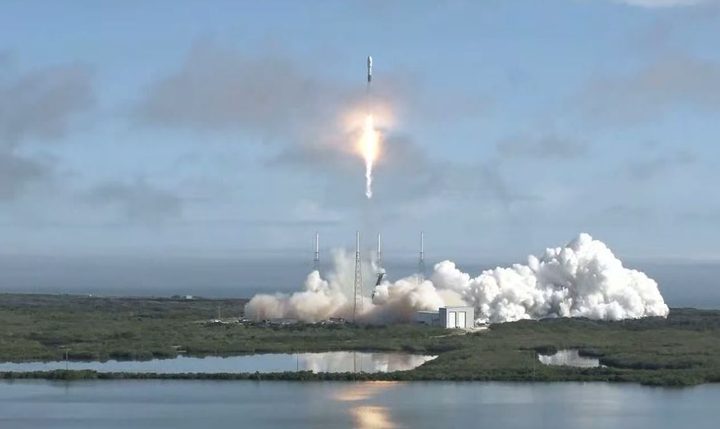
60 Starlink satellites are launched aboard a Falcon 9 rocket on Monday, 17th February 2020.
60 Starlink satellites are launched aboard a Falcon 9 rocket on Monday, 17th February 2020. SpaceX

SpaceX has successfully launched and deployed 60 more Starlink satellites, bringing the total number of satellites in the network to nearly 300. The Starlink project aims to create a network of satellites that can provide broadband internet access across the globe, even in remote areas that are currently poorly served and lack broadband access — but not everything went according to plan.

Recommended Videos

The launch took place at 7:07 a.m. PT on Monday, February 17, with the satellites launched aboard a SpaceX Falcon 9 rocket from Space Launch Complex 40 at Cape Canaveral Air Force Station in Florida.

At 7:23 a.m. on Monday, February 17, SpaceX posted to Twitter confirming its successful deployment of the 60 Starlink satellites.

Successful deployment of 60 Starlink satellites confirmed! pic.twitter.com/bKBtI5UZEB

— SpaceX (@SpaceX) February 17, 2020

The Falcon 9 rocket used in this launch is also notable for having been previously used. Its first stage was launched as part of the CRS-17 mission in May 2019 and the CRS-18 mission in July 2019, both commercial resupply missions to the International Space Station (ISS) launched as part of NASA’s commercial resupply program. The program uses private companies like SpaceX and Boeing to ferry cargo to and from the ISS, carrying supplies to the station and the results of scientific experiments back to Earth.

The Falcon 9 was also used for the JCSAT-18/Kacific1 mission in December 2019, in which it deployed a satellite for Kacific Broadband Satellites, a Singaporean company. The re-use of rocket parts is a major SpaceX innovation in the sector. While agencies such as NASA have been considering developing reusable rockets since the 1960s, no one has been able to actually develop a working partially reusable rocket before SpaceX.

Once the first stage of the Falcon 9 rocket separated, the plan was for the stage to land on the droneship “Of Course I Still Love You,” stationed in the Atlantic Ocean. Then the fairing would be recovered by two recovery ships, “Ms. Tree” and “Ms. Chief.” Unfortunately, the stage missed the droneship and landed elsewhere. But SpaceX did confirm that it made a “soft landing” into the ocean.

Had it been successful, this would have been the 50th landing of a first stage from a Falcon rocket. For now, SpaceX will have to wait a little longer before it can claim this accolade.

Georgina Torbet
Georgina has been the space writer at Digital Trends space writer for six years, covering human space exploration, planetary…
That Claude chat you shared? Google may have seen it too
Public chat links were indexed by Google, potentially exposing sensitive information shared with the AI.
Claude AI on an iPhone.

If you've ever shared a Claude conversation using a public link, it might be worth checking your privacy settings. Over the weekend, users discovered that publicly shared Claude chats and Artifacts were appearing in Google Search and other search engines through queries such as site:claude.ai/share. The indexed pages reportedly included everything from resumes and business documents to API keys, health information, and other sensitive conversations that users likely never expected to become searchable.

How did this happen?

Read more
The AI-hooked younger generation is sourcing chatbot help even for in-person talks
From pickup lines to angry emails, here's how young adults are using AI to script their social lives, and why psychologists say it's a risky habit.
Person using ChatGPT on a MacBook.

I've definitely rehearsed a text message in my head before hitting send, especially when it's a long email with dozens of jargon and diplomatic language. However, when it comes to in-person talks, I’ve never even thought about outsourcing them to an AI chatbot.

Turns out an entire generation has handed the whole script to AI instead (via The Wall Street Journal).

Read more
Google Flow Music Spaces is becoming an all-in-one AI music studio
The latest update brings song editing, stem splitting, image generation, lyrics, and video creation into a single workspace.
Google Flow Music Featured

The company has announced a major update for Flow Music Spaces, bringing a suite of new AI-powered creative tools directly into collaborative workspaces. Instead of jumping between different apps or sessions, users can now generate and edit songs, split audio stems, create images, write lyrics, and even generate videos without leaving a Space.

What's new in Flow Music Spaces?

Read more