1. Home
  2. Computing
  3. News

Supercomputer consortium to fight coronavirus with processing power

Add as a preferred source on Google
 

The fight against coronavirus is getting the support of 16 supercomputers thanks to a new consortium of U.S. government agencies and companies. The White House Office of Science and Technology Policy and the U.S. Department of Energy have announced a partnership to provide supercomputer power for researchers seeking to understand the coronavirus.

Recommended Videos

The participants in the COVID-19 High Performance Computing Consortium include major tech companies IBM, Amazon Web Services, Google Cloud, and Microsoft, in addition to two universities: The Massachusetts Institute of Technology and the Rensselaer Polytechnic Institute. It also includes five national laboratories, the National Science Foundation, and NASA.

The participants will bring a total of 16 supercomputers to the fight against the virus, providing more than 330 petaflops of processing power from across 775,999 CPU cores and 34,000 GPUs. Researchers can use this massive amount of computer power to quickly run through calculations and models which would take days, months, or even years to perform on less powerful computers.

IBM's Summit Supercomputer
IBM

IBM explained how supercomputers can contribute to medical research in a blog post: “As a powerful example of the potential, IBM’s Summit, the most powerful supercomputer on the planet, has already enabled researchers at the Oak Ridge National Laboratory and the University of Tennessee to screen 8,000 compounds to find those that are most likely to bind to the main ‘spike’ protein of the coronavirus, rendering it unable to infect host cells.”

Researchers were able to use Summit’s resources to search for drug compounds which could act as a treatment for the cure or control of the disease. In just two days, Summit was able to identify 77 compounds which could be potentially useful in the management of the disease. With the addition of the other supercomputers, researchers will be able to examine even more data.

It isn’t only huge companies with massive supercomputers which are contributing to coronavirus research efforts, however. The Folding@Home project is inviting members of the public to contribute processing power from their home computers in a distributed computing project. The project now contributes over 470 petaflops of power in total, which is twice as much as even the Summit supercomputer. You can learn about how you can contribute to the project on the Folding@Home website.

Georgina Torbet
Georgina has been the space writer at Digital Trends space writer for six years, covering human space exploration, planetary…
How to install macOS 27 Golden Gate public beta on your Mac?
From a smarter Siri to a more reliable Spotlight, here's your full walkthrough for installing macOS 27 Golden Gate's public beta today.
macOS 27 Golden Gate

Along with iOS 27’s public beta, Apple has also released macOS 27 Golden Gate’s public beta build, so that early adopters can get their hands on the new features, including Siri AI, and provide timely feedback to help ensure a stable iOS launch in September. 

If you’re sold on all the new features but don’t want to put your faithful MacBook through developer beta duty, a public beta offers a much more refined experience. To install macOS 27’s public beta, follow the steps given below. 

Read more
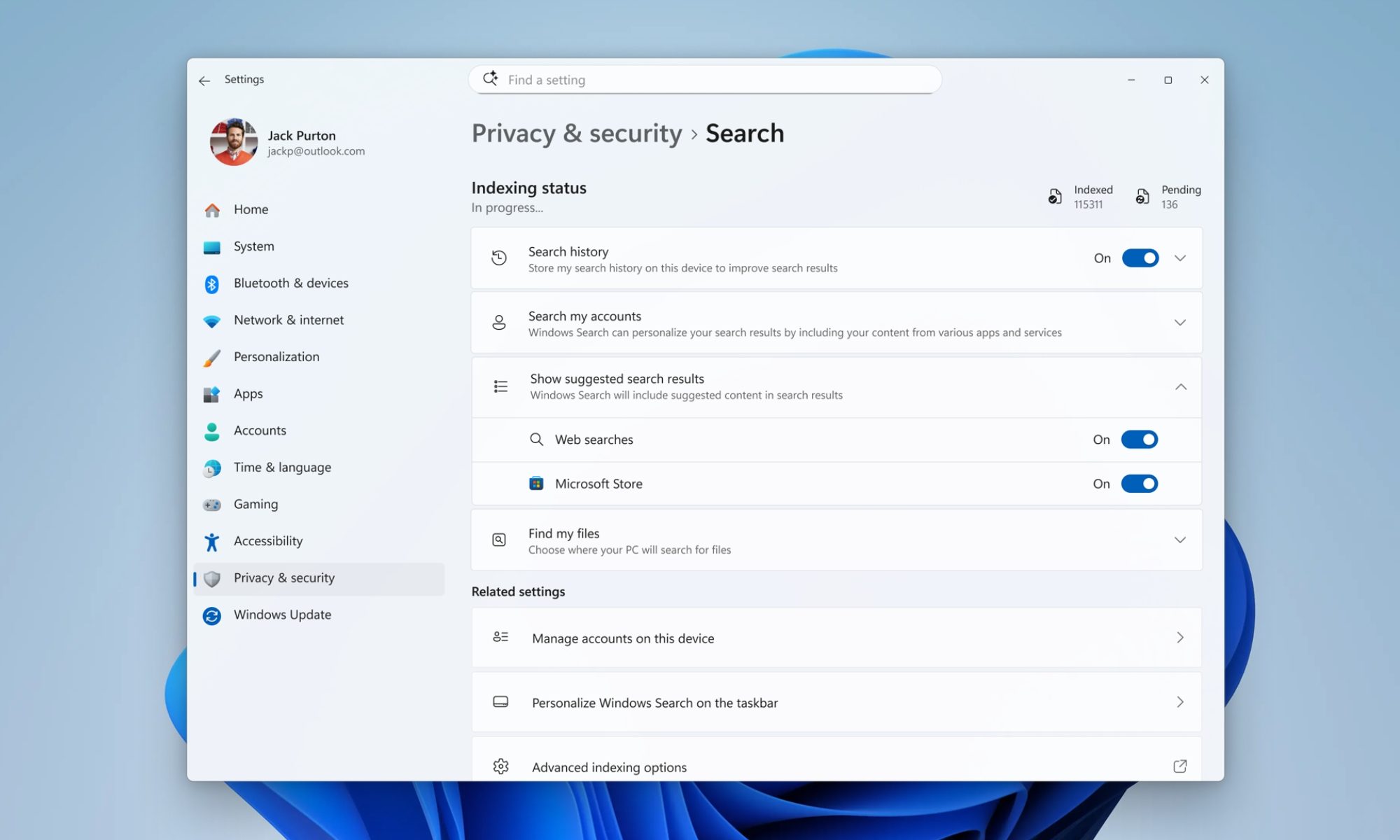
Microsoft is finally fixing the worst thing about Windows Search, but you can’t try it just yet
Windows Insiders in the Experimental channel are getting a Search experience that finally feels less of a billboard and more of what users actually need.
Page, Text, Person

Windows Search has been a mess for years, and I do not use that word lightly. Open it to find a file, and you get trending Bing topics, Microsoft Store promotions, and an AI tools tile that just opens a browser. 

That is changing, but not immediately for all users. Microsoft is rolling out a batch of Windows Search improvements to Insiders in the Experimental channel, and for once, this isn't just a fresh coat of paint.

Read more
Apple doesn’t want to share this AirPods feature with Meta, but the EU may force its hand
Spring 2027, EU only, built under DMA pressure.
The front of the Ray-Ban Meta smartglasses.

I’ve been an AirPods user for the last four years, and one of the things that makes it genuinely hard to leave behind is the seamless, almost magical pairing experience across devices. Open an AirPods case near your iPhone, and a pop-up appears within seconds. Switch to your Mac and the audio follows. 

However, the experience is limited only to Apple devices. Doesn’t matter whether you have one of the coolest pieces of tech on the market right now; if it’s not Apple, it won’t get the same treatment. However, that might change for the Meta Quest or the Ray-Ban Meta glasses, thanks to pressure from the EU. 

Read more