The last decade has seen the nonstop development of new kinds of audio products, like soundbars, true wireless earbuds, noise-canceling wireless headphones, and smart speakers. Yet despite these innovations, the underlying technology that produces the sound we hear has pretty much stayed the same for the last hundred years. But that might be about to change if Resonado Labs has anything to say about it. The company, which is based in the U.S. and South Korea, has patented a new way to build drivers — the core component at the heart of every speaker — that drastically reduces the space needed to accommodate them.
Resonado calls the technology Flat Core Speaker (FCS), and as the name suggests, it can be used to create speakers that have a much smaller overall depth, which expands the number of places speakers can be installed. Erikc Perez, Resonado co-founder and chief marketing officer, says that FCS achieves these benefits without compromising sound performance.
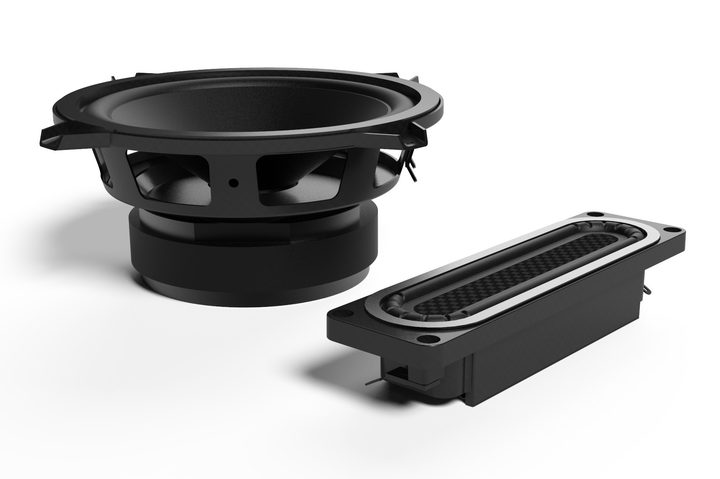
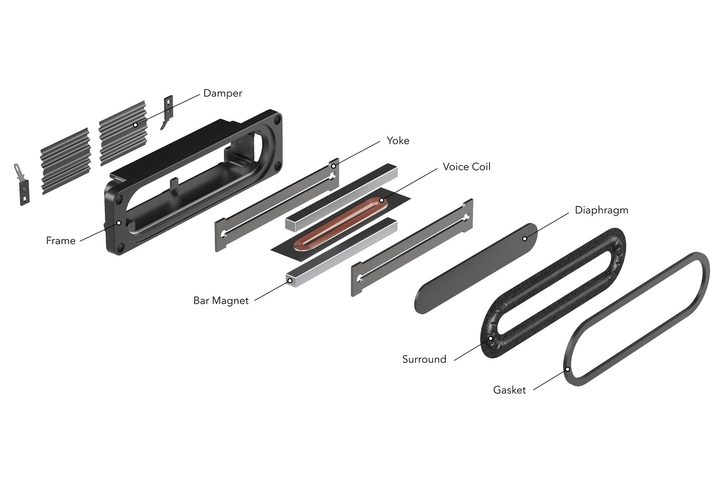
Traditional speaker drivers use an electrodynamic architecture, which places an electromagnet and a voice coil beneath a diaphragm. When electrical impulses are sent through the magnet, the voice coil moves, causing the diaphragm to vibrate, which produces the sounds we ultimately hear. Resonado’s FCS technology doesn’t reinvent this wheel as much as it reshapes and rearranges the components.
Instead of using a donut-shaped magnet surrounding a cylindrical voice coil, an FCS driver suspends a flattened voice coil between two bar magnets. This arrangement lets the diaphragm remain flat, instead of the deeper, cone-like shape required by normal drivers, while simultaneously distributing the voice coil’s force more evenly across the diaphragm’s surface.
Unlike more exotic alternatives to electrodynamic drivers, such as planar magnetic or electrostatic, FCS uses all of the same materials as conventional speakers. This helps to keep the cost of FCS-based speakers much closer to that of traditional designs, Perez said.
Resonado Labs doesn’t make speakers — although it released a crowdfunded proof of concept — preferring instead to license its FCS patents to companies that can benefit from its advantages.
Our first real taste of what FCS can do will come later this year. Thanks to a partnership with China’s Soundlab, we’ll start to see vehicles that come equipped with FCS speakers. Airstream, the iconic U.S. RV brand, has also committed to using FCS components in its 2022 line of touring coaches.
But Resonado has its sights set on a whole spectrum of mass-market audio products, from soundbars to smart speakers. It recently developed a new version of its driver called FCS Bidirectional, which lets a single magnet/voice coil motor power two horizontally opposed diaphragms at once. This design could offer the same space-saving benefits of the recently released KEF KC62 Subwoofer, but in an even smaller package.
Its microsized FCS drivers can also be used in full-sized headphones. Because the FCS drivers can take on noncircular shapes, they can provide a larger diaphragm without increasing the space requirements in the headphone earcups. Theoretically, they can be used in earbuds, too.
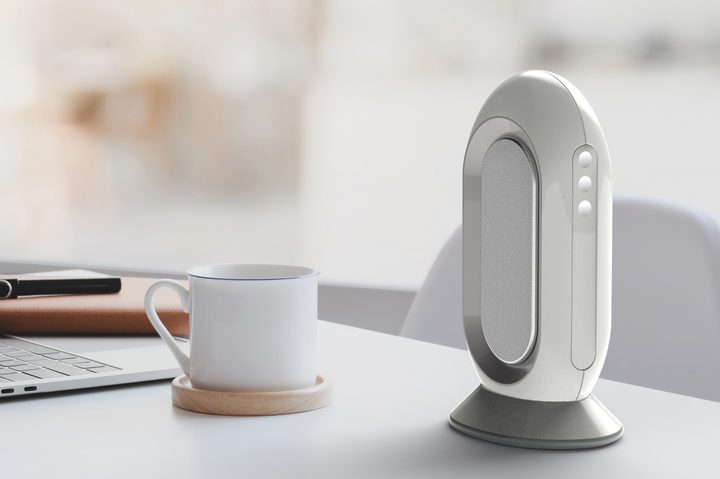
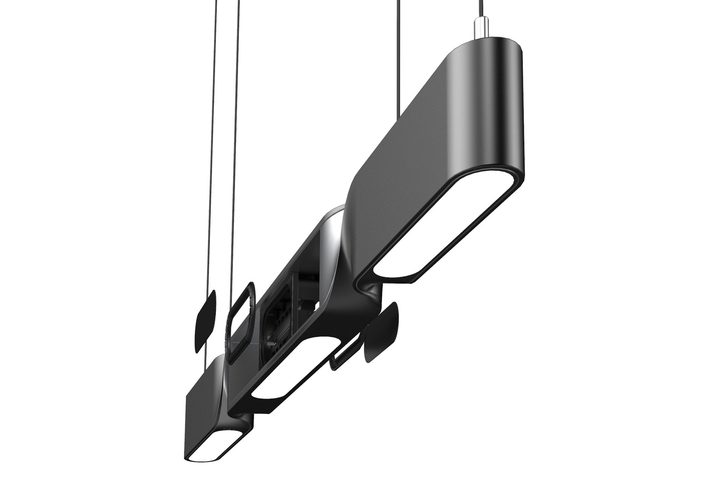
In two tantalizing concept designs, Resonado has shown what an FCS-equipped smart speaker could look like, as well as given a glimpse at a pendant light bar that integrates an FCS DualCore speaker.
The only real question at this point is how do FCS speakers actually sound compared to traditional cone-diaphragm designs? Hopefully, we’ll get our hands on an FCS-equipped product soon so we can let you know.