1. Home
  2. Computing
  3. News

GPU shortages aside, the powerful Nvidia RTX 3080 Ti is almost here

Add as a preferred source on Google

As the GPU shortage continues on, getting news on any graphics card is a good thing. There are unlikely rumors like Nvidia rereleasing the GTX 1080 Ti, as well as more plausible leaks regarding the upcoming Nvidia RTX 3080 Ti. Now, Lok LOK shared a few photos of shipping labels on Facebook that hint that the 3080 Ti is not only coming, but coming soon.
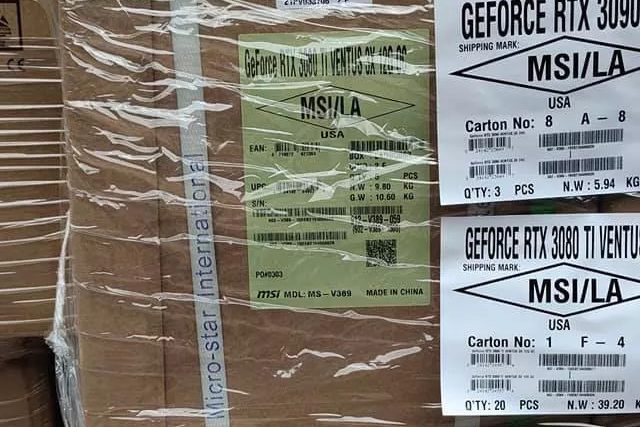
Image used with permission by copyright holder

The label is for a batch of MSI’s RTX 3080 Ti Ventus 3X 12G OC graphics cards, which are allegedly heading to the U.S. ahead of a release in May. The name confirms earlier rumors of the 3080 Ti coming with 12GB of GDDR6X VRAM, pushing it ahead of the 10GB seen on the 3080. Rumors suggest the 3080 Ti will ship with 10,240 CUDA cores, 80 RT cores, and 320 Tensor cores. That’s a believable step up from the 3080, which comes with 8,704 CUDA cores, 68 RT cores, and 272 Tensor cores. The 3080 Ti is also rumored to come with a 384-bit memory bus, matching the $1,500 RTX 3090.

Recommended Videos

The 3080 Ti was originally rumored to come with 20GB of GDDR6X VRAM. However, the batch of MSI cards from the photo and an Eurasian Economic Commission (EEC) filing from Gigabyte show that Nvidia stripped the card down to 12GB.

Nvidia is also reportedly working on new silicon to limit the mining performance of its upcoming GPUs. Reports now are focused on the RTX 3060, which launched with a botched anti-mining system. However, Nvidia will likely use the silicon with all of its upcoming graphics cards. The die is rumored to cut the hash rate in half once it detects mining activity.

Nvidia RTX 3080
Nvidia

The 3080 Ti is the big news, but the photos also show boxes of the RX 580, RTX 3090, and GT 710. The RX 580 is a popular card for miners due to its low price and high hash rate, while the GT 710 is great for budget PC builds. Hopefully there’s enough of those two cards to leave the 3080 Tis and 3090s for gamers, especially as Nvidia and Intel double down on the shortages plaguing the world of computing.

Jacob Roach
Former Lead Reporter, PC Hardware
Jacob Roach is the lead reporter for PC hardware at Digital Trends. In addition to covering the latest PC components, from…
A Windows 11 bug may be quietly eating hundreds of gigabytes of your storage
Windows 11’s storage-eating bug now has a fix from Microsoft
Windows 11 suffering from RAM crisis

If your Windows 11 PC suddenly looks low on storage, your downloads folder or game library may not be the problem. According to Windows Latest, a bug tied to a Windows system file can silently consume tens or even hundreds of gigabytes on the system drive.

The file in question is called CapabilityAccessManager.db-wal, and it sits inside Windows’ Capability Access Manager folder. Windows Latest says the issue may appear as unusually high “System files” usage in Windows 11’s storage breakdown, even though the Settings app does not clearly identify the exact file responsible. In some reported cases, users saw it grow to 200GB, and even more.

Read more
Your next Teams meeting could have an AI teammate that answers questions for you
Teams is getting smarter, cleaner, and quieter about it. The AI features are opt-in, the chat cleanup is automatic.
Computer, Electronics, Laptop

Microsoft Teams is getting a meaningful update that overhauls almost every part of how you use the app, from AI-assisted meetings to a cleaner chat layout. Most of the changes are already in testing, and several are scheduled to roll out before the end of the summer.

Starting with the most interesting addition: an upgraded AI Facilitator that can listen to your meeting, spot when someone seems confused, and generate a response (via Windows Report). 

Read more
A hacker’s arrest just revealed how Microsoft can track your Windows device
Microsoft knew what websites his Windows PC visited.
Windows 11 on a laptop

A teenager allegedly used a VPN to cover his tracks while hacking a US jewelry retailer, but Microsoft knew anyway.

Court documents unsealed in the US case against Peter Stokes, a 19-year-old dual US-Estonian citizen accused of being a member of the notorious Scattered Spider hacking group, reveal that Microsoft provided the FBI with records tied to a tracking mechanism called the Global Device Identifier, or GDID. 

Read more