  1. Home
  2. Computing
  3. News

Nvidia admits its horrible GPU shortage will continue throughout 2021

Add as a preferred source on Google
Image used with permission by copyright holder

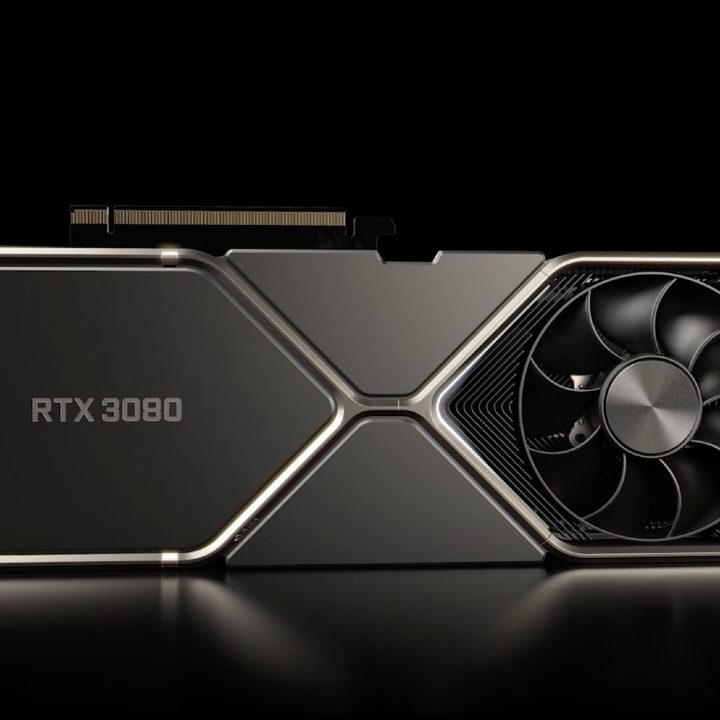
Amid announcements about the RTX Studio lineup and RTX graphics coming to Chromebooks on Monday, Nvidia held its first investors meeting for fiscal 2022. During the call, Nvidia Chief Financial Officer Colette Kress touched on the GPU shortage that has plagued the market since late last year. And the outlook isn’t good.

“Overall demand remains very strong and continues to exceed supply while our channel inventories remain quite lean. We expect demand to continue to exceed supply for much of this year,” Kress explained in a blog post.

Recommended Videos

Ampere’s launch has been very successful for Nvidia, driving Nvidia’s gaming division to new revenue heights. Kress explained that Nvidia believes that it has “sufficient supply to support sequential growth beyond Q1,” but that doesn’t mean it will be any easier getting a graphics card. It just means Nvidia has enough stock to sell more graphics cards than it did last quarter, and with demand still surging, that shouldn’t be an issue.

Stock shortages are only one part of the complex GPU shortage puzzle. Hefty tariffs on PC components have driven up the cost of the entire Ampere line, and manufacturer TSMC is still struggling to meet demand. Combine those issues with a thriving scalping market and mobs of miners and gamers looking for the latest releases, and the state of the GPU market starts to become to clear.

Nvidia didn’t talk about what it’s doing to address these problems during the investor call. The good news is that Nvidia has as much or more stock than it did last quarter, and although it’s hard to find a GPU, they’re still arriving in the hands of gamers. Once supply chains rebuild from the coronavirus, the best hope for gamers is that the crypto bubble eventually bursts and scalpers move on to the next shiny tech product. Regardless, it looks like the GPU market won’t turn the corner until late 2021, at the earliest.

Jacob Roach
Former Lead Reporter, PC Hardware
Jacob Roach is the lead reporter for PC hardware at Digital Trends. In addition to covering the latest PC components, from…
I went looking for budget-friendly gadgets and found 5 Prime Day deals under $50 worth buying
Useful tech upgrades don’t have to cost a fortune and these affordable Prime Day deals prove it.
best-amazon-prime-day-deals-under-50

Prime Day is full of tempting tech, but you don't need to blow your budget to pick up something useful. I've rounded up six deals under $50 covering handy accessories, smart home gadgets, charging gear, and quirky little devices that are easy to justify as impulse buys.

Plugable USB-C Hub 9-in-1 Adapter - $37.46 (25% off)

Read more
I’d buy one of these 4 gaming monitors while Amazon Prime deals are still live
Computer Hardware, Electronics, Hardware

A monitor is one of those PC upgrades I’m usually reluctant to rush into. Too many options, and once you start looking at OLED panels, ultrawides, 4K resolutions, and high refresh rates, prices can get expensive fast. That’s exactly why Amazon Prime sales are usually a good time to start looking.

I’ve reviewed the monitor deals currently available on Amazon, and these four caught my attention. There’s a little bit of everything here, from a 240Hz OLED that should be fantastic for gaming to a 34-inch ultrawide and even a monitor capable of hitting an absurd 480Hz. More importantly, all four are on sale right now, with one down as much as 44%.

Read more
Asus Zenbook 14 hits the shelves to tackle MacBook Neo with OLED, better ports, and other perks
At just $100 over the MacBook Neo, you get an OLED display, more versatile ports, biometric authentication on all models, and a backlit keyboard.
Asus Zenbook 14

The entry-point Asus ZenBook 14 is finally up for grabs in the US market, and this one is staring right at the MacBook Neo with a handful of practical perks. Just like the MacBook Neo, Asus' offering also comes with an all-metallic build that uses the proprietary Ceraluminum material that we have seen on pricier ZenBooks.

But there are a handful of upgrades on this $800 laptop that set it apart from its $700 competitor from Apple. The most notable one is a 14-inch OLED display, which offers a much better viewing experience than what you get on the MacBook Neo. The port selection is also pretty generous, as you get a pair of USB-C ports, a full-size USB Type-A port, and an HDMI port as well.

Read more