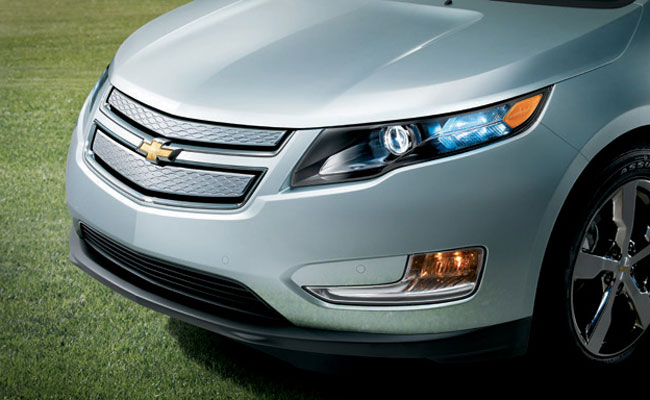
The first mainstream electric vehicle to hit American roads is almost here. After years of incubation, GM will begin selling the long-awaited Chevy Volt in November of this year. The company has been hyping the concept since all the way back in 2007, when its raked-back stature and muscular body lines suggested “green” cars didn’t have to look like wedges with wheels – and they could come from America, too. Time and concessions to safety, space and practicality have morphed the once-edgy Volt into a blocky sedan not unlike the Prius in its production form, but the post-pregnancy car retains its central promise: alleviating the need for gas entirely, as long as you don’t need to go far. Will the Volt serve as the first stepping stone to independence from oil, or is it destined to become yet another EV-1?
Decide for yourself with our quick guide to all the essential facts on Chevy’s upcoming Volt.
How is the Volt different from a Prius, or any other hybrid on the road today?
Two major design features set the Volt apart from anything else in mainstream dealerships today: It’s a plug-in hybrid, and it uses electric drive exclusively.
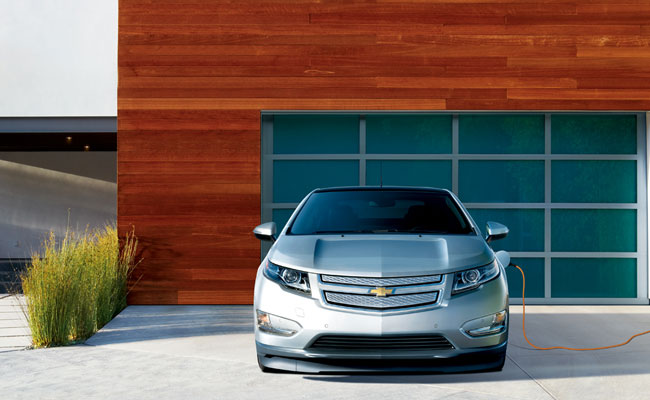 Unlike the Toyota Prius or any of the other cars we typically think of as hybrids, you can plug the Volt in at home to top off the batteries, then drive short distances without ever having to fire up the engine. For folks with short commutes, that means complete autonomy from gas, rather than just improved gas mileage.
More significantly, from an engineering standpoint at least, there is no mechanical connection between the engine and wheels: Even when the batteries run low and the engine kicks in, it only acts as a generator, supplying electricity to the motors that physically drive the car. It’s an electric car with an engine to extend range, not a gasoline car with electric motors to improve efficiency.
Where do I plug it in to charge it?
You can plug the Volt into the standard 120-volt outlet you probably already have in your garage – the same one you would use for a radio, a shop vac or a toaster, for that matter. Or, for a faster charge, you can hook the Volt up to 240 volts, like you would with a washer and drier. Not just any 240-volt outlet will do, though: You’ll need to purchase a special charging station that will need to be hard-wired into your house’s circuit breaker, rather than just plugged into an available outlet. Chevy hasn’t yet announced pricing or availability for this type of charger, but it’s likely more than one company will make them.
The plug for the Volt won’t look like one for any other appliance: It looks more like a gas pump handle than a plug. The standard is called SAE J1772, and it’s the same type of plug every new electric car will use.
 How long will it take to charge?
Chevy claims you can fully charge the Volt in 10 hours from a 120-volt outlet, or as little as four hours using the aforementioned 240-volt charger.
How far can it go without using gas?
Forty miles. Obviously, factors like weight in the car, driving habits, whether or not you run the air conditioning and even extreme temperatures will whittle that down.
So how many miles per gallon does it get?
There’s a short answer, and a smart answer.
Short answer: 48 miles per gallon.
Smart answer: It doesn’t make sense to measure the Volt in miles per gallon. Measuring in miles per gallon made sense when all cars – including other hybrids – used gasoline as their sole source of energy, but it’s not a meaningful metric to apply to a car that can be plugged in and driven for up to 40 miles without any gas at all. Hypothetically, you could plug in the Volt every night, drive short distances every day, and put on 100,000 miles without burning a drop of gasoline. On the other end of the spectrum, you could also be too lazy to ever charge it, drive it like any other hybrid, and get 48 miles per gallon. Real-life fuel economy, measured over a tank of gas or even the life of the car, will vary completely based on how often you’re able to charge it and how far you drive.
How much will it cost?
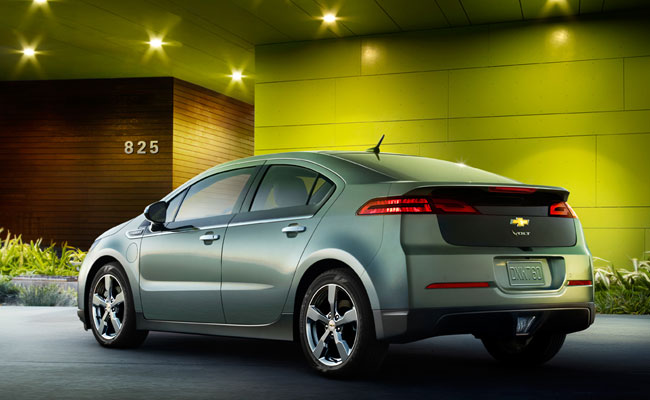
The Volt will cost $41,000 off the showroom floor, but a $7,500 federal tax rebate will bring that price down to $33,500. You’ll also have the option of leasing it for $350 a month for 36 months. Some reports indicate that dealerships could significantly mark up the Volt due to low numbers at launch. Edmunds.com contacted one dealer in California in hopes of preordering, only to find that it would mark up the Volt by $20,000.
When will it be available?
The Volt will begin showing up November 2010, but only in California, the Washington D.C. metro area, Michigan, Texas, New York, New Jersey and Connecticut. GM only plans to produce 10,000 the first production year, and nationwide availability won’t happen until late 2011. The 2012 model year should be much easier to get your hands on: GM has already announced it will ramp up production to 45,000 for that year.
Chevy Volt Photos