
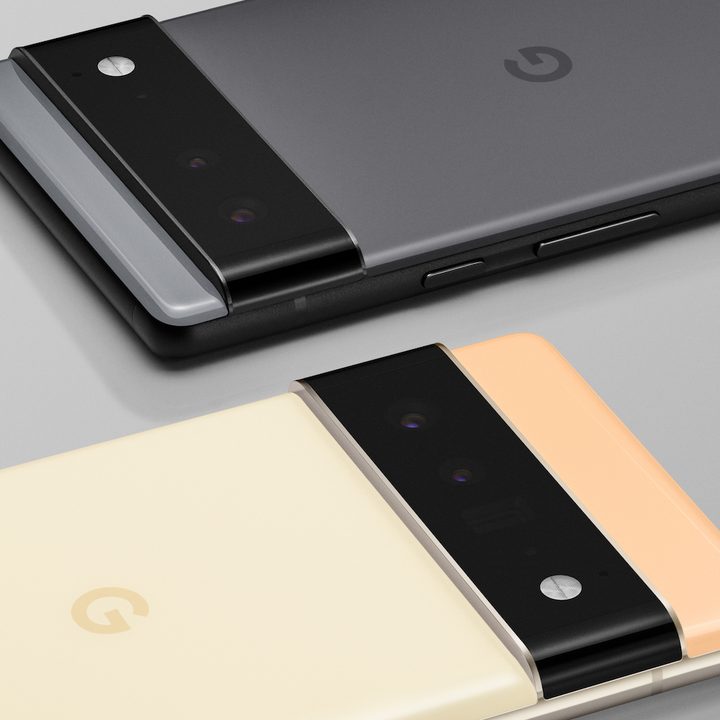
Google’s Pixel 6 and Pixel 6 Pro are launching soon as the company’s next flagship phones and prospective iPhone 13 competitors. While the company has already shared a lot of what the Pixel 6 will bring, a pair of reports add more color to what we already know about the Pixel 6. Coming from XDA Developers, the reports claim to detail the display, camera, and processor that will ship in Google’s next phone.
First, and most pertinent to the appropriately named Pixel, Google is updating the camera hardware of the Pixel 6 from the Sony IMX363 it had packed starting with the Pixel 4a 5G. Instead, it could be swapping it for Samsung’s 50MP GN1 image sensor and supplementing it with an ultrawide lens and a Sony 12MP IMX386 image sensor, paired with a Sony 48MP IMX586 sensor for telephoto capture.
Google previously shipped the Pixel 4 with a telephoto lens, but dropped that for an ultrawide lens in the Pixel 5. The Pixel 6 Pro will be the first Google phone to come with all three lenses. Google is also reportedly shipping it with a “baby mode” and motion deblur to enable capture of subjects in motion. This matches with earlier descriptions of Pixel 6 camera demos from Google when the company first announced the phone.
The second-most interesting confirmation regards the specs of Google’s Tensor chip. Google is introducing its first custom Pixel chip with the Pixel 6’s Tensor, and purported (but disputed) benchmarks appeared on Geekbench this week. XDA’s report claims that the core configuration and 12GB RAM seen in Geekbench matches that of real Pixel 6 Pro hardware, though it’s worth noting that the device name in benchmarks is easy to tamper with.
Last year, Google shied away from using powerful chips in its smartphones in favor of elevating the clean Pixel software optimization, and to a large degree, it worked. While the score in the disputed benchmark is decidedly unimpressive, earlier Galaxy S20 Fan Edition leaked benchmarks also debuted with lower scores than the actual phone would demonstrate. XDAs Tensor-focused report notes that the chip would be made up of 2 ARM Cortex-X1 clocked at 2.802GHz, 2 ARM Cortex-A76 clocked at 2.253GHz, and 4 ARM Cortex-A55 clocked at 1.80GHz. The use of ARM Cortex A76 chips over newer models like the A78 and the A77 is concerning, but Google has yet to confirm Tensor’s specs or explain its reasoning one way or the other.
Finally, comments on the display accompany a selection of smaller corroborations. First, the Pixel 6 Pro will have a QHD display with support for a screen refresh rate of up to 120Hz. XDA Developers adds that the Pixel’s refresh rate will drop back to 60Hz when the battery percentage is low, as is common with other phones. Google’s Pixel 6 will keep the Battery Share feature introduced on the Pixel 5, allowing it to charge such accessories as Pixel Buds. Contradicting text on an accessory page from retailer VoiceComm, XDA also claims the Pixel 6 will not come with the Active Edge feature that Google last shipped on the Pixel 4. Instead, Google will add a new Quick Tap feature, allowing Pixel owners to tap the back of the phone and trigger certain actions.
The Pixel 6 is now set for a fall launch, with rumors giving a possible date of October 19. It will launch with three color options for each model, and Android 12 will be preinstalled. You can read more about Google’s next phone here.


