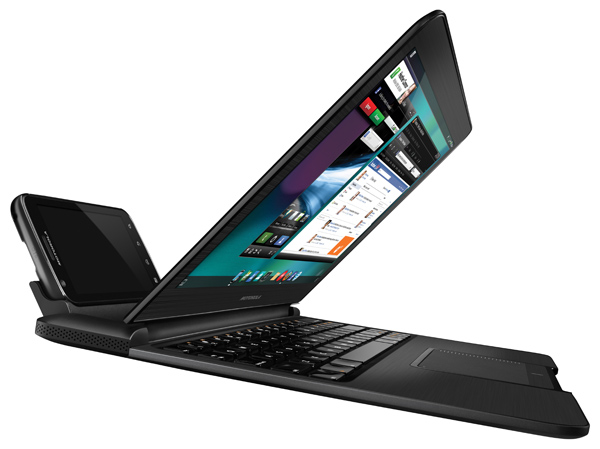
The Motorola Atrix 4G was one of our favorite devices at CES this year (pics and hands-on impressions here). The Android phone itself is sleek and powerful, but what separates it from the pack is the ability to dock with a laptop shell and become a full netbook, complete with Firefox and some productivity software. Better, the Laptop shell holds an 8 to 10 hour charge, and will actually charge the phone while it powers the dock. But the looming question has always been its price. In order for the Atrix 4G + Laptop Dock concept to make sense, it had to cost less to own than simply buying a phone and netbook separately. Unfortunately, as we feared, Motorola and AT&T have completely blown it. The Atrix 4G will hit shelves on March 6, but the Laptop Dock is too expensive to justify buying.
Assuming you’re looking to own a netbook and a smartphone, which is the market Motorola is targeting, here is what it costs to own a Motorola Atrix 4G and its accompanying Laptop Dock. For the purposes of picking plans that are actually usable, I have avoided AT&Ts 200MB data plans.
Cost to own an Atrix 4G + Wi-Fi Netbook
+ $200 for Motorola Atrix 4G (w/2-yr contract)
+ $600 for “DataPro 2GB smartphone data plan” ($25/mo for 24 months)
+ $315 for ASUS Eee PC Seashell 1005PE-MU27-WT 10.1-Inch Windows 7 Netbook
_________________________________________________________
$1,115 for two great devices with 2GB monthly data (find a way to tether the netbook yourself)
Cost to own an Atrix 4G + 3G connected Netbook
+ $200 for Motorola Atrix 4G (w/2-yr contract)
+ $600 for “DataPro 2GB smartphone data plan” ($25/mo for 24 months)
+ $10 for Samsung Go Windows 7 Netbook from AT&T (w/2-yr contract)
+ $1,440 for “DataConnect 5 GB” ($60/mo for 24 months)
_________________________________________________________
$2,250 for two connected devices with 7GB of monthly data
Cost to own the Atrix 4G + Laptop Dock
+ $600 for Motorola Atrix 4G + Laptop Dock bundle (w/2-yr DataConnect contract)
– $100 mail-in-rebate (obtainable after 60 days of mailing)
+ $1080 for required “DataPro 4GB for Smartphone with Tethering plan” ($45/mo for 24 months)
_________________________________________________________
$1,580 for one device that becomes a netbook and is limited to 4GB of data
The economics don’t make sense
Motorola is charging $500 to buy the Laptop Dock by itself without a plan. How on earth is it worth that much money? Most netbooks AT&T sells max out at $450, and netbooks outside of the carrier cost a lot less than that. Essentially, the Laptop Dock is a screen, a keyboard, and a battery. The device has no CPU, RAM, harddrive, or anything inside of it. This device should not cost more than $200 without a plan. That puts its price about $100 under the price of a standard netbook ($300-$350). Bundled with the Atrix 4G (and contract), it should cost about $300-$350. Bottom line, it should match the price of a netbook.
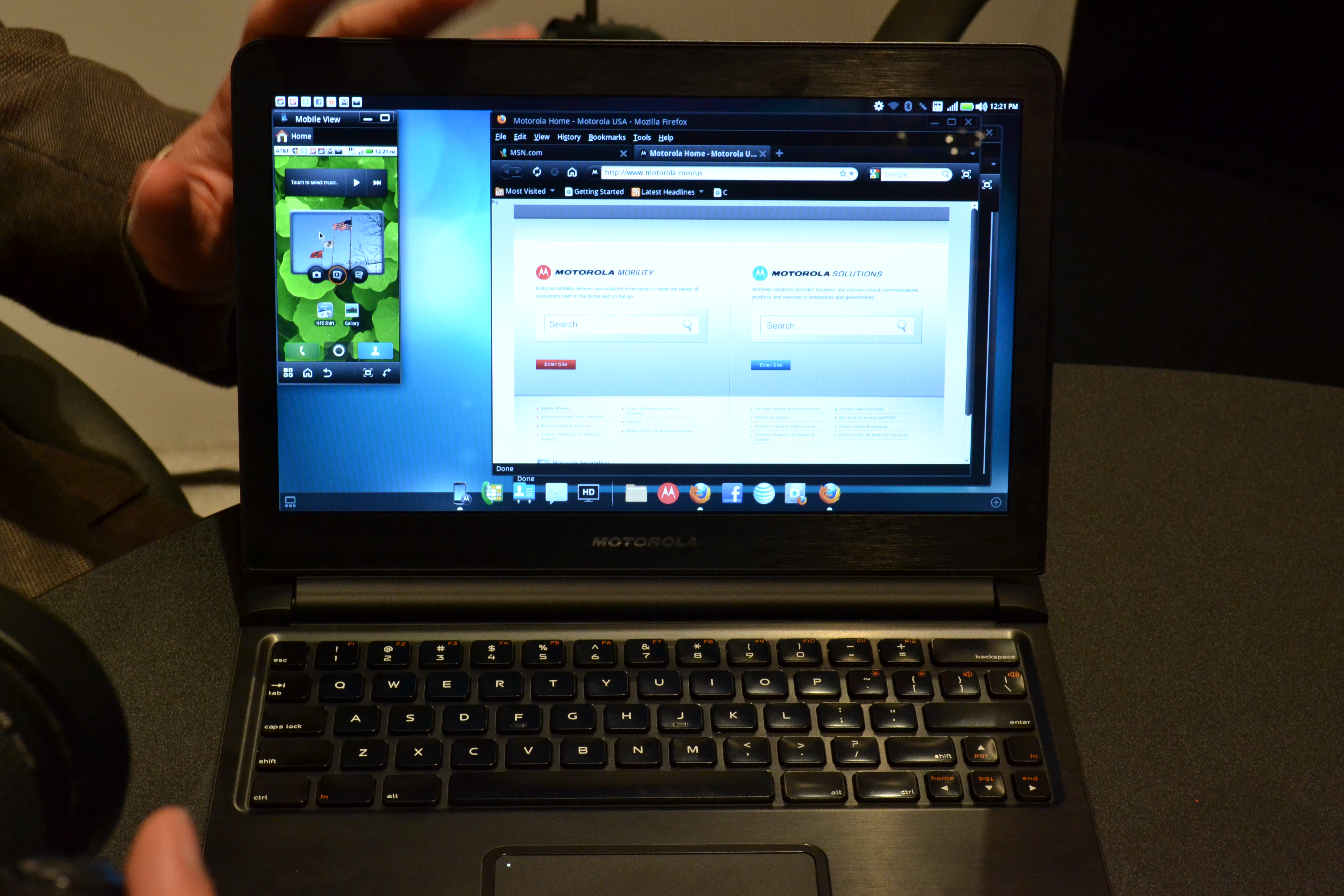
Why can’t it cost more? Well, because it offers a lot less. As novel an idea as the Atrix 4G Laptop mode is, it makes a weak substitute for a full-fledged netbook. It has a Firefox browser, 15-inch screen, and some basic document editing software (very basic), but doesn’t have great stats for a laptop. The gigabyte of RAM and dual-core processor are great, but the 16GB of internal memory, lack of a Webcam, low desktop resolution, and lack of available applications and games leave a lot to be desired. Since it runs a variant of Android/Linux in its Laptop mode, there are few to no applications built for it yet. Motorola will likely release a few, but unless the concept takes off in a major way, browsing the Web on a big screen with a keyboard is the only major advantage of the Atrix 4G Laptop. But at its current pricing, you could buy a decked out netbook and do a helluva lot more with it for much less money.
Conclusion
While the Atrix 4G + Laptop Dock is definitely a better deal than buying an Atrix 4G (or other Android phone) and a 3G connected Netbook, I can’t see how anyone who wasn’t rich, lazy, desperate, or a combination of the three would choose either option at AT&T’s current data and device prices. The most economical way to go is to buy a $200 Android smartphone like the Atrix 4G and also buy a Wi-Fi netbook like the ASUS Eee PC Seashell Windows 7 Netbook for $315. With some ingenuity, you can find a way to tether your phone and netbook without AT&T’s crazy tethering plan. Even if you do decide to go legit and opt for the $45-a-month tethering plan, it works out to $1,595, a mere $15 for a fully functioning Windows 7 computer that doesn’t need a phone jammed into it to operate.
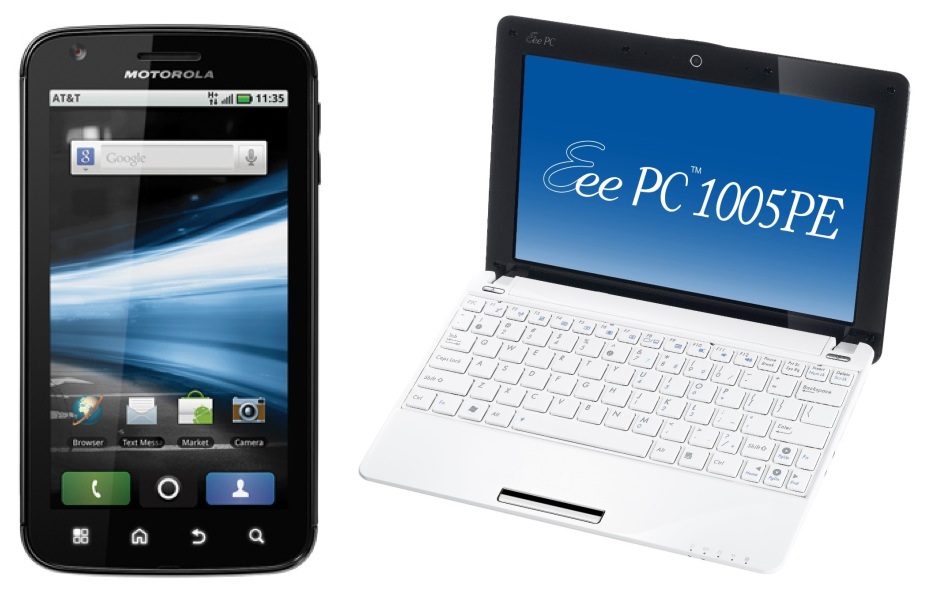
The Atrix 4G + Laptop is one of the coolest ideas we’ve seen, but the only way such a concept will take off is if it’s either A.) much better than a standard netbook and phone separately, or B.) cheaper than the alternatives. Sadly, The Atrix 4G + Laptop Dock is neither.