
  1. Home
  2. Computing
  3. Legacy Archives

Investors back call for Apple succession plan

Add as a preferred source on Google
Image used with permission by copyright holder

Apple’s Steve Jobs is widely regarded as key to the company’s resurgence from the doldrums of the computing industry to the upper echelons of consumer electronics and mobile technology, but with Jobs on his second medical leave since 2009, investors are becoming increasingly antsy about the future of Apple’s leadership. One of Apple’s larger investors, the Central Laborer’s Pension Fund, has asked Apple’s board of directors to adopt and disclose a formal succession planning police that, among other things, would require annual reporting on the company’s succession planning. And now, that proposal has gained support from advisory firm Institutional Shareholder Services, which claims disclosure would enable investors to “judge the board on its readiness and willingness to meet the demands of succession planning.”

Apple’s board of directors is against the proposal, claiming in a filing with the U.S. Security and Exchange Commission last month that it has already has a succession plan in place, and arguing that disclosing that information would give competitors an unfair advantage.

Recommended Videos

The measure will be one of two shareholder policy proposals to be voted on at Apple’s company meeting. The other proposal would change how voting is handled for uncontested positions on Apple’s board of directors. Apple is also against that proposal.

On taking his current leave, Jobs indicated that he would remain involved in strategic decisions for the company, but COO Tim Cook would once again take over managing day-to-day operations for the company.

Geoff Duncan
Former Contributor
Geoff Duncan writes, programs, edits, plays music, and delights in making software misbehave. He's probably the only member…
Topics
Google rejects alarming report that says its Search AI tools are unsafe for kids
The company says it couldn’t reproduce many of the responses cited and argues that the testing doesn’t reliably measure product safety
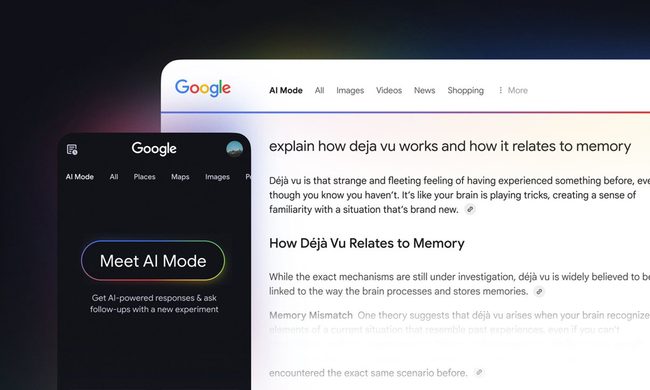
Google AI Mode on mobile and desktop

Google has rejected a new report that labels its AI-powered Search features an “unacceptable risk” for children and teenagers.

Common Sense Media’s Youth AI Safety Institute gave AI Overviews and AI Mode its lowest overall rating. The two tools performed poorly against seven of the institute’s eight AI safety principles and failed every category involving potentially severe harm. Google says those findings came from searches that don’t resemble how people normally use its products.

Read more
What should you look for in a printer for high-volume home printing?
From ink costs to wireless printing and scanning, here's how to pick a printer that keeps up with busy households without constant cartridge replacements.
Computer Hardware, Electronics, Hardware

This post is brought to you in paid partnership with HP

Most people find out their printer wasn't built for them at the worst possible moment. You need to print something urgent (a permission slip, a tax form, a boarding pass) and you're out of ink. Or low on magenta, which for reasons no one has satisfactorily explained, also blocks you from printing a black-and-white document. You order a cartridge, wait two days, and finally print the thing you needed on Tuesday the following Thursday.

Read more
This AI doesn’t just translate languages, it invents brand-new ones
Forget translating, this AI builds languages from scratch, sounds, grammar, and all.
ConlangCrafter open on laptop

Ever wondered what a language built entirely by AI would sound like? A team of researchers just made a tool that answers exactly that question. A new paper published in the Proceedings of the Association for Computational Linguistics introduces ConlangCrafter, a tool that uses large language models to build brand new languages complete with their own sounds, grammar, and vocabulary.

Morris Alper, the paper's lead author and soon-to-be assistant professor at the University of Miami, explained that the goal was to create languages with features you don't normally find in the ones we already speak. 

Read more