  1. Home
  2. Computing
  3. Entertainment
  4. Legacy Archives

FBI takes down alleged King’s Speech, Black Swan pirate

Add as a preferred source on Google

Wes DeSotoAccording to confidential court records that Wired has accessed, the FBI raided the home of Wes DeSoto, who agents believe first shared The King’s Speech and Black Swan on The Pirate Bay in January. DeSoto is a member of the Screen Actors Guild and is being investigated for any involvement in TiMPE, which has made a name for itself in pirating movies before their release dates. According to the sealed documents, the FBI searched DeSoto’s home for “records, documents, programs, applications or materials relating to ‘TiMPE’ and ‘thepiratebay.org.’”

DeSoto told Wired he has no connection with the group. “I’m nobody in the online file sharing world.,” he claims. “This investigation is excessive and a waste of tax dollars.”

Recommended Videos

If convicted, DeSoto could face up to three years in prison. His SAG status is what has made him a prime suspect: The organization sends members codes so they can screen films before their release dates, and production studios had placed watermarks on the pre-released films. When someone under the handle mf34inc told Pirate Bay commenters that “SAG now sends out iTunes download codes for screens…I’m a SAG member and I thought I’d share these,” suspicions were aroused and authorities began paying attention.

While mf34inc began sharing Rabbit Hole, investigators found and traced the IP address, leading them to DeSoto.

DeSoto is an actor and graphic and apparel designer living Los Angeles. According to IMDB, he recently appeared on an episode of CSI, playing the role of “Werewolf Enthusiast.”

Molly McHugh
Former Social Media/Web Editor
Before coming to Digital Trends, Molly worked as a freelance writer, occasional photographer, and general technical lackey…
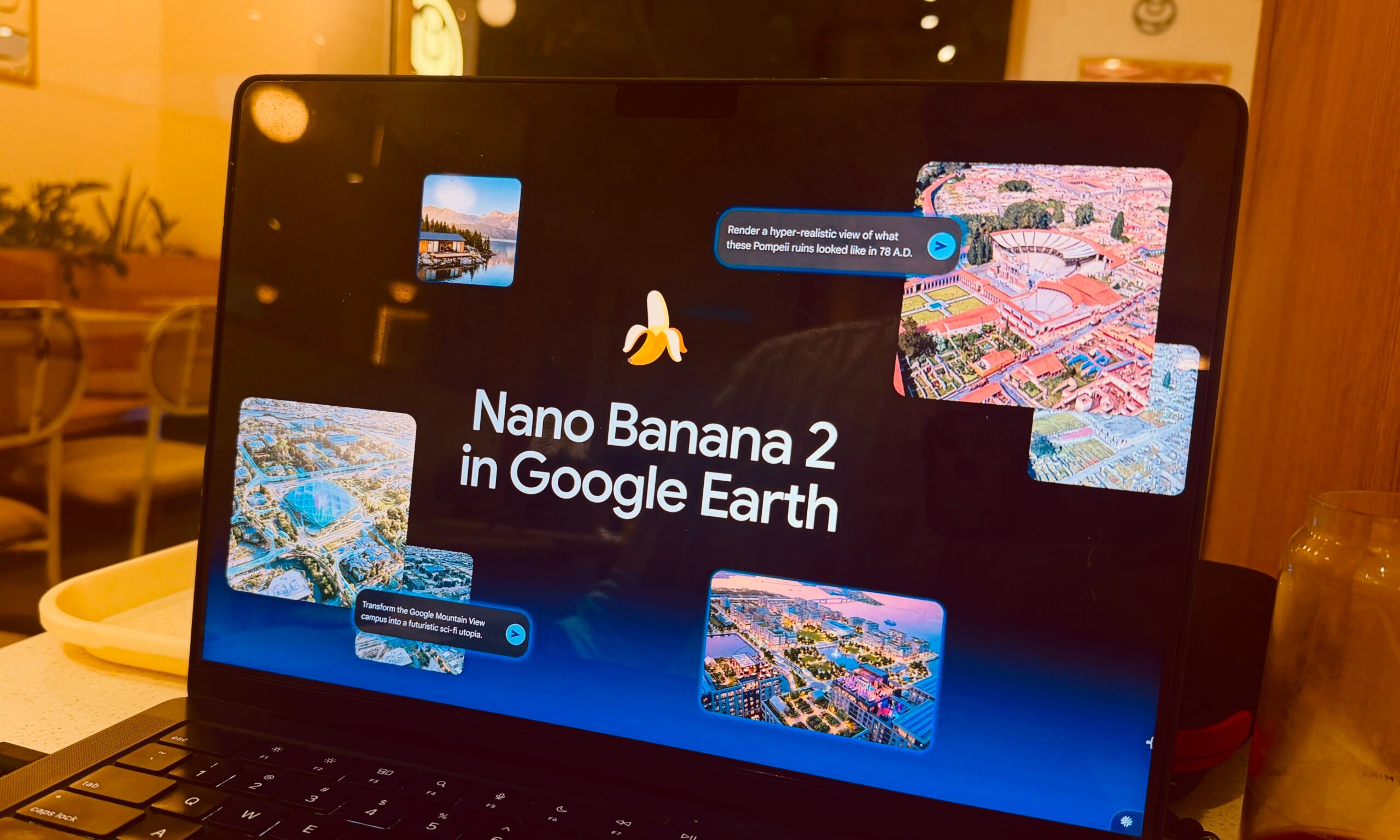
Google Earth’s AI misadventure lasted only a day. It was a tale of dangerous ignorance.
Nuclear reactors, tanks, and historical destruction on a life-like satellite map? Yeah, that's bad.
Nano Banana AI image generator representation.

Technology behemoths are clearly not reading the room, or they are just moving faster than they should when it comes to AI deployment. Google has already stuffed its Gemini AI in every corner of its software stack, from Android to daily productivity tools like Gmail that are used by hundreds of millions of users every day. AI is everywhere. Not all of it is bad, mind you. But in a few places, it just feels forced.

In its latest AI-fication experiment, the company targeted Google Earth. The idea was to let the audience use its Nano Banana 2 AI image generator and make images that can be placed on the map view. On paper, it's a cool idea. What would the Colosseum of Rome look like in your urban neighborhood? Yeah, fun stuff like that.

Read more
AMD is apparently gearing up to raise GPU prices right after Nvidia’s steep hike
AMD has reportedly told AIB partners about a price hike that goes into effect in. August.
AMD RX 7800

AMD is next in line to raise the asking price of its Radeon GPUs, merely days after the news of a similar hike coming for Nvidia graphics cards started making waves. As per ChannelGate on Weibo (h/t VideoCardz), AMD has informed its board partners that the price of GPU and memory bundles will go up by at least 10% in August.

Is a similar price hike coming for standalone graphics cards? I won't be surprised if that happens. The situation is so bad that AMD is planning to bring back graphics cards with 4GB of onboard memory. AMD just introduced the RX 9050 GPU, which costs $279. Notably, it's just $20 less than the RX 9060 XT that offers double the graphics memory.

Read more
Microsoft will make Windows work well with just 8GB RAM. We desperately need it
The dream of a reliable and affordable Windows laptop hinges on the next milestone at Microsoft.
Surface laptop on wooden table

The year 2026 has marked a huge course correction for Microsoft after years of frustrating users with plenty of confusing processes, unoptimized UI elements, and just the generous bloatware that can bring any Windows system to a crawl. Microsoft has finally shifted into a new phase. From fixing the right-click behavior to speeding up the Search system, the company has fixed plenty of papercuts.

The next major milestone is making Windows 11 run smoothly on Windows PCs with just 8GB of RAM. That directly means entry-level and budget laptops will at least get the basics right, even if that means sacrificing the on-device AI bells and whistles. Let's face it. The increasingly AI-first approach to computing on a Windows 11 machine is a little too taxing on the hardware at hand.

Read more