1. Home
  2. Cars
  3. Entertainment
  4. Legacy Archives

Chitty Chitty Bang Bang supercar hits auction blocks

Add as a preferred source on Google
Chitty 2
Image used with permission by copyright holder

Youre sleek as a thoroughbred, your seats are a featherbed, you’ll turn everybody’s head today!

The wonder car from Roald Dahl and Dick Van Dyke’s classic 1968 musical is going to be auctioned off on May 15 in Los Angeles. Bidding for Chitty Chitty will begin at $1,000,000.

Recommended Videos

In the movie, off-beat inventor Caractacus Potts (Van Dyke) and his children speed through the air and navigate the seas as the car transforms to foil Baron Bomburst’s schemes (that Child Catcher was super creepy). Of course, in the real world, no single car would be able to play all those roles. Many cars were created in order to simulate Chitty Chitty Bang Bang’s various abilities — there were non-driving cars for the flying and floatation scenes as well as other stunt cars.

In 1973, one of the Chitty versions with wings and propeller was sold for $37,000 at an auction in Florida.

Chitty 3
Image used with permission by copyright holder

The car being auctioned off on May 15 is the one used for the road-driving shots and principal scenes. It’s also the only one registered with the GEN 11 plates, which perhaps make it the truest incarnation of the make-believe Chitty Chitty Bang Bang.

The car was built by Alan Mann, head of the Ford racing team at the time, and was constructed on a custom ladder frame chassis. The sellers say the boat deck where the passengers sat was made by boat builders in Buckinghamshire, and the dash was made from a British WW1 fighter plane.

Alan Mann’s Chitty has a Ford 3-liter V-6 engine in it and an automatic transmission, though add-ons make it look convincingly like a racing car from the 1910s. Its fully-functional, and the sellers say its in “excellent operational condition” .

Jeff Hughes
Former Digital Trends Contributor
I'm a SF Bay Area-based writer/ninja that loves anything geek, tech, comic, social media or gaming-related.
Your next car’s software update could become its biggest security risk
Your next car could receive updates like your smartphone. That's also becoming a cybersecurity nightmare.
OTA technology allows manufacturers to remotely deliver software updates.

Modern cars are no longer machines that stay the same after they leave the showroom. Increasingly, they're becoming software-defined vehicles that receive new features, bug fixes, and security patches wirelessly, much like smartphones. But while over-the-air (OTA) updates have made vehicle maintenance easier and cheaper, cybersecurity experts are warning that the same technology could also become one of the automotive industry's biggest security challenges.

Researchers and policymakers are now calling for stronger oversight as connected vehicles become increasingly dependent on remote software updates. Their concern isn't just about hackers stealing personal data. It's about someone potentially interfering with the operation of a moving vehicle.

Read more
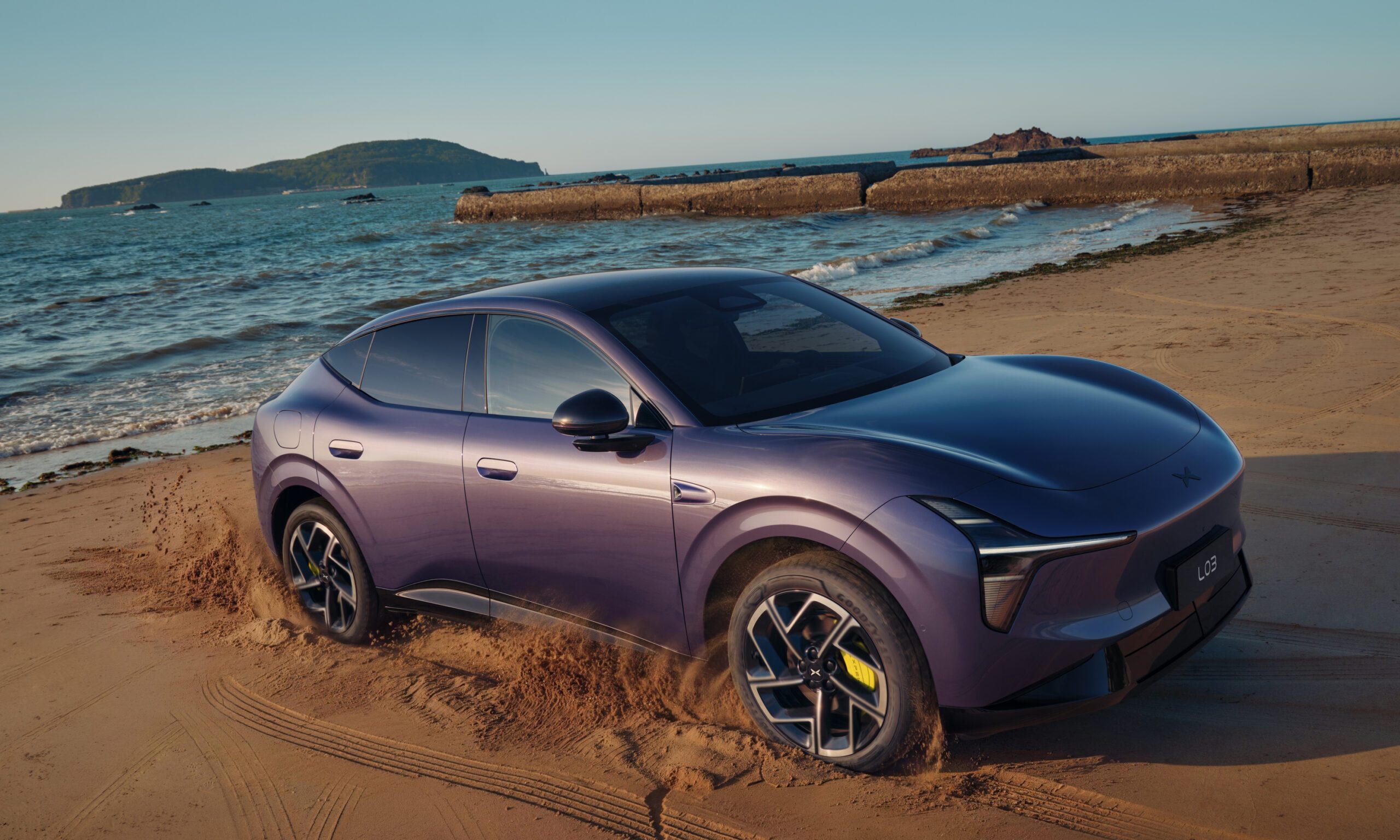
This sleek Chinese EV pairs supercar styling with three AI brains
The Xpeng L03 is an AI supercomputer disguised as a stylish family SUV
Xpeng L03

Xpeng’s latest electric vehicle carries enough processing power to make the term "smart car" actually sound more realistic than it actually is. The new Xpeng L03 debuted simultaneously in Europe and China on July 16, with the company presenting it across 65 markets. Available as a fully electric vehicle and an L03 Power X range-extender, the coupe-SUV is Xpeng’s most internationally focused model so far. Market-specific prices and sales dates remain unannounced.

Three AI chips and Google Maps built right in

Read more
A new sodium battery posts wild four-minute charging numbers, but don’t expect it in an EV yet
The breakthrough could improve fast charging and battery life, but the study hasn’t demonstrated those results in a production-sized pack
EV Charger

A new sodium-metal battery has posted a charging number that makes today’s EVs look painfully slow. In laboratory testing, the cell operated at a 15C rate, equivalent to completing a charge or discharge in roughly four minutes.

That doesn’t mean researchers plugged in an electric car and watched it fill up before the driver finished buying coffee. The result came from a small experimental cell using a new quasi-solid electrolyte, while the larger pouch-cell prototype delivered far less dramatic performance.

Read more