1. Home
  2. Phones
  3. Mobile
  4. News

Samsung Galaxy S22 Ultra render leak suggests a Galaxy Note replacement

Add as a preferred source on Google

As we head towards 2022, a slew of smartphone launches awaits us. Ahead of the official unveiling, a number of leaks surrounding the next-gen OnePlus smartphones have already popped online. Now, it’s Samsung’s turn with the leak of a Galaxy S22 Ultra render. The takeaway from that one image is — it might be the next Galaxy Note replacement.

Popular tipster Evan Blass aka @EvLeaks uploaded a render of the upcoming Galaxy S22 Ultra on Twitter. The alleged render reveals the front and back sides of the device. According to the image, the upcoming Ultra smartphone will come equipped with curved edges — both front and back. It could result in a much more ergonomic fit in the hands. However, the flat corners might spoil the in-hand comfort that you’d get from a phone with curved corners.
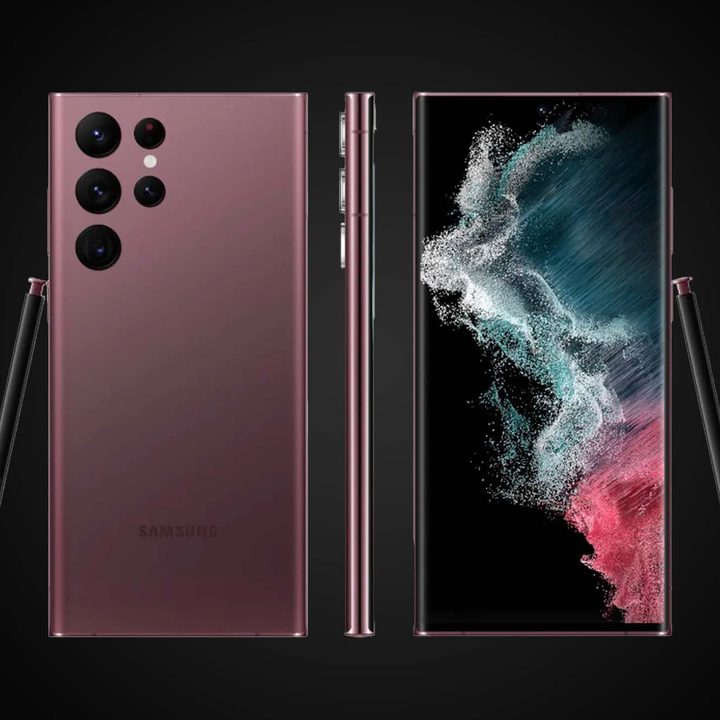
Galaxy S22 ultra render revealing the front and back of the smartphone.
Image used with permission by copyright holder

The live image reveals the inclusion of an S-Pen, which is likely to be docked inside the phone this time around. To recall, the Galaxy S21 Ultra supported S-Pen but didn’t have a place to keep the stylus in the phone. A docking mechanism of the S-Pen inside the Galaxy S22 Ultra suggests a Galaxy Note replacement. After all, a Note smartphone doesn’t make sense if its exclusive feature is making its way to the S-series.

Recommended Videos

The render also suggests a boxy design just like on the Note series with a revamped camera module — there isn’t one. The cameras reside inside the body instead of a separate camera module. It showcases five rear cameras and a single selfie shooter inside a punch-hole cutout, which Samsung calls the “Infinity-O display.” We can expect a 120Hz LTPO AMOLED panel with a QHD+ resolution on the upcoming smartphone. The rest of the specifications and launch date remains under wrap as of now.

Prakhar Khanna
Prakhar Khanna is an independent consumer tech journalist. He contributes to Digital Trends' Mobile section with features and…
OnePlus is gone, and Android phones just became more boring in the US
OnePlus 13 vs OnePlus 11.

I wasn't expecting a smartphone brand's exit to hit me this hard, but OnePlus leaving the US and Europe genuinely did. The company has already confirmed that it will no longer launch new products in either market, although existing customers will continue receiving software updates and after-sales support. So while OnePlus isn’t disappearing altogether, it is walking away from two of the biggest smartphone markets in the world.

To be honest, the Android market in the US already feels limited. If you’re shopping for a flagship, your realistic choices almost always begin with Samsung and end with Google. OnePlus was one of the very few brands sitting in between, offering something that didn’t quite look or feel like everything else. And that’s exactly what I’m going to miss.

Read more
A niche iPhone browser quietly fixes my biggest problem with Google Search
Quiche Browser open on iPhone

If there's a new browser, email app, or note-taking app to try, chances are I've already installed it. Like every other productivity nerd, I'm always chasing the perfect setup. That's how I stumbled upon Quiche Browser. It was already close to replacing the Arc Search for me on the iPhone, but its latest update finally pushed it over the edge, earning it a spot as my default browser.

What makes Quiche so good

Read more
Google has to play fair with AI rivals on Android, and that could be good news for your wallet
A new ruling strips Gemini of its exclusive access to deep Android integration, opening the door for cheaper AI models to offer similar functionality for less.
A person using Google Gemini on the Google Pixel 9a.

After forcing Google to open up Android to third-party app stores, the EU is back with a new target, and this time it's Gemini's home-field advantage. The European Commission ordered Google on July 16 to give rival AI apps the same deep access to Android that's currently exclusive to Gemini. The order falls under the EU's Digital Markets Act (DMA), and it directs Google to stop treating its own assistant as a first-class citizen on a platform it controls.

What Google now has to hand over

Read more