Intel has revealed some more information about its highly anticipated Arc discrete graphics at its CES 2022 keynote. The major announcement is that the product is indeed shipping, “marking a new era in the discrete graphics market,” according to Intel.
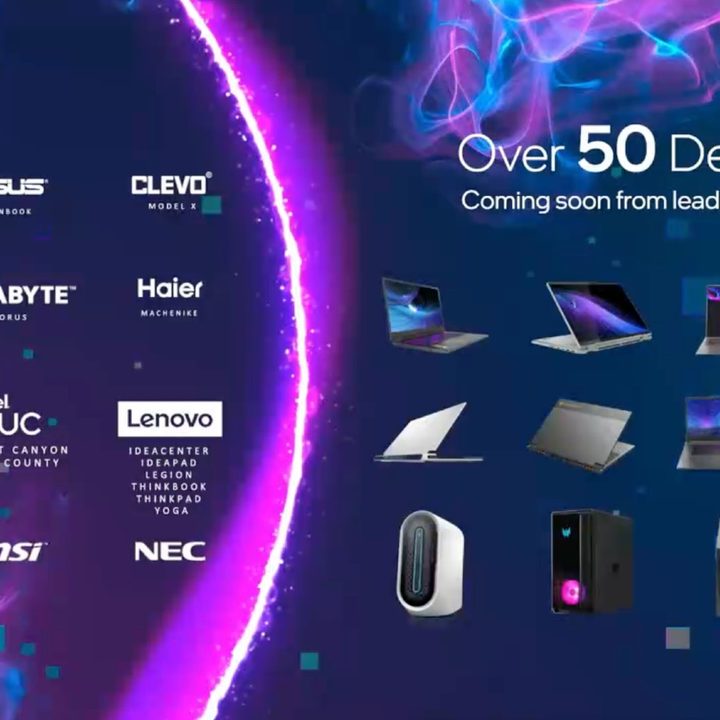
Intel says more than 50 new mobile and desktop designs will use Intel Arc graphics, including products from Acer, Asus, Clevo, Dell, Gigabyte, Haier, HP, Samsung, Lenovo, MSI, and NEC.
That includes most of the big players in the PC world, which is a good sign for Intel. The company didn’t provide any more information on what types of machines these would be, though it did mention in its press release that Arc graphics would make for “an exciting time for gamers and creators.”
One of the PCs at CES 2022 was announced with Intel Arc graphics was the Acer Swift X 16. It’s a thin-and-light ultrabook known for squeezing a lot of performance out of a fairly small and affordable little machine. It’s a good candidate for the Intel Arc treatment — and based on how it was configured by Acer, it could draw comparisons to the mobile Nvidia RTX 3050 Ti.
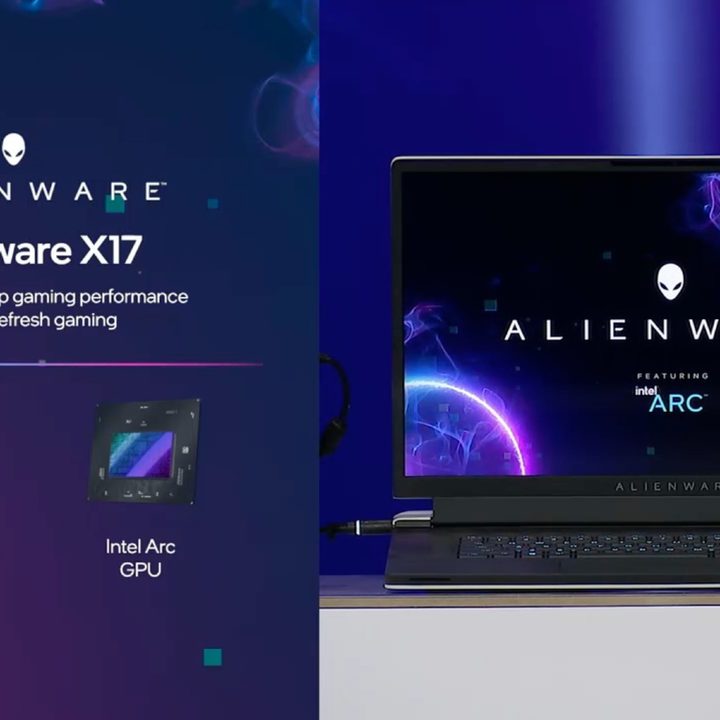
Other laptops announced by Intel with Arc Graphics include the Alienware x17 and a Lenovo Yoga.
Despite the fact that Intel is shipping this new product, many technical details on Intel Arc remain unconfirmed.
Intel did announce support for the PC game Death Stranding Director’s Cut for its upscaling tech, XeSS.
Intel claims that it has continued to see more adoption of XeSS from game studios. So far, the list of studios committed to support the technology include 505 Games, Codemaster, EXOR Studios, Fishlabs, hashbane, IOI, Illfonic, Kojima Productions, Massive Work Studio, PUBC Studios, Techland, Ubisoft, and Wonder People.
XeSS is Intel’s answer to Nvidia DLSS (Deep Learning Super Sampling), which uses A.I-enhanced upscaling to improve frame rates in games.
Intel has also detailed the advantage of using both an Intel processor and Intel graphics. It’s a technology called Intel Deep Link, which has been use in integrated Intel graphics systems since 2020. Deep Link helps the two components work together more efficiently with features like power sharing, faster video encoding, and A.I.-enabled image and video workloads.
Intel says the combination of “compatible” Intel Core CPUs and Intel Arc graphics will result in “new capabilities and better performance.”
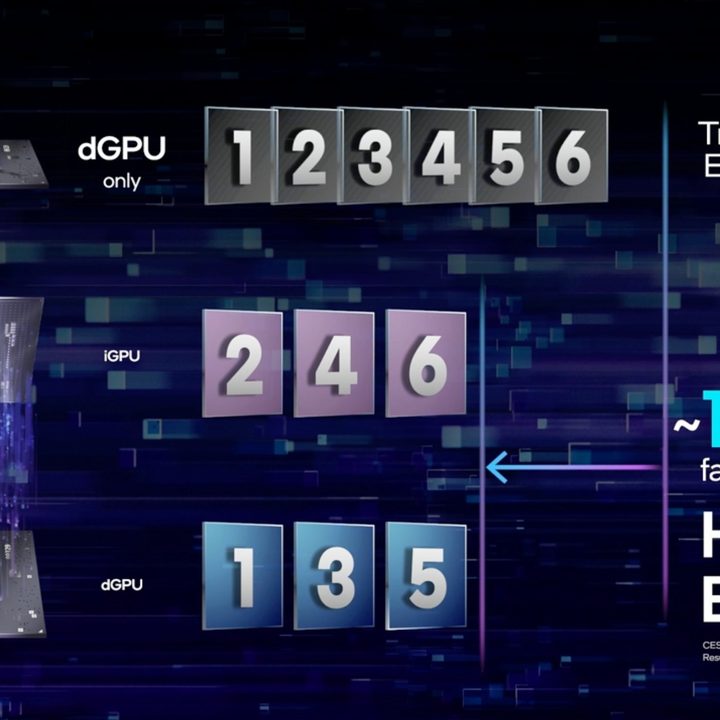
The first example of such a feature is Deep Link Hyper Encode, which allows the integrated and discrete graphics to work simultaneously to accelerate the encoding of a single video stream. Blackmagic Design has already announced support for Deep Link Hyper Encode in DaVinci Resolve software.
“We are excited to now optimize DaVinci Resolve for the latest Intel Arc graphics and next-generation Quick Sync video technology,” said Rohit Gupta, director of DaVinci Software Engineering.
There’s a long road ahead for Intel Arc graphics, especially with the dominance of Nvidia and rising challenges from AMD and Apple. Clearly, Intel is slowly building support for its partners to ensure the success of these new graphics. We just hope to hear some of the missing technical details about these new graphics soon, as Intel has said in the past that they are due out in the first quarter of 2022.