  1. Home
  2. Computing
  3. News

Windows 11 had a big four months. Here’s what’s coming next

Add as a preferred source on Google

It’s been about four months since Windows 11 first launched, and Microsoft is now talking about what’s next for its new operating system.

As many rumors suggested, arriving this year are features like Android Apps, taskbar improvements, and redesigned core applications. Yet in detailing those new features for Windows 11, Microsoft also talked about some trends in the Windows space regarding hybrid work and learning, entertainment, and other consumer habits for everyday tasks.

Recommended Videos

At the top of that list is an interesting tidbit on Windows users upgrading to Windows 11. People are apparently accepting the upgrade offer to Windows 11 at twice the rate of Windows 10. The company also claims that there has been a sixfold increase in communication apps on Windows and that people are spending 40% more time on their Windows 11 PC versus Windows 10.

Other Windows tidbits include 70% more people streaming content across Hulu, Netflix, and YouTube on Windows. Even monthly gaming minutes on Windows grew over 35%, according to Microsoft. And overall time spent on Windows is up 10% over prepandemic levels.

A man works on a Windows tablet.
Image used with permission by copyright holder

As far as the details on the new features, Microsoft is hoping to launch a public preview of Android apps on Windows 11 through the Microsoft Store. Windows 11 will also soon get new call mute and unmute features in the taskbar, and easier window sharing features. Microsoft is even planning on bringing back the weather to the taskbar and will launch a new media player and redesigned Notepad app, both of which were previously in testing.

“Windows will continue to be the backbone for innovation, a destination for gaming, creativity, and exploration, and a gateway to the Metaverse,” said Panos Panay, chief product officer for Windows and Devices.

Today marks one of the first times that we’ve officially seen numbers from Microsoft about Windows 11’s popularity. Previously, Microsoft CEO Satya Nadella only indicated he was “delighted” with the popularity, indicating that the OS had more “usage intensity.”

Some other details from today’s Microsoft post indicate that the PC is still quite popular, even with issues in the supply chain industry. Microsoft noted that two times as many people are using their PC to shop, spending 40% more time shopping. It also detailed that global PC shipments surpassed 340 million in 2021, with Windows now powering 1.4 billion monthly active devices.

Arif Bacchus
Arif Bacchus is a native New Yorker and a fan of all things technology. Arif works as a freelance writer at Digital Trends…
The Mac Pro nearly received an M3 Extreme chip twice as powerful as M3 Ultra
High production costs likely killed Apple’s M3 Extreme plans
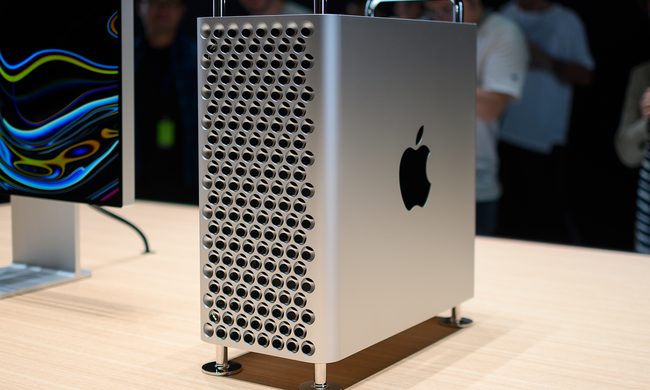
Apple's Mac Pro on a table at a press event.

Apple discontinued the Mac Pro earlier this year, ending a 20-year run for a computer that once represented the very best of the company’s desktop lineup. However, Apple reportedly had much bigger plans for the machine before ultimately replacing it with the Mac Studio.

According to Bloomberg’s Mark Gurman, Apple developed an M3 Extreme chip that could have offered twice as many CPU and GPU cores as the M3 Ultra. The processor was intended to sit above the Ultra tier and could have finally given the Mac Pro the performance advantage it badly needed. Apple eventually abandoned the chip due to concerns over production costs and limited demand for such an expensive machine.

Read more
Hidden prompts can secretly rewrite an AI’s memory, and researchers say that’s a serious problem
Researchers discover AI attack that rewrites an assistant's long-term memory
Chatbot on a smartphone.

Large language models are getting better at remembering us. Whether it's your preferred writing style, recurring tasks, shopping habits or project deadlines, AI assistants are increasingly storing long-term memories to make future conversations feel more personal and useful. But according to new research, that same feature could become one of AI's biggest security vulnerabilities.

Researchers from New Mexico State University have demonstrated a new attack called GhostWriter, capable of secretly planting false memories inside AI agents. Rather than stealing information outright, the attack manipulates what an AI remembers, potentially causing it to make dangerous decisions long after the original attack has taken place.

Read more
This experiment shows how easy it is to poison an open-weight AI model for under $100
This research raises new doubts about trusting open weight AI models.
Computer, Electronics, Laptop

Open-weight AI models have been having a moment lately. Just this month, Moonshot's massive Kimi K3 model landed close behind Claude Fable 5 and GPT 5.6 Sol in several benchmarks, all while remaining fully open-weight and downloadable by anyone.

However, Katie Paxton-Fear, a cybersecurity lecturer at Manchester Metropolitan University and staff security advocate at Semgrep, managed to poison an open-weight model and proved how easily that openness can be turned against you (via The Register).

Read more