  1. Home
  2. Computing
  3. Legacy Archives

Oracle seeking billions from Google over Java infringement

Add as a preferred source on Google
Google Android Logo
Image used with permission by copyright holder

Last August, Oracle filed suit against Google claiming the company’s Android operating system infringed on Java patents and copyright. This week, for the first time, Oracle has started to lay out the amount of damages it is seeking in the case—and according to a court filing this week, the amount is in “the billions of dollars.”

Google’s Android operating system includes the Dalvik virtual machine, a Java-compatible system that was developed independently of Sun’s Java virtual machine—both enable computers to run Java software. Oracle acquired Sun Microsystems in 2009, and is now pursuing Google for infringement, claiming the Dalvik VM infringes on patents the company acquired along with Sun. Oracle also alleges Google was fully aware of the Sun patents, and even hired some of Sun’s Java engineers.

Recommended Videos

In a letter to the court earlier this month, Google characterizes Oracle’s damages claims as inflated and inaccurate, since Google believes they are based on legal errors. According to Reuters, Google described Oracle’s claim of billions in damages as “unreliable and results-oriented.”

In an unusual move for a company that prides itself on transparency, Google asked the court to keep particular details of Oracles’ damages claim private; however, the judge in the case has ordered Google to publicly reveal information on damages for the record today.

The amount of damages being sought in the case can be significant: if a potential judgment in the billions of dollars is hovering over the future of Android, it may dissuade developers and hardware makers from continuing to embrace the platform since, if Google is found liable, it may have little choice but to pass that cost down to others. A finding in favor of Oracle would also likely see Oracle earning a royalty on every Android device sold—a burden on Android’s “open” platform and an ongoing cost that would likely be passed along to consumers.

Neither Oracle nor Google have so far responded to a request for comment.

Geoff Duncan
Former Contributor
Geoff Duncan writes, programs, edits, plays music, and delights in making software misbehave. He's probably the only member…
Lenovo’s Googlebook lineup could include two laptops, a 2-in-1 tablet, and an AI mouse
Images have emerged online giving us our first look at Lenovo’s upcoming Googlebooks
Googlebook

Google announced Googlebook at I/O in May, but we are still waiting to see what the finished hardware will actually look like. The first devices are expected this fall, and new images published by Android Headlines may have given us an early look at what Lenovo has planned.

Lenovo appears to be preparing at least three Googlebooks, including two traditional laptops and a detachable 2-in-1 tablet. There is also a new wireless AI mouse that seems to have been designed specifically for the platform.

Read more
Shopping for back-to-school? I’d recommend these GaN chargers for saving space and packing more power
From a $9 spare to a $56 desk hub, these chargers cut down on cable clutter so that you can focus on your studies, not how cluttered your desk looks.
Best GaN chargers in 2026 for back to school shopping.

Between a phone, a laptop, a tablet, and perhaps a pair of wireless earbuds that require charging every day or every few days, most students are packing multiple chargers for move-in day. Those big, heavy bricks take up valuable backpack space that could otherwise be free for carrying more items. 

However, GaN chargers fix that problem in two ways. First, they deliver the same amount of power from a much smaller body, thanks to gallium nitride transistors. Furthermore, if you're willing to spend a little more upfront, you can get a high-capacity, multi-device charger capable of powering your entire digital ecosystem from a single wall outlet, something that could be very useful for a dorm room.

Read more
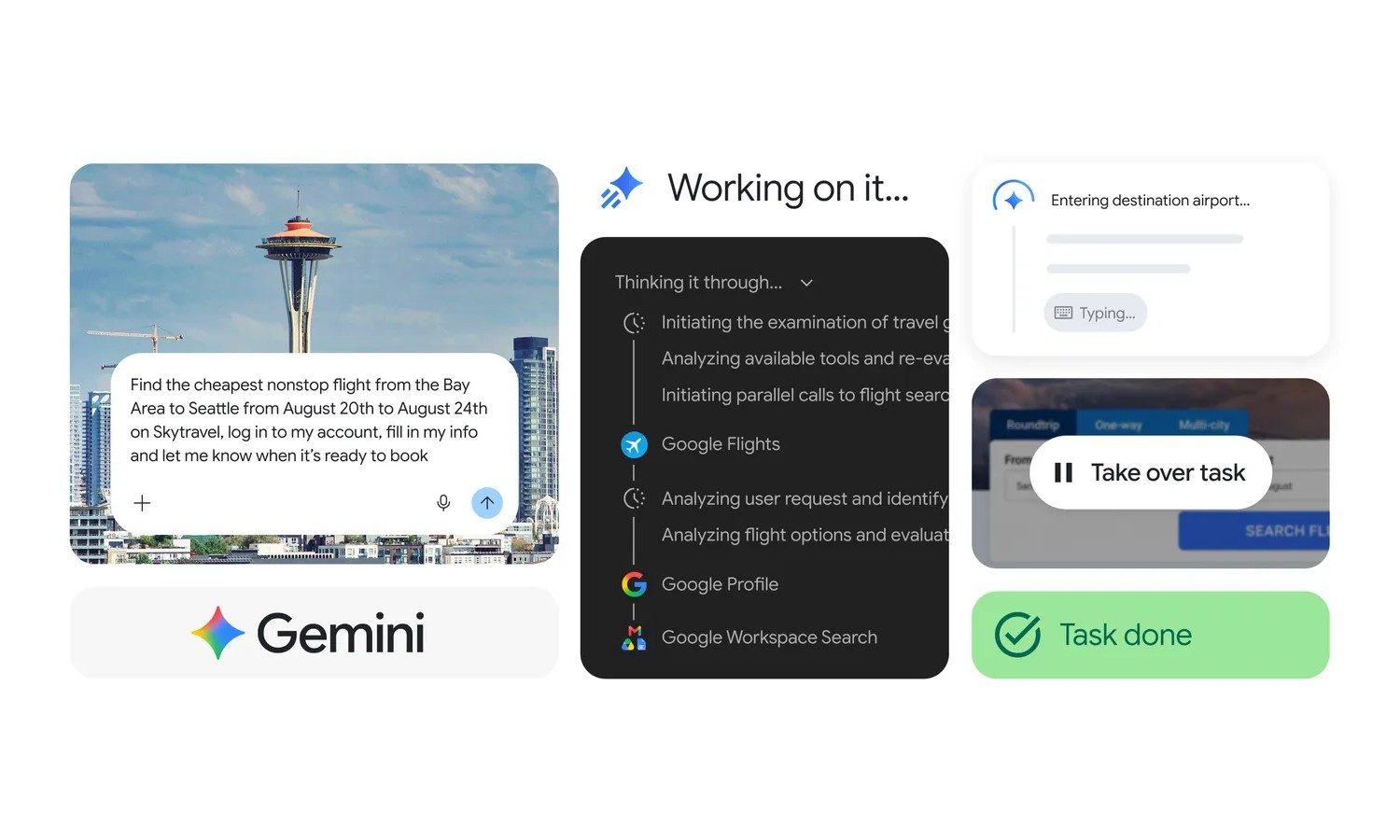
Gemini Spark can now use Chrome logins and saved passwords to run errands on your behalf
Gemini Spark can use Chrome’s auto browse feature to navigate websites and complete online tasks
Gemini Spark Chrome auto browse feature

Google is integrating Gemini Spark with Chrome so it can carry web-based tasks further without users having to take over at every step. The search giant is also expanding access to AI Pro subscribers in more than 160 additional countries, although the new browser capabilities are initially limited to the United States.

How Chrome auto browse works

Read more