Zoom is adding new avatars that will allow you to appear in conference calls as one of your favorite barnyard friends.
Like Apple’s Animoji, you can disguise your appearance as a bunny, dog, raccoon, cow, mouse or friendly fox when you show up to your next virtual meeting, adding a bit of fun and whimsy to the new work-from-home era that began more than two years ago.
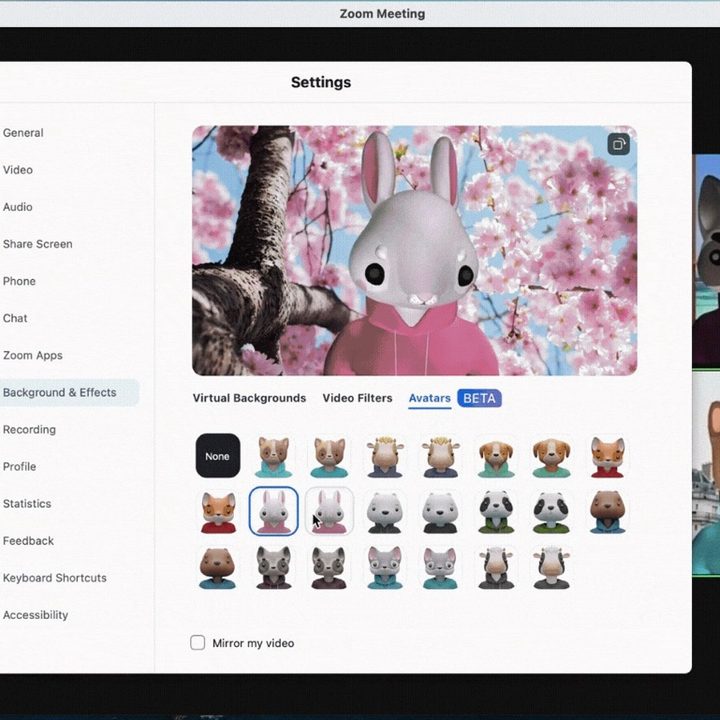
Through software, Zoom will apply the animal avatar of your choice to your face by using your webcam to detect the location of your face. Given Zoom’s high-profile privacy issues with Zoom-bombing during the pandemic, the company is paying more close attention to privacy and security while implementing this feature, and Zoom claims that animal avatars do not use facial recognition to identify who you are.
“So while the Avatars feature can tell what is or is not a face, it does not recognize or distinguish between individual faces,” Zoom explained.
And while seeing Animal Crossing happen in real time across your video screen may not seem appropriate at the next virtual company all-hands meeting, Zoom believes there are some use cases where using animal avatars can make sense. In a blog post announcing the new feature, Zoom mentioned that doctors dressed in their pediatric patient’s favorite animal avatar can make telemedicine seem less stressful, and using avatars can help shy or socially anxious co-workers break the ice during virtual teambuilding events. The feature can make also make remote learning more engaging and fun for younger students.
So before you say no to blurting out “What does the fox say” when you see your co-worker disguised as an avatar fox, there are some benefits to Zoom’s latest attempt at trying to solve Zoom fatigue. For starters, if you’re working from home and don’t want to fully get dolled up just to appear on a more casual call with teammates, avatars can let you feel more relaxed without the pressure to look your best at all times. And as The Next Web reported, using animal avatars can help shy individuals participate in meetings without the pressure of showing their face on camera.
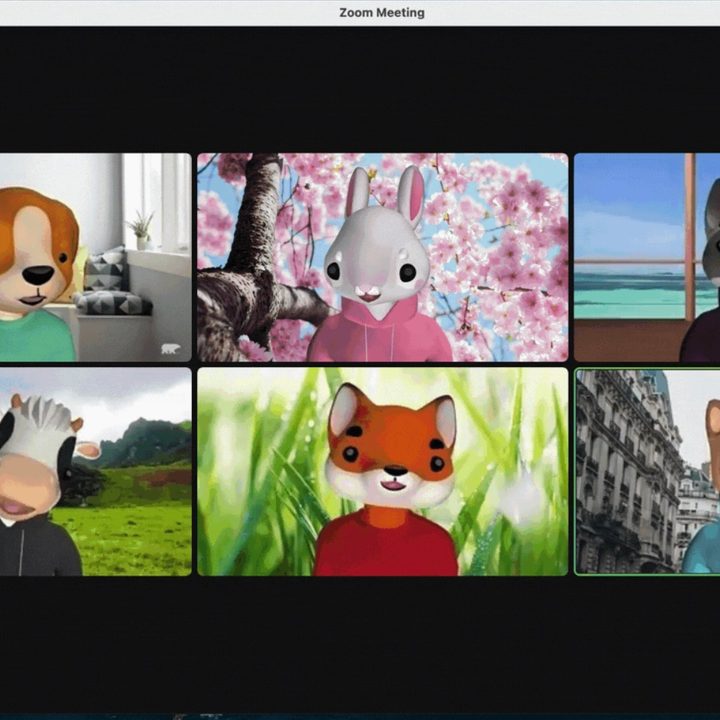
The launch of animal avatars is Zoom’s latest endeavors to make video calls more fun and engaging, alongside previously released features like virtual backgrounds, immersive scenes, and filters. The new feature is available on Windows, MacOS, and iOS mobile devices. You will need to run a Zoom client with version 5.10.0 or higher, and the animal avatar feature needs to also be enabled by the account owner or administrator.
To use an avatar, you’ll want to open the Zoom app and navigate to the meeting toolbar. Next, you’ll want to select the Stop Video option to open the video options menu.
Then, you’ll want to choose the Choose Virtual Background or Choose Video Filter option. At that point, you’ll be able to navigate to the Avatars tab and choose your favorite animal avatar. At launch, 11 animal avatars are available, and Zoom states that it is looking to deliver avatars beyond just the animal kind in the future. It’d be interesting to see a science class where students can appear as their favorite scientists, from Albert Einstein to Marie Curie.