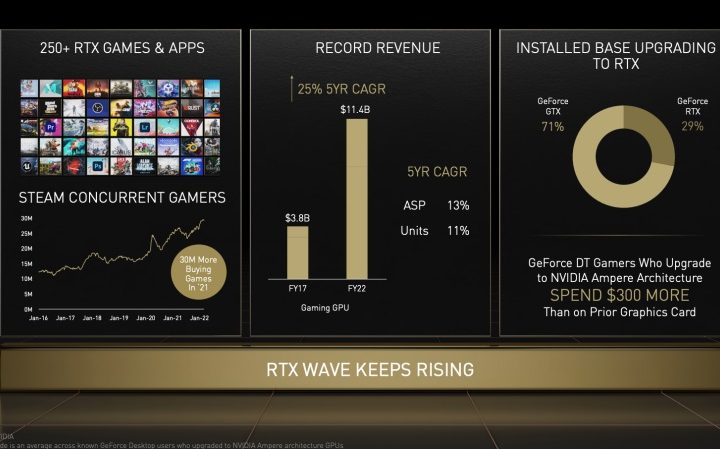
In a recent meeting with investors, Nvidia proudly announced that users who choose to upgrade to RTX 3000-series graphics cards are forced to spend around $300 more than they spent on their previous GPU.
This massive increase highlights the impact the chip shortage has had on the market and shows just how difficult it is to build a new PC in 2022.
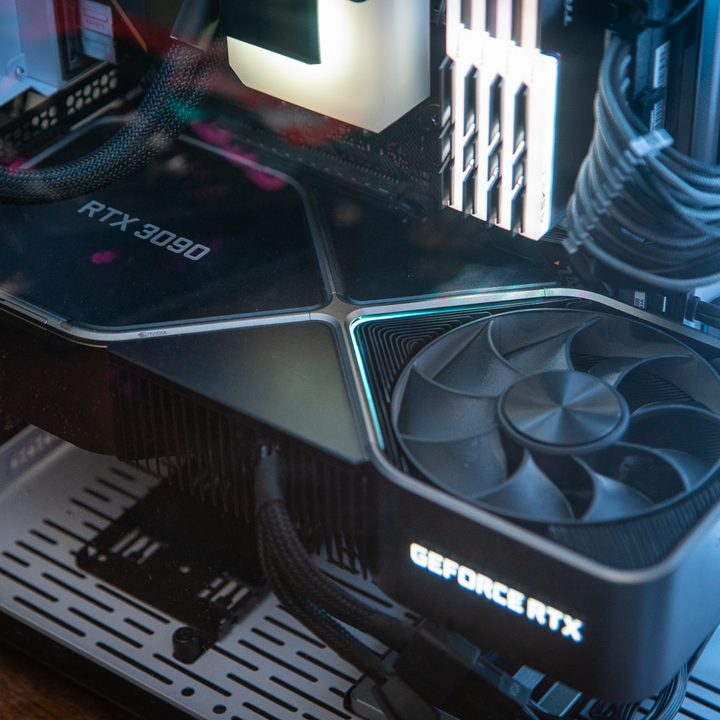
At this point in time, most of us are familiar with the perils of the GPU shortage. Over two years in, buying a graphics card is still difficult. Yes, there are plenty of GPUs available at various online retailers, but none of them are priced fairly. Although we’re seeing a steady decrease in pricing, we’re still far off from being able to buy one of the best graphics cards at MSRP the way we were once able to do. The question is, will such a time ever come back?
During the investors day, Nvidia confirmed that RTX 3000-series GPUs are much more expensive than the previous generations. Jeff Fisher, Nvidia’s senior vice president, said it clearly: “The GPU is offering more value than ever. Based on our data, they are spending $300 more than they paid for the graphics card they replaced.”
Some of that $300 can definitely be attributed to the chip shortage. Although Nvidia’s graphics cards have a much more reasonable MSRP, spotting one priced at its intended amount is almost impossible and happens very rarely. Retailers such as Best Buy sometimes hold special restocking events and sell the GPUs at MSRP, but those are rare, and in Best Buy’s case, now locked behind a paywall.
However, we can’t blame the GPU shortage for everything — the prices have gone up regardless. As PCMag compares, the GTX 1070 launched in 2016 with an MSRP of $379. Its current-gen counterpart, the RTX 3070, started out priced at $499. This price jump could be considered reasonable given the vast increase in power compared to the GTX 1070, but it’s still an increase. Unfortunately, most people are unable to get an RTX 3070 for that price anyway and thus are forced to pay higher premiums than what Nvidia asked for in the first place.
The pricing situation ties neatly with another thing Fisher said: Only about 29% of Nvidia’s gaming customers currently own an RTX GPU. This means that 71% of users are still using older GTX-series graphics cards from at least two generations ago.
While this means good news for Nvidia — the market is still untapped and there is a lot of potential for future earnings — it spells bad news for gamers at large. The fact that only 29 percent of users were able to upgrade their PC since 2018 highlights just how expensive it has gotten to stay on top of the latest hardware.
At a time when buying a new graphics card can sometimes be more expensive than building a whole gaming PC was in 2017, it’s more important than ever that the GPU market receives some reinforcements. Having an abundance of GPUs readily available would naturally lower the prices. In that regard, things are looking up — Nvidia, AMD, and even Intel are all set to release next-gen graphics cards this year. Perhaps with the increased supply, the prices will continue dropping and will one day become reasonable once again.