  1. Home
  2. Computing
  3. News

AMD Ryzen 7 5800X3D shines in gaming benchmarks, beats Intel

Add as a preferred source on Google

AMD Ryzen 7 5800X3D continues being tested in gaming ahead of the embargo lift, and the results are very encouraging — the CPU manages to keep up with the Intel Core i9-12900KF.

The processors were matched up in a variety of titles. In one of the tests, the 3D V-Cache AMD CPU actually beat Intel by nearly 30%.
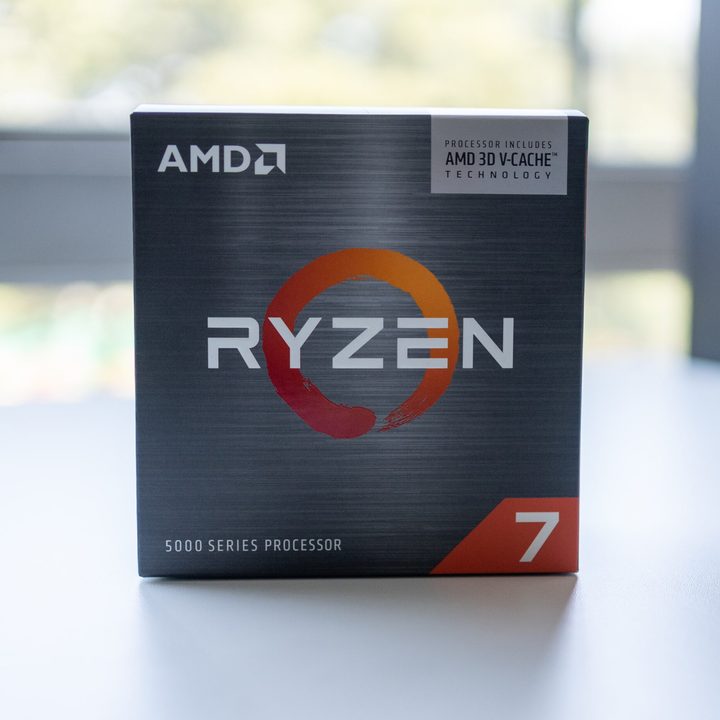
AMD Ryzen 7 5800X3D box.
XanxoGaming

In case you missed our previous coverage, AMD’s upcoming Ryzen 7 5800X3D is being tested by the Peruvian website XanxoGaming. The publication managed to buy the CPU and is publishing test results that range from synthetic benchmarks to full-on specialized gaming tests aimed to gauge the performance of the processor. Most publications are under embargo, but XanxoGaming is not, as it is blacklisted by AMD. As a result, it can freely share these benchmarks ahead of time.

Recommended Videos

In synthetic benchmarks, the CPU didn’t shine, but it is in gaming where AMD expected to see improvements. Based on the new tests, we can say that it may very well live up to the expectations. AMD promised performance on par with Intel’s Core i9-12900K, which is presumably why XanxoGaming used that CPU, alongside the Ryzen, to obtain accurate comparisons.

Both the processors have been tested on a platform with DDR4-3200 CL14 memory and an Nvidia GeForce RTX 3080 Ti Founders Edition. At first, we only had scores from Shadow of the Tomb Raider to go on, but in this round of tests, XanxoGaming added several new titles, including Borderlands 3, Control, Death Stranding, F1 202, Final Fantasy XV, Metro Exodus, and The Witcher 3. Shadow of the Tomb Raider got a second test, as the first test was carried out on platforms with different specs.

Most of the games were tested at 1080p on ultra settings. In a real-life gaming setting, other variants may occur, but using 1080p and 720p is common in CPU testing, which is what XanxoGaming was doing here. The publication compiled the results in a series of slides. It first shared the news with VideoCardz, but you can now see even more benchmarks directly on XanxoGaming.
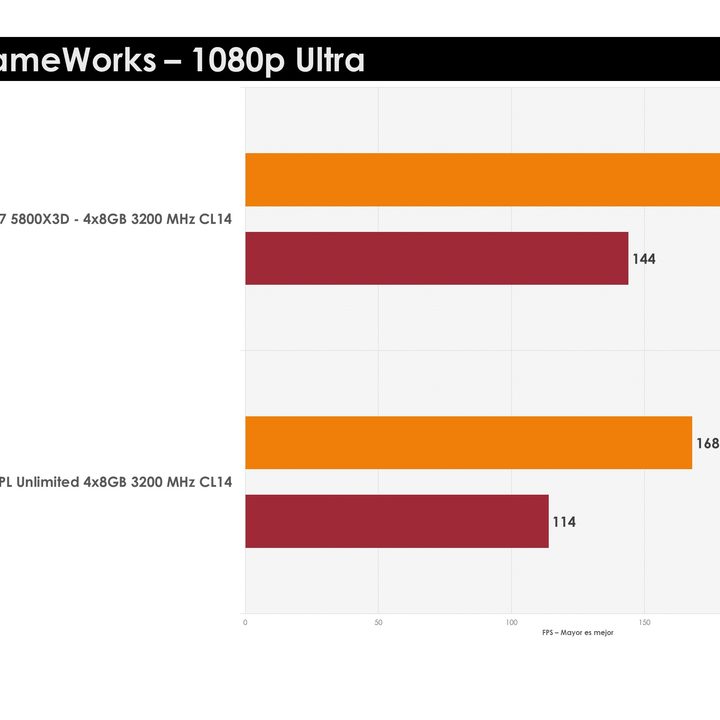
Benchmark of the AMD Ryzen 7 5800X3D.
XanxoGaming

The tests serve to highlight how AMD Ryzen 7 5800X3D makes the most of its innovative, massive, 96MB L3 stacked cache. Although it didn’t win in every single test, it kept up with Intel in the majority of them, and in some cases, it won by a large margin. As an example, in Final Fantasy XV, AMD hit 217 frames per second (fps) while the Intel Core i9-12900KF trailed behind at 168. This adds up to a 29% win for AMD. In Shadow of the Tomb Raider, Ryzen also scores higher: 181 fps versus 164. In the titles where Intel wins, it does so by a small margin.

Despite the lower clock speeds and just eight cores, it’s clear now that AMD Ryzen 7 5800X3D can keep up with Intel’s best CPU. As the release date (April 20) draws closer, more and more benchmarks should start popping up to give us an even more accurate view of the processor’s performance.

Monica J. White
Monica is a computing writer at Digital Trends, focusing on PC hardware. Since joining the team in 2021, Monica has written…
The Mac Pro nearly received an M3 Extreme chip twice as powerful as M3 Ultra
High production costs likely killed Apple’s M3 Extreme plans
Apple's Mac Pro on a table at a press event.

Apple discontinued the Mac Pro earlier this year, ending a 20-year run for a computer that once represented the very best of the company’s desktop lineup. However, Apple reportedly had much bigger plans for the machine before ultimately replacing it with the Mac Studio.

According to Bloomberg’s Mark Gurman, Apple developed an M3 Extreme chip that could have offered twice as many CPU and GPU cores as the M3 Ultra. The processor was intended to sit above the Ultra tier and could have finally given the Mac Pro the performance advantage it badly needed. Apple eventually abandoned the chip due to concerns over production costs and limited demand for such an expensive machine.

Read more
Hidden prompts can secretly rewrite an AI’s memory, and researchers say that’s a serious problem
Researchers discover AI attack that rewrites an assistant's long-term memory
Chatbot on a smartphone.

Large language models are getting better at remembering us. Whether it's your preferred writing style, recurring tasks, shopping habits or project deadlines, AI assistants are increasingly storing long-term memories to make future conversations feel more personal and useful. But according to new research, that same feature could become one of AI's biggest security vulnerabilities.

Researchers from New Mexico State University have demonstrated a new attack called GhostWriter, capable of secretly planting false memories inside AI agents. Rather than stealing information outright, the attack manipulates what an AI remembers, potentially causing it to make dangerous decisions long after the original attack has taken place.

Read more
This experiment shows how easy it is to poison an open-weight AI model for under $100
This research raises new doubts about trusting open weight AI models.
Computer, Electronics, Laptop

Open-weight AI models have been having a moment lately. Just this month, Moonshot's massive Kimi K3 model landed close behind Claude Fable 5 and GPT 5.6 Sol in several benchmarks, all while remaining fully open-weight and downloadable by anyone.

However, Katie Paxton-Fear, a cybersecurity lecturer at Manchester Metropolitan University and staff security advocate at Semgrep, managed to poison an open-weight model and proved how easily that openness can be turned against you (via The Register).

Read more