1. Home
  2. Computing
  3. News

Apple pushes update to Studio Display that fixes webcam issues

Add as a preferred source on Google

Apple’s Studio Display is set to get a fix for its webcam issues in the form of a software update after it was initially plagued with poor reviews from leading tech journalists.

The Monterey 12.4 beta software has been made available as of Tuesday, first to developers, but everyone else should also be able to access the update through Apple’s public beta program later in the day.

Apple Mac Studio desktop and Studio Display.
Image used with permission by copyright holder

Users should be able to update their Studio Display to Firmware Version 15.5 (Build 19F5062g) by selecting System Preferences > Software Update, with the appropriate developer or public beta software installed first. Apple spokesperson Jennie Orphanopoulos told The Verge that the update addresses “noise reduction, contrast, and framing” on the web camera of the Studio Display.

Recommended Videos

After being announced in mid-March, several reviewers, including Joanna Stern of the Wall Street Journal and The Verge editor Nilay Pate, had harsh opinions about the 12-megapixel ultrawide front camera on the Studio Display. Stern compared the image quality of the Studio Display to that of an “old BlackBerry,” while Patel described having abysmal results with the webcam on several apps, including FaceTime, Zoom, Photo Booth, and QuickTime.

Many were surprised at this feature mishap that plagued the Studio Display, considering it has a similar camera to that of an iPhone 11 — a 12-megapixel lens with an f/2.4 aperture. The display is also powered by an A13 chip, The Verge added.

However, the product is essentially a 27-inch smart display and is currently unique in Apple’s device lineup, making it apt for bugs and other mishaps.

At the time of the original incident, Apple responded to journalists, stating that the company has “discovered an issue where the system is not behaving as expected.”

The Studio Display currently sells for $1,600 as a peripheral for Apple’s M1 Ultra-powered Mac Studio desktop, which sells for $4,000.


Fionna Agomuoh
Fionna Agomuoh is a Computing Writer at Digital Trends. She covers a range of topics in the computing space, including…
Claude’s Sonnet 5 is built to do more on its own and cost you less
Better than its predecessor, nearly as good as the flagship, and meaningfully cheaper than both.
Art, Floral Design, Graphics

Every major AI lab is racing to prove its models can work autonomously with minimal hand-holding; we’re now seeing pricing emerge as the next battleground. 

Anthropic just fired its latest shot, Claude Sonnet 5, a model the company says performs nearly as well as its flagship Opus 4.8 at a fraction of the cost.

Read more
Apple Creator Studio adds AI tools across Final Cut Pro, Logic Pro and Pixelmator Pro
Final Cut Pro gets AI captions, Auto Mask and better Pixelmator Pro workflows in Creator Studio update
Computer Hardware, Electronics, Hardware

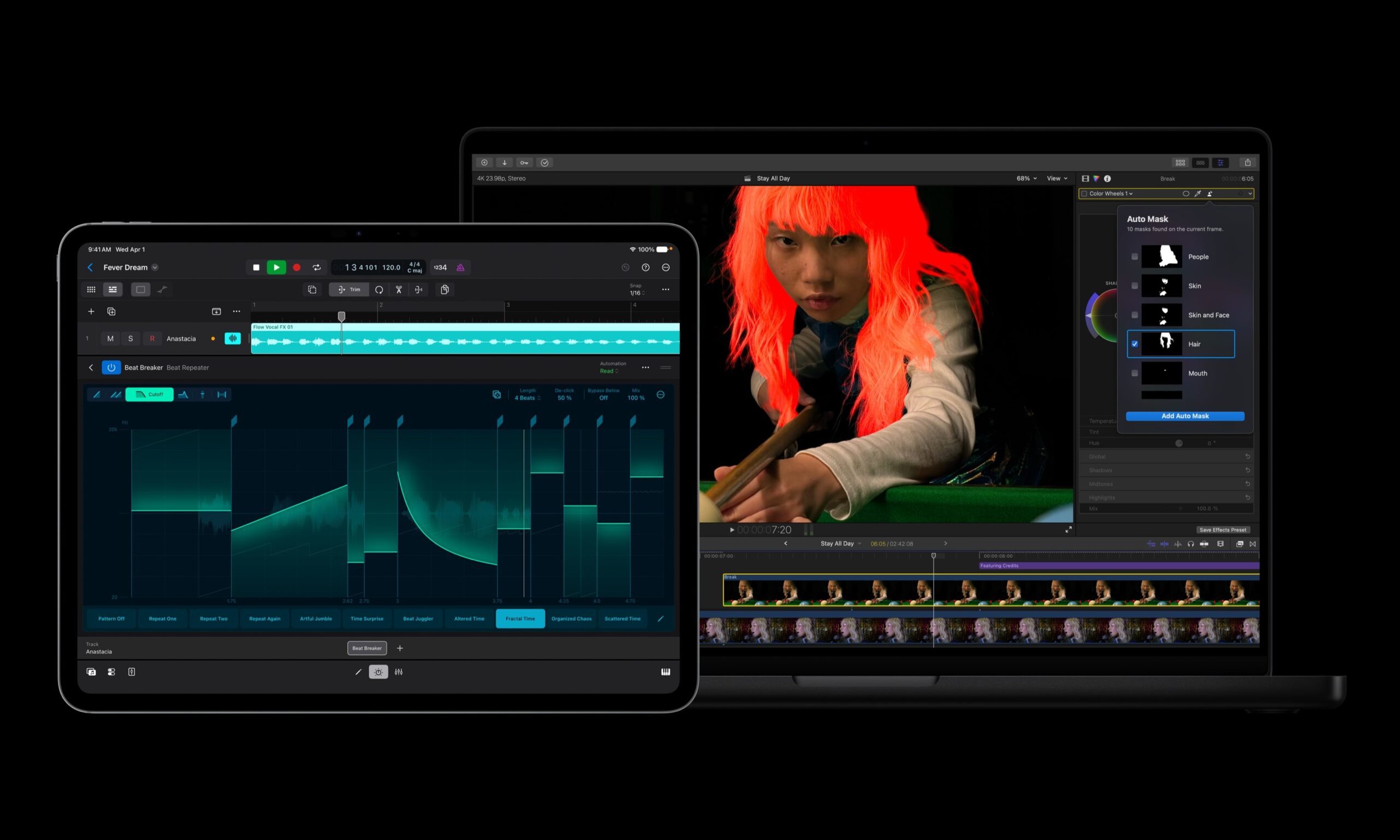
Apple has introduced a major update to Apple Creator Studio, adding new AI features, deeper Pixelmator Pro integration, and workflow upgrades across Final Cut Pro, Logic Pro, Keynote, Pages, Numbers, Motion, Compressor, Freeform, and Final Cut Camera.

The update makes Creator Studio more useful across Mac, iPad, and iPhone, especially for people who move between video editing, image editing, presentations, documents, spreadsheets, and music production.

Read more
AI browsers like Perplexity Comet can be tricked into spilling your password through BioShocking exploit
Six AI browsers were found leaking saved passwords and many of them haven't fixed it yet.
MacBook Air in hand, Comet browser loaded—let’s see what Perplexity’s AI can really do

Security researchers just found a strange way to trick AI browsers into handing over your passwords. They managed to trick AI browser agents into exposing sensitive data like saved passwords, session cookies, and private tokens by disguising the theft as part of a harmless "game."

The technique is called BioShocking, named after the popular video game BioShock, where a brainwashed character is manipulated into believing a false reality. Once an AI browser falls for the same trick, it stops following its own safety rules entirely.

Read more