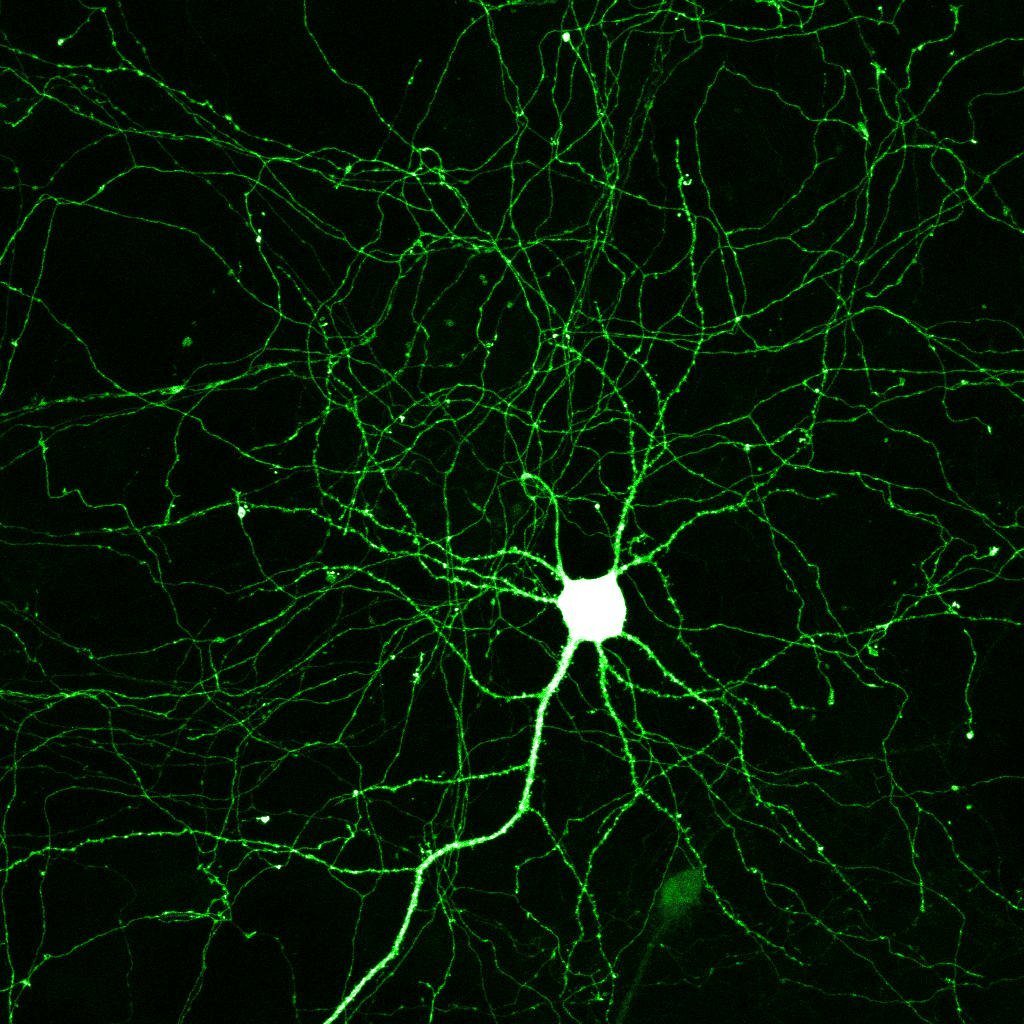
 The structure of the human brain is perhaps, still, one of science’s greatest mysteries. As discovery paves the way through the human genome (our six billion basepairs of DNA) and human proteome (our vast array of proteins), one of the greatest remaining questions has been, “How do the neurons in our brain connect?” That mapping has been termed the connectome.
Scientists at the Max Planck Institute for Medical Research have utilized two newly developed computer programs to shed some light on the answer. Using both the KNOSSOS (aptly named for the legendary labyrinth) and RESCOP (no known Greek roots) the researchers were able to map roughly 100 neurons for over 70 students.
This is a massive step. Considering that there are over 70 billion neurons in our brain, all with variable connections to one another, even the fastest and powerful computers of today have been unable to generate models. And if there are 6.5 billion people on earth, each with slightly different connections, the calculations becomes endless.
RESCOP is designed to alleviate that second problem, by synthesizing the results from each of the subjects so that a general picture of the connections can be developed. KNOSSOS as its name implies, does the actual mapping of the neuronal connections. Subjects’ neurons are stained with a (safe) heavy metal which allows microscopes to see the connections between dendrites and axons. This three-dimensional picture is then recorded and analyzed, then repeated on a new section of neuron—a cumbersome process still. KNOSSOS is powerful enough that it can create and process the 3D pictures, and connect them to others roughly 50 times faster than previous programs.
There was also a time when mapping the human genome also seemed an endless task. And it has long past.
(Photo credit: Case Organic)