  1. Home
  2. Computing
  3. Web
  4. Legacy Archives

Microsoft announces $250,000 ‘BlueHat Prize’ contest for security innovation.

Add as a preferred source on Google

microsoft research by Robert Scoble via FlickrToday Microsoft announced a new contest called the BlueHat Prize, designed to spur innovation in computer security protection technology. The company has put up a prize pot worth over $250,000 for the top 3 contestants to split at next year’s Black Hat USA convention.

Microsoft is easily paying out more in this contest than the bug hunt bounty offered by Google, and definitely more than the newly launched bounty program by Facebook. The large pot is necessary as Microsoft believes that the rampant and increasing attacks against corporation and government computer systems calls for security researchers to look at a bigger picture rather than focusing on one bug at a time.

Recommended Videos

“Microsoft recognizes the need to stimulate research in the area of defensive computer security technology,” said Matt Thomlinson, Microsoft’s Trustworthy Computing Group GM. “Our interest is to promote a focus on developing innovative solutions rather than discovering individual issues. We believe the BlueHat Prize can catalyze defensive efforts to help mitigate entire classes of attacks.”

The first-place winner will receive the lion’s share of $200,000. Second-place winner will receive $50,000 and the third place winner get’s a subscription Microsoft’s security developers network. Entries can be submitted from today to April 1 2012. Contestants will be allowed to retain the rights their intellectual property but they are required to irrevocably license the IP to Microsoft royalty-free and forever. Microsoft employees and residents of Cuba, Iran, North Korea, Sudan and Syria are ineligible to participate in the contest.

Senior director of Adobe product security Brad Arkin said, “this research has the potential to lower costs for third-party developers and increase the level of security assurance for end users. I am looking forward to seeing what the creativity of the community can deliver.”

Jeff Hughes
Former Digital Trends Contributor
I'm a SF Bay Area-based writer/ninja that loves anything geek, tech, comic, social media or gaming-related.
The Mac Pro nearly received an M3 Extreme chip twice as powerful as M3 Ultra
High production costs likely killed Apple’s M3 Extreme plans
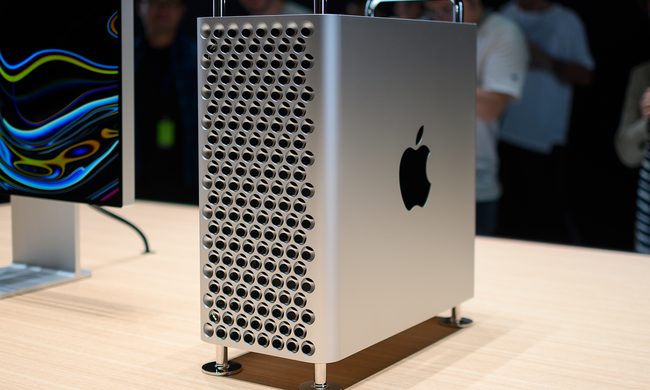
Apple's Mac Pro on a table at a press event.

Apple discontinued the Mac Pro earlier this year, ending a 20-year run for a computer that once represented the very best of the company’s desktop lineup. However, Apple reportedly had much bigger plans for the machine before ultimately replacing it with the Mac Studio.

According to Bloomberg’s Mark Gurman, Apple developed an M3 Extreme chip that could have offered twice as many CPU and GPU cores as the M3 Ultra. The processor was intended to sit above the Ultra tier and could have finally given the Mac Pro the performance advantage it badly needed. Apple eventually abandoned the chip due to concerns over production costs and limited demand for such an expensive machine.

Read more
Hidden prompts can secretly rewrite an AI’s memory, and researchers say that’s a serious problem
Researchers discover AI attack that rewrites an assistant's long-term memory
Chatbot on a smartphone.

Large language models are getting better at remembering us. Whether it's your preferred writing style, recurring tasks, shopping habits or project deadlines, AI assistants are increasingly storing long-term memories to make future conversations feel more personal and useful. But according to new research, that same feature could become one of AI's biggest security vulnerabilities.

Researchers from New Mexico State University have demonstrated a new attack called GhostWriter, capable of secretly planting false memories inside AI agents. Rather than stealing information outright, the attack manipulates what an AI remembers, potentially causing it to make dangerous decisions long after the original attack has taken place.

Read more
This experiment shows how easy it is to poison an open-weight AI model for under $100
This research raises new doubts about trusting open weight AI models.
Computer, Electronics, Laptop

Open-weight AI models have been having a moment lately. Just this month, Moonshot's massive Kimi K3 model landed close behind Claude Fable 5 and GPT 5.6 Sol in several benchmarks, all while remaining fully open-weight and downloadable by anyone.

However, Katie Paxton-Fear, a cybersecurity lecturer at Manchester Metropolitan University and staff security advocate at Semgrep, managed to poison an open-weight model and proved how easily that openness can be turned against you (via The Register).

Read more