Apple’s iPhone 14 is likely launching in a little over two months, and we already have a fairly good picture ofwhat’s coming. This year, Apple is predicted to make three changes that’ll differentiate the base iPhone 14 from its more Pro siblings. It’ll come with a different design, a weaker camera, and an inferior chipset.
Apple has differentiated its iPhones in terms of screen quality and materials before, but this marks the first time the baseline iPhone is going to be markedly inferior to the Pro model.
Apple adopts a tried-and-true strategy
When it comes to Android phones, we’re used to companies rolling out a slew of different options under the same brand. There are main phones, Plus variants, Fan Editions, and A-models — all coming with different processors and cameras. Samsung’s Galaxy S21 line featured with an S21 FE, a base S21, an S21 Plus, and an S21 Ultra. The Pixel has the Pixel 6, 6 Pro, and 6a. Xiaomi has the 12S, 12S Pro, and 12S Ultra, and on it goes.
What Apple had typically done in the past that differentiated it from Android phones was to keep the fundamentals more or less the same. Yes, the iPhone XR and XS were different, but they had the same rear camera and the same processors so that imaging and performance were in sync. With the iPhone 13 Pro and 13 Pro Max, displays drifted apart, but the broad strokes of the devices remained the same.
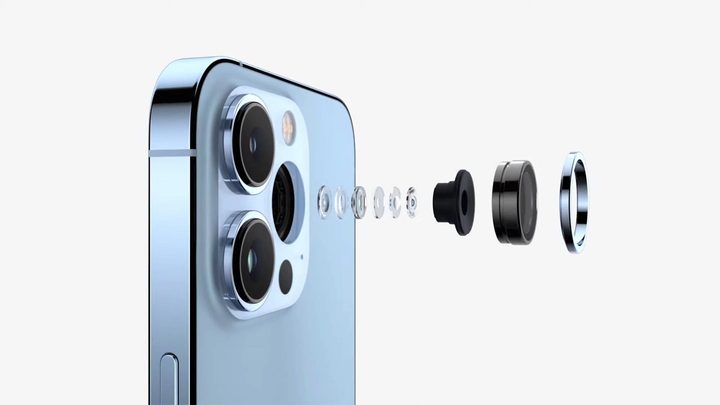
But now the two are trading places. As big Android brands homogenize their flagship variants, Apple is moving toward a stronger differentiation. The predicted changes coming with the iPhone 14 are substantial. There’s a new design, a sharper and upgraded front camera, a larger sensor in the rear camera to keep up with Android rivals, and a new chip. Add that to the different bodies, extra camera, and better screen, and the iPhone 14 and 14 Pro are going to be very different phones.
You’ll have to pay up for the new chip
“Chipset differentiation, along with memory differentiation, is not an old pricing strategy, as on the Mac portfolio. With the higher and higher spec on smartphones, consumers are no longer forced to pay for unnecessary hardware. Nevertheless, it’s been common among Android camps for years,” Ian Lam, senior researcher at Counterpoint Research, told Digital Trends in an emailed comment.
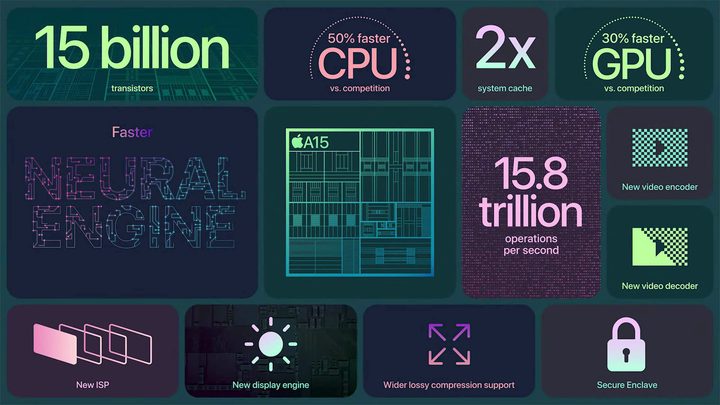
The processor is the most striking change, and that one is predicted to stick across generations, according to analyst Ming-Chi Kuo. Although Android phone makers now broadly use the same processors across their flagship lines, there’s still some differentiation. The Motorola Edge 30 Pro uses the powerful Snapdragon 8 Gen 1, while the regular Motorola Edge 30 uses the Snapdragon 778+ chip.
Apple has always shipped its phones with flagship chips — whether it’s cheap phones (the 5c or SE) or the most high-end model. At the same time though, chips aren’t important for raw performance. It’s the features that they enable that matter. Android phones aren’t bad because they use older chips, it’s because those older chips are often flawed or limited in some way, with fewer guaranteed software and security updates. Apple’s chips have been head and shoulders above Qualcomm’s for a while now, and the company’s extended support means that the biggest flaw of shipping a phone with an older processor is all but eliminated. It is the iPhone. It plays by a different set of rules.
“Apple’s current processors already outpace today’s software and use case for most users. While Apple has certainly promoted the leading performance-per-watt of its silicon, iPhone buyers prioritize the overall experience of the device and ecosystem much more than specific tech specs anyway. If Apple builds a phone that takes great pictures with a lower megapixel sensor, a physically smaller battery, and a billion fewer transistors, people will buy it. The Android experience is not terribly instructive; not only is the customer base different, the sales performance of the budget flagships vary wildly by vendor and market position,” Avi Greengart, analyst at Techsponential concurred in an email to Digital Trends.
Changing the meaning of ‘default’ iPhone
The iPhone 13, the current “default” iPhone, isn’t a bad phone. As many people have pointed out, its chips outpace anything you’d find on the Android market. If Apple were to keep it for another year, it would still outpace everything released and provide better battery performance relative to size. The camera? Still pretty reliable. The screen? Still pretty good to look at. However, the difference between that iPhone and the 13 Pro is minimal, some would say trivial.
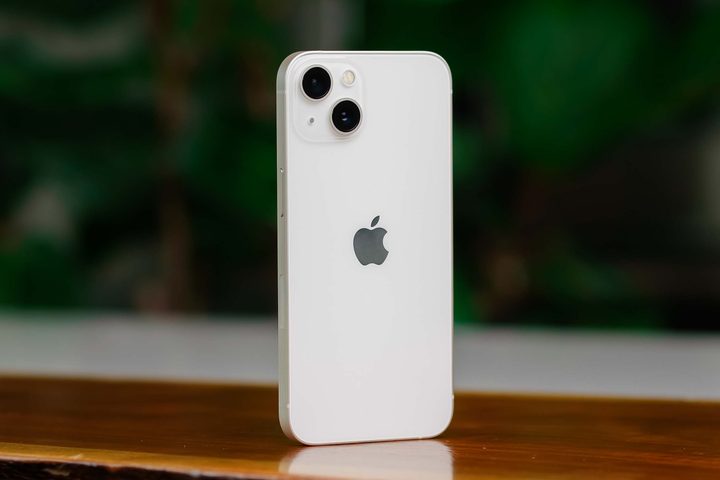
If you’re not into the zoom camera and you really could care less about refresh rates, then you’re fine with the 13. With the 14 and 14 Pro, the camera quality gap is going to get much bigger. If you’re a gamer or someone who cares about future-proofing your phone? Its a no-brainer. All of these will add up to a more powerful “iPhone” experience.
So how would Apple be able to conceptualize the adjectiveless, unqualified iPhone in this new world? It’s a phone for people who want “an iPhone.” Well, it’ll be an iPhone that comes in two sizes and does iPhone things — albeit less impressively. You can get all your iPhone apps, iMessage your friends, and FaceTime your family. You don’t necessarily care about all the gigahertz, refresh rates, or megapixels. It won’t stand out as anything groundbreaking, and you’ll pick it up every three or four years.
But for everyone else who does care about those things, the Pro models will look more enticing than ever before.