1. Home
  2. Computing
  3. Mobile
  4. News

Samsung’s 2nd-generation SmartSSD can process data right on the drive

Add as a preferred source on Google

Forget CPUs. Say goodbye to ARM systems on a chip (SOCs). Samsung just dropped its second-generation smart SSD, and this sounds like a game changer.

The SmartSSD processes data right there on the hard drive. Programs saved to your PC don’t need to lose speed transferring to your CPU in order to launch. Games can render graphics directly from the drive, freeing up GPU cores. It’s like a party on your SSD and everyone is invited.
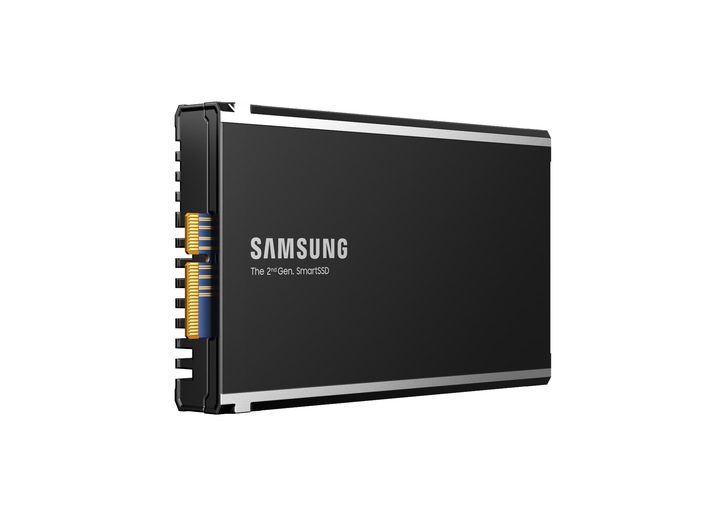
A black Samsung 2nd generation Smart SSD
Image courtesy of Samsung Image used with permission by copyright holder

“The SmartSSD is playing an increasingly important role,” Samsung said in an official press release. “Especially with the growth of next-generation technologies such as AI, machine learning and 5G/6G, which require large amounts of data processing.”

Recommended Videos

But this isn’t a regular consumer-facing product. Samsung developed SmartSSD for high-performance use in industry and research. SmartSSD is a proprietary technology developed by Samsung and AMD in 2020. The hard drive is designed to relieve the CPU and GPU during heavy scan processes, such as when using AI or developing high-end graphics.

Normally, the CPU would need to scan the hard drive for the information it needed and then pull that info out of the drive before processing it or sending it to the GPU. But the SmartSSD allows the hard drive to handle most of that process.

“Unlike existing SSDs, Samsung’s SmartSSD can process data directly, thereby minimizing data transfers between the CPU, GPU and RAM.” Samsung said. “This technology can avoid the bottlenecks that often occur when moving data between storage devices and CPUs, resulting in markedly improved system performance and much higher energy efficiency.”

According to tech watchdog site TechPowerUp, Samsung’s second-generation SmartSSD cuts processing time by 50% and reduces power consumption by up to 70%. It also frees up to 97% of CPU utilization.

Samsung once again partnered with AMD to create the second-generation SmartSSD. The drive uses an AMD-based SOC heavily optimized for Samsung SSD architecture. Samsung hopes to work with other manufacturers to standardize SmartSSD technology through the Storage Network Industry Association (SNIA) so future smart SSD drives will work in a variety of devices.

Nathan Drescher
Former Computing Writer
Nathan Drescher is a freelance journalist and writer from Ottawa, Canada. He's been writing about technology from around the…
Gemini Notebook’s new Collections arrive just as Google turns it into a bigger workspace
Google is cleaning up notebook organization as the former NotebookLM expands across Gemini and Search
Gemini Notebook branding on a MacBook

Google has barely finished renaming NotebookLM, and it’s already addressing one of the headaches that comes with building a large research library.

Collections are rolling out to all Gemini Notebook users, giving them a way to group related notebooks while keeping everything visible under My Notebooks. The dashboard gets some structure without asking users to rearrange the library they’ve already built.

Read more
Samsung’s humanoid robot ambitions are real, but factories come first
Samsung’s new robotics division has humanoids in its sights, although its immediate business is far more practical factory automation
Robot Touch Human Finger

Samsung wants a place in the humanoid race, but its new robotics push begins with machines built for factories rather than homes.

The CEO-led RX robotics division will initially focus on manufacturing robots. Samsung has separately identified humanoids as a priority, although it hasn’t announced a commercial model or explained where one fits into the division’s immediate plans.

Read more
WhatsApp’s Liquid Glass redesign is finally coming to Mac after months of waiting
WhatsApp's Mac app is getting Apple's Liquid Glass-inspired makeover
WhatsApp

WhatsApp has been steadily adopting Apple's new design language across its apps, but Mac users have largely been left watching from the sidelines. That is finally beginning to change.

The messaging platform has started rolling out its Liquid Glass redesign for the WhatsApp Mac app, bringing the desktop experience much closer to what iPhone and iPad users have been seeing over the past few months. The update introduces a refreshed interface with redesigned navigation elements, updated menus, and a cleaner layout that aligns with Apple's latest software aesthetic. According to WABetaInfo, the rollout has begun through the latest Mac App Store update and is currently reaching a limited number of users.

Read more