New benchmarks of the upcoming AMD Ryzen 9 7950X just emerged, and to say that they put the processor in a good light would be an understatement. The CPU absolutely wrecked its predecessor, winning by over 40%.
While that sounds pretty amazing, it might not be entirely true. Here’s why it’s too early to get too excited.
[GB5 CPU] Unknown CPU
CPU: AMD Ryzen 9 7950X (16C 32T)
Min/Max/Avg: 5640/5759/5733 MHz
Codename: Raphael
CPUID: A60F12 (AuthenticAMD)
Scores, vs AMD 5800X
Single: 2217, +28.3%
Multi: 24396, +127.1%https://t.co/eLLmHldqWg— Benchleaks (@BenchLeaks) August 30, 2022
The score appeared on Benchleaks, teasing the performance of the Ryzen 9 7950X in Geekbench 5. The Zen 4 flagship CPU is set to arrive on September 27 with a healthy 16 cores and 32 threads as well as a 4.5GHz base clock that can be boosted as high as 5.7GHz. This clock speed is confirmed by the benchmark, where the processor hits a maximum of 5,759MHz. It was paired with 32GB of 6000MT/s DDR5 RAM and a high-end Asus ROG Crosshair X670 Extreme motherboard.
The Geekbench 5 scores are nothing short of impressive — the new Zen 4 processor hit 2,217 points in single-core operations and 24,396 in multi-core. Benchleaks compared these scores to the AMD Ryzen 7 5800X, and the multi-threaded gains are staggering — the Ryzen 9 7950X beats the Ryzen 7 5800X by 127%. However, perhaps more telling are the scores that Tom’s Hardware dug up, which pit the Zen 4 CPU against its Zen 3 counterpart.
Comparing the Ryzen 9 7950X to the Ryzen 9 5950X also reveals massive gains. The Ryzen 7000 CPU beat its predecessor by 29% in single-core tasks and 43% in multi-core operations. These scores are, no doubt, impressive, but it’s too soon to trust them fully. The reason behind that caution is not just the fact that this is a single early benchmark and we need to see a bigger sample — the reason lies within Geekbench itself.
Geekbench 5 covers three different types of workloads in the total of 21 benchmarks it tests with. These include integer, floating point, and cryptographic workloads. The latter are famously AVX-intensive, and this is where Zen 4 gets an unexpected edge over Zen 3, because AMD has equipped it with AVX-512. This is a fairly new instruction set added to modern CPUs, and it can have a big positive impact on cryptographic tasks. The Zen 3 processor doesn’t have access to AVX-512, so its cryptographic performance was rated much lower.
Breaking down the scores into the three different workload types reveals more reasonable gains. The Ryzen 9 7950X beat the 5950X in integer and floating point tests by 23% and 22% in single-core and 45% and 38% in multi-core, respectively. However, the cryptographic boost is much more immense, amounting to 70.5% in the single-threaded test and 55.7% in the multi-threaded test.
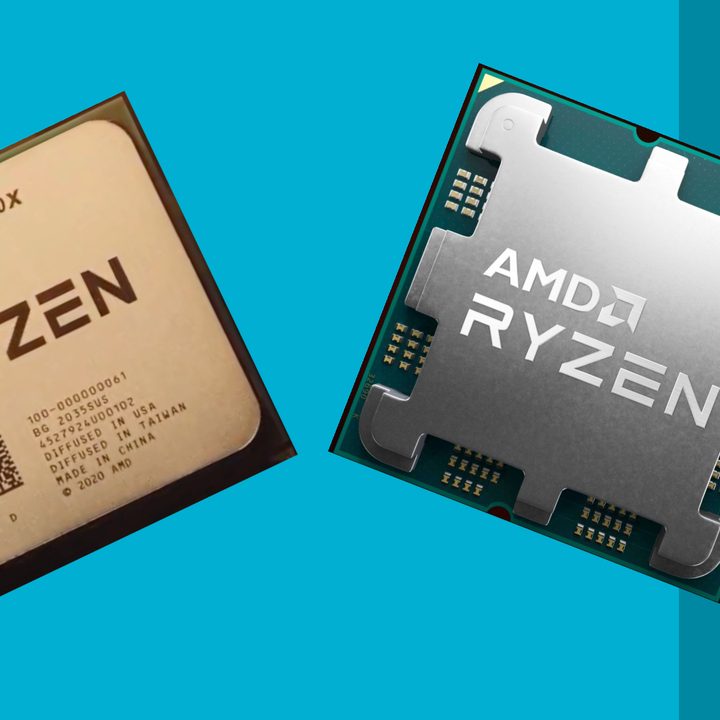
What does this really mean? It means that the Geekbench 5 score may have been inflated due to the great performance provided by the AVX-512 instruction set. This would not be bad on its own, since AMD did add this as a new feature of the Ryzen 7000, but the problem is the adoption rate of this instruction set. It’s not being used by many apps, so only very specific software will benefit from this addition. On the other hand, integer and floating point workloads are much more widespread and will affect the performance experienced by most users.
It’s still too soon to fully judge the performance of the upcoming AMD Ryzen 9 7950X. While this particular benchmark may not tell the full story, it still shows a huge boost compared to its predecessor; those integer and floating point scores don’t need to be disputed, and even on their own, they’re impressive. We’ve already seen similar results from another benchmark, too. As we get closer to the launch date, we’ll start seeing more accurate benchmarks that tell us more.