1. Home
  2. Space
  3. News

ISS astronaut’s photos capture a ‘wonderful world’

Add as a preferred source on Google

It may not be a perfect world, but if you look in the right places it’s certainly wonderful.

International Space Station (ISS) astronaut Samantha Cristoforetti, for one, definitely thinks so. Inspired by Louis Armstrong’s 1967 classic What a Wonderful World, the Italian space traveler recently posted four sublime Earth images alongside lyrics from the legendary track.

Recommended Videos

“I see skies of blue and clouds of white
The bright blessed days, the dark sacred nights
And I think to myself
What a wonderful world…”#MissionMinerva pic.twitter.com/3cGi1I5Uck

— Samantha Cristoforetti (@AstroSamantha) September 10, 2022

The pictures, captured from the space station as it orbited some 250 miles above our planet, look more like paintings that photographs. Cristoforetti doesn’t say what parts of the world they show, inviting us instead to focus on the sheer beauty of the scenery far below.

During downtime on the ISS, astronauts often like to head to the Cupola module, whose seven windows offer stunning views of Earth and beyond. No doubt these images were taken from that precise place.

While some crew members like to simply gaze out and enjoy the vistas, others grab one of the station’s many cameras, capturing the spectacle to share with their followers on social media.

Cristoforetti, who has more than a million followers on Twitter and around half a million on TikTok, has been posting regular updates during her six-month space mission, which started in April.

Her various posts aim to share different aspects of her life in space and have so far included tips for wannabe astronauts, an explanation of a mysterious bright light on Earth, an image of a lunar eclipse from space, and a time-lapse showing how the sun sometimes doesn’t set for astronauts aboard the station.

She’s also demonstrated how astronauts perform CPR in space, and chatted about how space debris can affect life on the orbiting outpost.

For a bit of fun, she also recreated a moment from the hit Hollywood flick, Gravity.

For more images showing Earth from space, check out this impressive collection captured from the ISS and other spacecraft, including one particular stunner snapped during the historic Apollo 11 mission in 1969.

Trevor Mogg
Contributing Editor
Not so many moons ago, Trevor moved from one tea-loving island nation that drives on the left (Britain) to another (Japan)…
Space is becoming Bezos and Musk’s next data center site, and we have every reason to worry
The AI boom is coming for the night sky
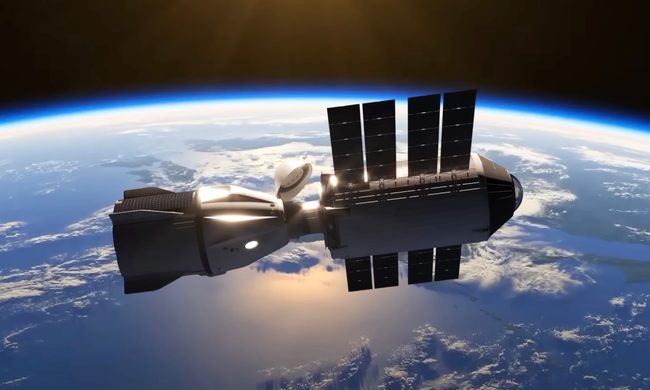
How Vast's space station will look in orbit.

AI data centers already consume vast amounts of electricity and water on Earth, so Silicon Valley has begun looking somewhere considerably more spacious... literally.

Elon Musk's SpaceX and Jeff Bezos' Blue Origin, along with several other companies, have proposed enormous constellations of satellites designed to operate as orbital data centers. However, environmental groups and former space officials are now warning that putting them into orbit at the proposed scale could have severe consequences for Earth's atmosphere and the night sky.

Read more
The first possible exomoon is here, and it makes our Moon look hilariously tiny
Scientists may have found the first exomoon, except this one is the size of Jupiter
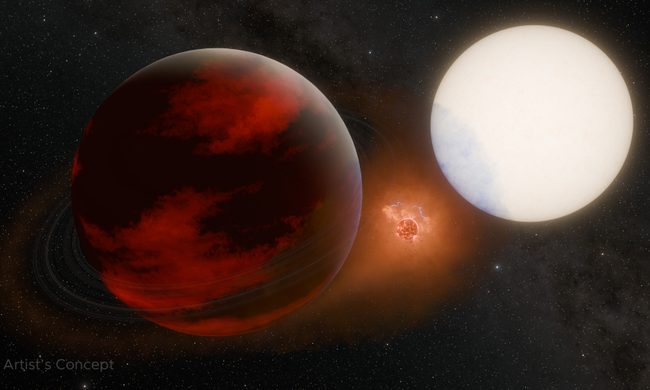
This artist’s concept depicts a potential volcanic moon between the exoplanet WASP-49 b, left, and its parent star. New evidence indicating that a massive sodium cloud observed near WASP-49 b is produced by neither the planet nor the star has prompted researchers to ask if its origin could be an exomoon.

We have already discovered more than 6,000 planets outside of our immediate neighborhood. Yet, finding a moon orbiting one of those distant worlds has proved considerably harder. Astronomers may finally have something close to the real deal, but this particular object stretches the word “moon” almost beyond recognition.

Using the European Southern Observatory’s Very Large Telescope in Chile, researchers detected strong evidence for a moon-like object in the CD-35 2722 system. Further observations are still necessary to confirm the discovery, but it could become the first confidently detected natural satellite outside our solar system. There is still one tiny complication though. This moon is apparently massive.

Read more
China’s answer to SpaceX’s reusable rockets literally catches boosters in a net
SpaceX catches boosters on legs. China just used a net.
Ammunition, Missile, Weapon

SpaceX's playbook for recovering a rocket booster generally involves legs, a precisely controlled vertical landing, and either a concrete pad or a drone ship. 

China just managed to pull off something similar, but in a slightly different way, and on July 10, it tested the method as well.

Read more