Last March, infiltrators carried out a quiet cyberattack against RSA, obtaining information about the operation of its SecurID tokens, hardware devices used by corporations, governments, and organizations to establish secure VPN connections with remote employees. RSA admitted the breach in April and began replacing SecurID tokens last June, but now RSA is revealing a bit more about the attack. Speaking at a Q&A session at the RSA Conference in London, RSA chairman Art Coviello said the attack’s methodology revealed that two separate teams were at work, and the company is very confident that the skill and resources required by the attack had to have been supported by a nation.
“We’ve not attributed it to a particular nation state although we’re very confident that with the skill, sophistication and resources involved it could only have been a nation state,” ZDNet UK quotes Coviello as saying.
RSA was apparently the victim of a targeted malware attack via a spreadsheet sent to a small number of employees, carefully worded to get someone to open the attachment. At least one did, and a malicious Adobe Flash object within the spreadsheet exploited a zero-day vulnerability that enabled the attackers to install a remote access Trojan horse. Once that was in place, hackers used the Trojan to explore RSA’s internal network and look for information about how its SecurID tokens operate. And they found it: information gleaned from the attack was subsequently used in an unsuccessful attack against U.S. defense contractor Lockheed Martin.
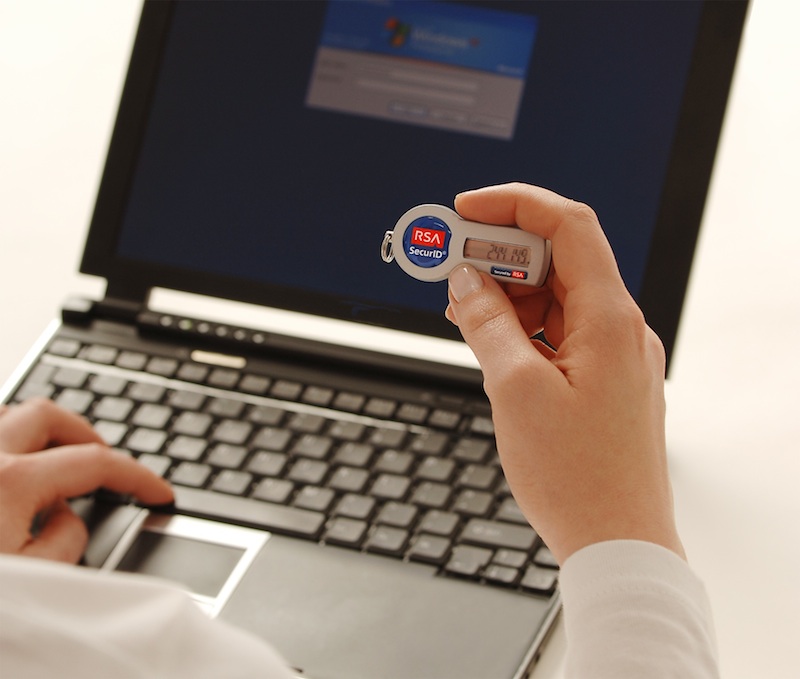
SecurID tokens are used as an additional layer of security over-and-above standard username-password combinations as a way to secure VPN logins from untrusted networks—like the Internet. When users connect, they’re prompted for an authorization key displayed on the SecurID token issued to them. These numeric keys change at a fixed interval (usually every minute)—the idea is that even if an attacker has a user’s name and password, they’d still need a unique number to access the network—and that number constantly changes. The information stolen in the RSA breach apparently enabled attackers to generate SecurID keys without the physical tokens.
Some industry watchers have expressed skepticism that the attack was carried out by a nation, noting there’s nothing in particular about the attack as subscribed that points to a government-backed operation. Yes, the information gleaned in the attack was used to go after a defense contractor, but the data could easily have been sold or changed hands numerous times after the attack—there’s not necessarily a direct connection between the perpetrators of the breach and the attackers who went after Lockheed Martin.
“It seems very odd to me for a company to say that they have determined that a country had attacked them, but to not then name the country,” wrote Sophos’ Graham Cluley in its Naked Security blog.
RSA has not disclosed how many tokens it replaced in the wake of the breach, but indicated that replacement had been completed by August.