I’ve been a Windows user since Windows 1.0 hit the streets. In that time, I’ve also reviewed more than 200 laptops, the vast majority running Windows.
And outside of a brief diversion to escape the pain of Windows Vista, I’ve never found much reason to want to secede to a Mac.
Then, I saw a particularly good deal for a 14-inch MacBook Pro with the M1 Pro, now almost a year since it was announced. So I picked it up to see what all the fuss was really about. And as much as I hate to admit it, it’s the laptop I keep coming back to, despite all the fantastic Windows options at my fingertips.
Luxurious build

For several weeks, I’d been bouncing between the Dell XPS 13 Plus and HP Spectre x360 13.5 — both review samples that I had the opportunity to hold on to for a longer look — as my daily drivers. They’re both excellent Windows 11 machines that have been listed among the best laptops, with quality builds, innovative features, strong performance, and gorgeous displays. In many ways, they’re among the best alternatives to the MacBook Pro you can find.
Despite all the ways these Windows laptops have caught up, the MacBook Pro remains in a class by itself. The 14-inch model I have is a bit larger than the Dell and HP, but not so much so that it can’t serve as the same kind of highly portable laptop. As I’ve been using it, I’ve been struck by how solid it feels. It’s rare that a laptop stands out so strongly in this regard, especially lately when so many laptops are also well-built.
It’s not that the XPS 13 Plus or Spectre x360 13.5 feel flimsy. They’re just as rigid, but they don’t feel quite as premium and sturdy as Apple’s unibody aluminum. I have a feeling it comes down to the quality of the materials used and the perfect balance achieved in the design and engineering of the MacBook Pro. Even the simple act of opening and closing the MacBook’s lid is a study in absolute refinement.
This has been a strength of MacBooks for a long time but not having used a newer MacBook in recent years, I find it still a clear advantage Macs have over Windows laptops — even if it’s a gap that’s been narrowed over the years.
Chilly performance
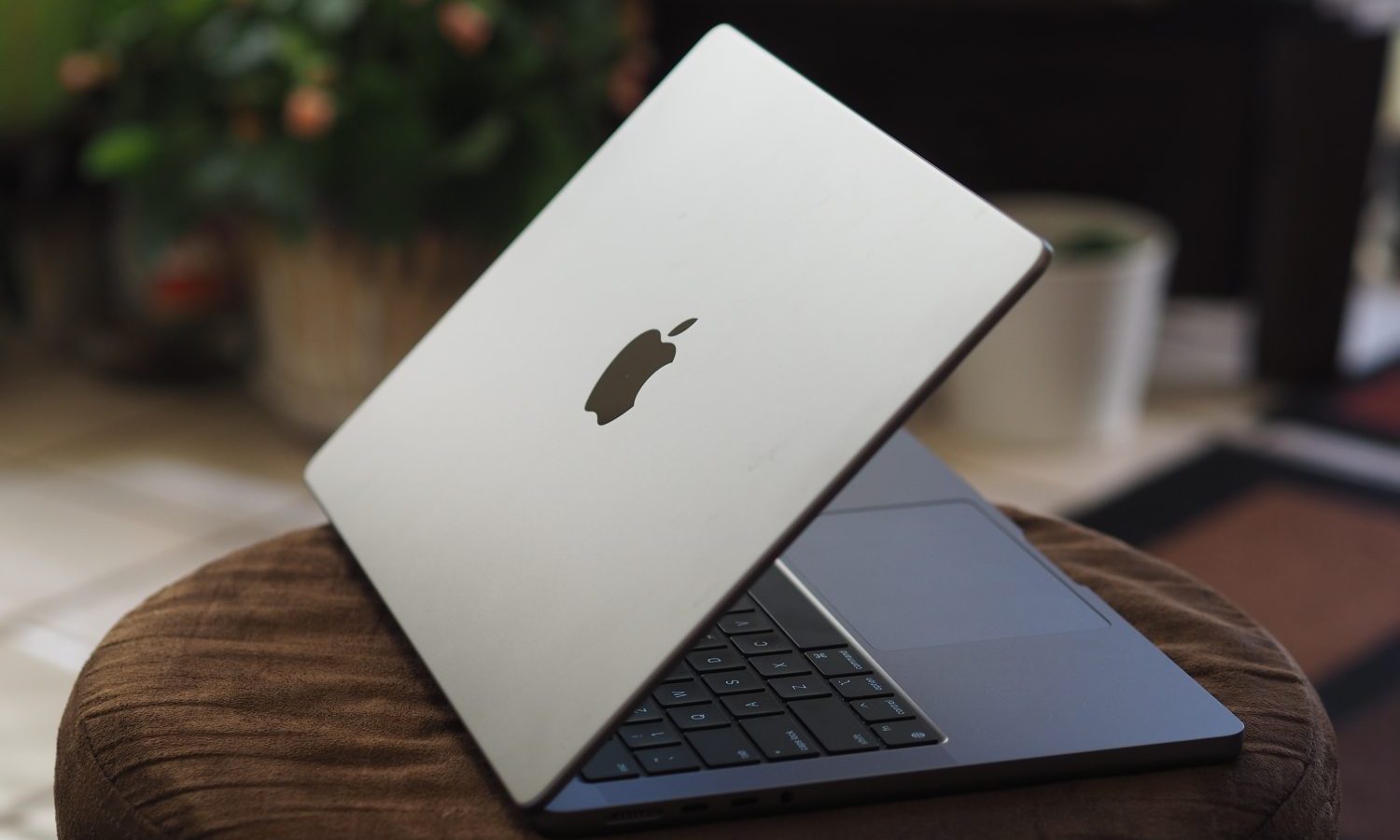
One thing I don’t like about the XPS 13 Plus and, to a lesser extent, the Spectre x360 13.5 is the heat they generate during normal use. They’re smaller laptops, but I could say the same about several 14-inch Windows laptops I’ve reviewed. The simple fact is that Intel chips can run hot and that results in either higher fan noise or a warmer chassis.
The MacBook Pro 14, on the other hand, runs remarkably cool. I’ve yet to force its fans to spin up (or I haven’t noticed them), so it’s eerily quiet as well. That’s remarkable given how much more powerful the MacBook is, and it’s a testament to Apple’s ARM architecture and macOS optimizations.
Despite that efficiency, the MacBook Pro 14 has far more top-end speed than I need in a portable machine. I rarely run tasks requiring a lot of CPU or GPU performance, like gaming and video editing, and my desktop is well-equipped for both. So for me, the MacBook is overkill, and its silent, chilly operation is what matters most.
And don’t even get me started on the awesome battery life, which is perhaps the performance advantage of the M1 Pro I appreciate most.
The best keyboard and touchpad

Apple’s Magic Keyboard is a triumphant recovery from the travesty that was its butterfly keyboard. The Magic Keyboard is a bit shallow, but it more than makes up for it with precise, snappy switches that are consistent throughout the expansive layout and large keycaps. I love the keyboards on the XPS and Spectre lineups, but the MacBook Pro 14’s is even better. And keyboard quality is one of my two most crucial factors when evaluating a laptop for my own use.
The Force Touch touchpad is also outstanding. It’s large, and not only that, but the entire surface responds to clicks with a physicality that’s hard to distinguish from mechanical buttons — while being quieter and more confident on top of it. And I like the ability to invoke extra actions with a firmer “force click.” The XPS 13 Plus also has a great haptic touchpad, but again, it can’t meet Apple’s standards.
I’ll note that the one flaw I’ve discovered with the MacBook’s design is that the touchpad is slightly loose, and using force click causes a gap at the top. It’s enough to make me wonder if dust might get inside the chassis, and it was present on both units I’ve used (hoping it was an anomaly, I returned the first one). Maybe I’m just unlucky, but regardless, it’s a minor flaw, yet one that stands out given how well the laptop is built otherwise.
A marvelous display
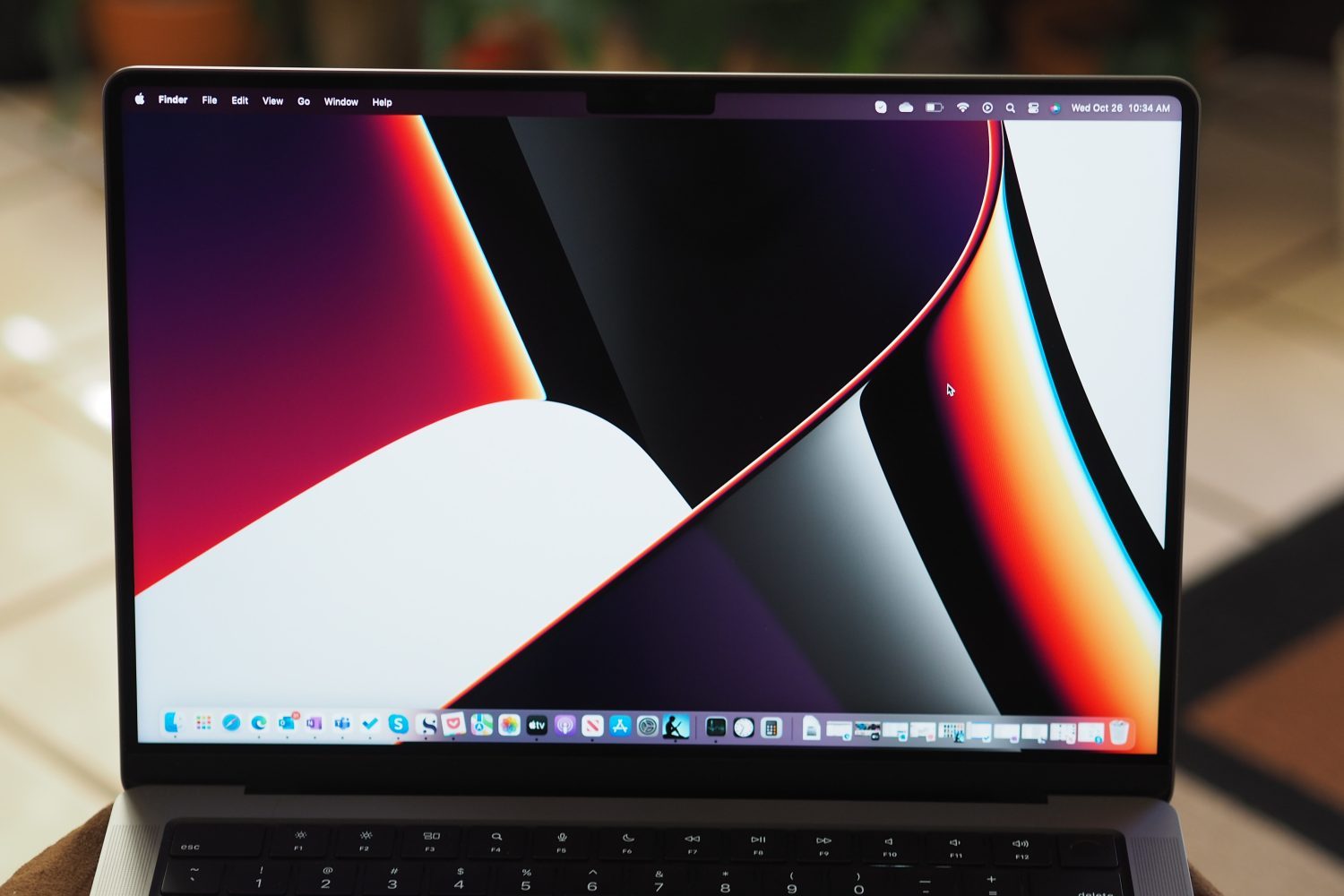
Anyone who’s read my reviews knows that I love OLED displays. They’re bright, colorful, and produce inky blacks. Both the Dell and HP have OLED options, and they’re spectacular. That matters, because a sharp display with excellent contrast — and thus superior text quality — is the second factor that makes or breaks a laptop for me.
But the MacBook Pro 14’s mini-LED display is even better. Its colors aren’t quite as wide as with OLED panels, but they’re wider than I need and they’re plenty accurate. Where the MacBook’s display excels is in its contrast, which is exceptional and equal to OLED, and in its high brightness.
For me, that matters most when watching high dynamic range (HDR) video (which Apple calls extended dynamic range, or XDR). I watch most shows that support HDR on my laptops, because my wife and I watch shows on our TVs where HDR doesn’t matter as much. It’s admittedly a subjective opinion, but the XDR display produces the best HDR video I’ve seen yet.
If you’re a gamer, that advantage in HDR gaming is even beginning to apply to AAA games like Resident Evil Village, though it’s still in the early stages, of course.
Money well spent
What’s funny is that I don’t need to buy a laptop. I review so many that I always have a few sitting around. Pulling out the credit card and spending $2,000 on a laptop is a bit of a luxury.
As I said, I’ve reviewed a lot of laptops over the last several years. The MacBook Pro 14 is the first laptop I’ve used that compelled me to spend my own money.
Now that we know the M2 MacBook Pro 14 and 16 have been delayed until next year, it strikes me that now remains an excellent time to buy one of the current M1 models.
As someone who spends many of my days testing Windows laptops, I’m as biased against saying this as anyone, but the experience of using the MacBook Pro still can’t be replicated on a Windows laptop — and that’s why I won’t be returning mine anytime soon.