  1. Home
  2. Emerging Tech
  3. Web
  4. Legacy Archives

Robotic guards coming to South Korean prisons

Add as a preferred source on Google

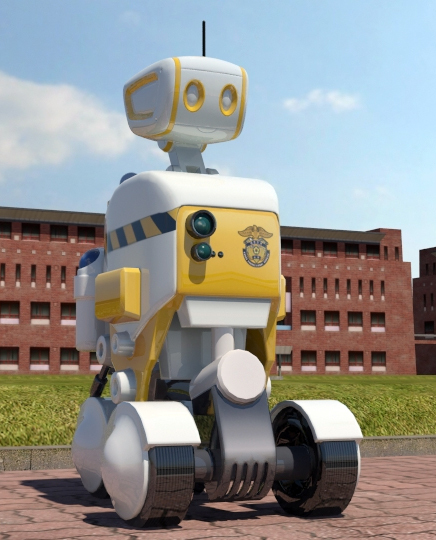
Guards in a South Korean prison will soon be introduced to some new colleagues – 150cm-tall robots on wheels.

In the latest example demonstrating the country’s interest in robotic technology, the robots will be put to work in a prison in the city of Pohang, located southeast of the capital Seoul, from March next year. If the month-long trial is successful, more prison guards may be turning up to work alongside robots in the near future.

Recommended Videos

A group of scientists, who developed the robots in cooperation with the country’s justice ministry, spent a billion won ($850,000) developing the robotic prison guard, which is supposed to enable its human counterparts to concentrate more on rehabilitation work with offenders.

The robots, which will be used mainly at night, will patrol the prison on the lookout for suspicious behavior among prisoners. Sensors on the robot will be able to study conditions in the cells and report back to the officer in charge – presumably a human one.

Speaking to the Wall Street Journal about the robotic guards, project leader Professor Lee Baik-chul of Kyonggi University said, “Unlike CCTV that just monitors cells through screens, the robots are programmed to analyze various activities of those in prison and identify abnormal behavior.”

Lee said that prison officers are happy about the plan to bring in robots as it should help reduce their workload on the night shift.

Inmates, on the other hand, were more cautious about the idea and asked for reassurance about their role. Presumably they were worried the robots might be heavy-handed brutes, equipped with an array of weapons able to be deployed at a moment’s notice.

“That’s a concern,” Lee said. “But the robots are not terminators. Their job is not cracking down on violent prisoners. They are helpers. When an inmate is in a life-threatening situation or seriously ill, he or she can reach out for help quickly.”

In fact, according to Lee, his team are currently finishing off building the robots, taking special care to make them look “humane and friendly.”

And it’s not just Korean prisons where robots have been put to work. Late last year, schools in the country began testing out teacher-bots in classrooms. The rotund robots, which cost more than $1.3 million to develop, were designed to teach English to students.


Trevor Mogg
Contributing Editor
Not so many moons ago, Trevor moved from one tea-loving island nation that drives on the left (Britain) to another (Japan)…
Google just canceled its AI Studio mobile app, and it’s not all bad news
Logo, Symbol, Disk

Google AI Studio was on track to make its way to Android and iPhone, giving developers and AI enthusiasts a dedicated place to build prompts and experiment with Google's latest models from their phones.

That's no longer happening. In a post shared by the official Google AI Studio account on X, Google confirmed that it's canceling the standalone AI Studio mobile app before launch. The announcement comes despite the company saying nearly 800,000 people had already pre-ordered the app across iOS and Android.

Read more
Google Earth’s AI misadventure lasted only a day. It was a tale of dangerous ignorance.
Nuclear reactors, tanks, and historical destruction on a life-like satellite map? Yeah, that's bad.
Nano Banana AI image generator representation.

Technology behemoths are clearly not reading the room, or they are just moving faster than they should when it comes to AI deployment. Google has already stuffed its Gemini AI in every corner of its software stack, from Android to daily productivity tools like Gmail that are used by hundreds of millions of users every day. AI is everywhere. Not all of it is bad, mind you. But in a few places, it just feels forced.

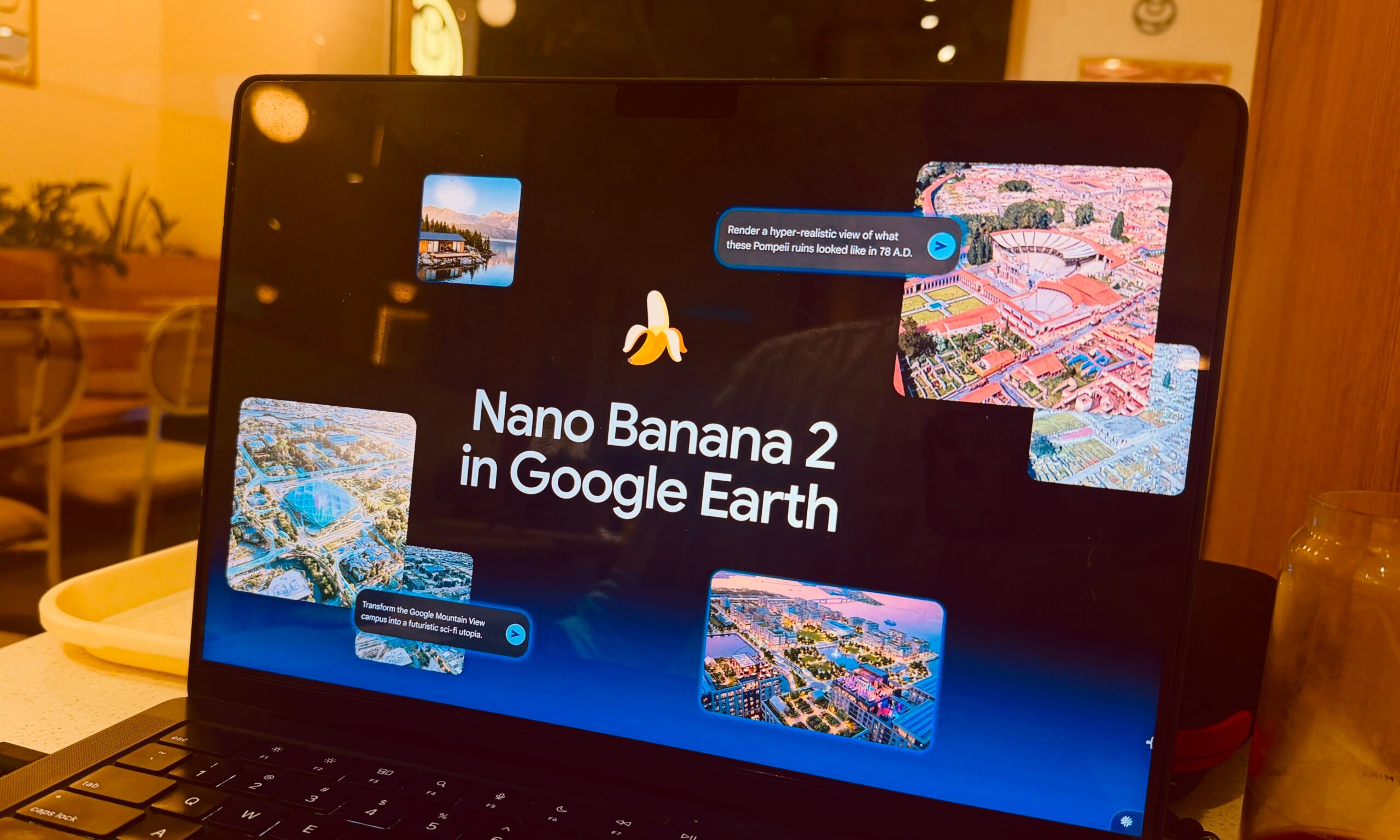
In its latest AI-fication experiment, the company targeted Google Earth. The idea was to let the audience use its Nano Banana 2 AI image generator and make images that can be placed on the map view. On paper, it's a cool idea. What would the Colosseum of Rome look like in your urban neighborhood? Yeah, fun stuff like that.

Read more
Google’s new AI gives robots better balance, smarter hands, and teamwork capabilities
Google just made robots a lot less clumsy and a lot more helpful.
Gemini robotics 2.0

Google DeepMind just brought sci-fi robots closer to reality, and it is very exciting. Building on its original Gemini Robotics model, the company has introduced Gemini Robotics 2, an AI system designed to help robots think, move, and even work together. Unlike most robots today, which rely on pre-programmed routines or someone controlling them remotely, this new system lets robots figure things out on their own when situations get unpredictable.

Can robots finally handle whole-body tasks?

Read more