1. Home
  2. Space
  3. News

NASA launches fresh water observation satellite

Add as a preferred source on Google
Promotional image for Tech For Change. Person standing on solar panel looking at sunset.
This story is part of Tech for Change: an ongoing series in which we shine a spotlight on positive uses of technology, and showcase how they're helping to make the world a better place.

NASA has launched its first mission to survey fresh water systems from a global perspective. The Surface Water and Ocean Topography (SWOT) mission launched from Space Launch Complex 4E at Vandenberg Space Force Base in California on Friday, December 16 at 3:46 a.m. PT. The SWOT spacecraft was launched using a SpaceX Falcon 9 rocket.

The mission aims to observe not only the oceans but also fresh water systems such as lakes and rivers, making it the first mission to do so from space. The intention is for the mission to study the flow of water between these systems and the ocean and to observe the depth of water to get a more complete picture of the flow of water across the planet.
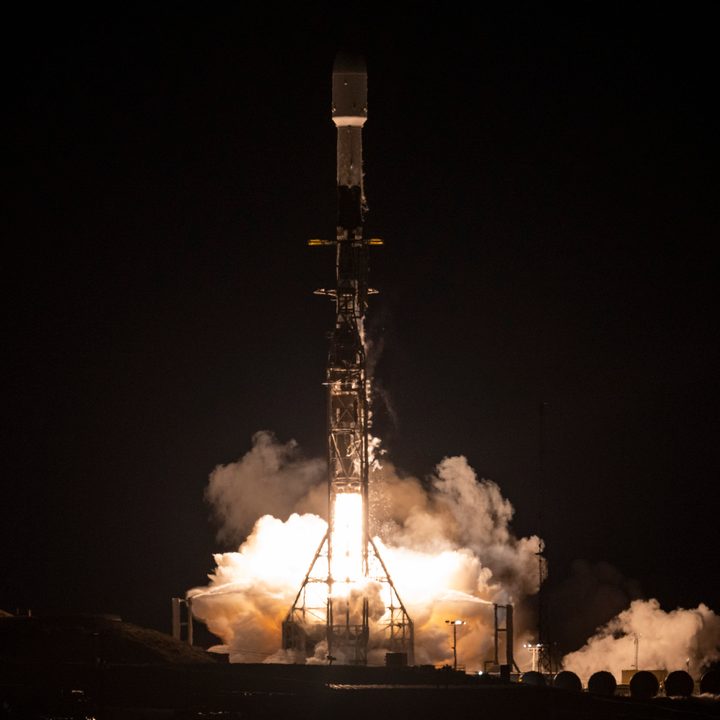
A SpaceX Falcon 9 rocket launches with the Surface Water and Ocean Topography (SWOT) spacecraft onboard. NASA/Keegan Barber

Understanding the flow of water across the globe is important for understanding the effects of climate change and for monitoring climate change more closely.

Recommended Videos

“Warming seas, extreme weather, more severe wildfires – these are only some of the consequences humanity is facing due to climate change,” said NASA Administrator Bill Nelson in a statement. “The climate crisis requires an all-hands-on-deck approach, and SWOT is the realization of a long-standing international partnership that will ultimately better equip communities so that they can face these challenges.”

SWOT will be able to survey freshwater systems over more than 90% of the Earth’s surface, covering the global area at least once every 21 days. It will use a radar-based instrument called a Ka-band radar interferometer, or KaRIn, to observe large areas of the surface at once. Being able to observe large swaths of the surface at a higher resolution enables more accurate monitoring of freshwater systems.

“We’re eager to see SWOT in action,” said Karen St. Germain, NASA Earth Science Division director. “This satellite embodies how we are improving life on Earth through science and technological innovations. The data that innovation will provide is essential to better understanding how Earth’s air, water, and ecosystems interact – and how people can thrive on our changing planet.”

Georgina Torbet
Georgina has been the space writer at Digital Trends space writer for six years, covering human space exploration, planetary…
China’s answer to SpaceX’s reusable rockets literally catches boosters in a net
SpaceX catches boosters on legs. China just used a net.
Ammunition, Missile, Weapon

SpaceX's playbook for recovering a rocket booster generally involves legs, a precisely controlled vertical landing, and either a concrete pad or a drone ship. 

China just managed to pull off something similar, but in a slightly different way, and on July 10, it tested the method as well.

Read more
Dimming the sun sounds unhinged, but this new study on El Niño makes a surprisingly good case for it
A natural test case, Australia's worst-ever wildfire season, suggests the idea deserves serious consideration.
Nature, Outdoors, Sky

When I first saw "scientists propose dimming the sun," I rolled my eyes. It sounds like a science fiction movie cooked up after watching many climate documentaries. But a new study, published on July 8, 2026, in the journal Science Advances, seems to have a genuinely compelling argument.

A Super El Niño is currently forming in the Pacific, feared to be the most intense in decades. It could escalate floods, wildfires, and extreme heat events worldwide. However, Researchers at UC San Diego's Scripps Institution of Oceanography, led by climate scientists Kate Ricke and Jessica Wan, are now proposing one of the most interesting solutions I’ve come across.

Read more
You can now walk through space and gaze into a black hole at this VR exhibit
Smithsonian Starstruck lets you drift past dying stars and see the origin point of the universe for as little as $18 a person.
Smithsonian Starstruck featured

Most planetarium shows ask you to sit still and look up. The Smithsonian's new VR exhibit takes a different approach, letting visitors walk through the vast expanse of the universe, drifting past stars, planets, and a black hole to get a physical sense of its true scale.

A $29 ticket to the edge of the galaxy

Read more