  1. Home
  2. Computing
  3. News

Restaurant chain to use AI to combat ‘sushi terrorism’

Add as a preferred source on Google

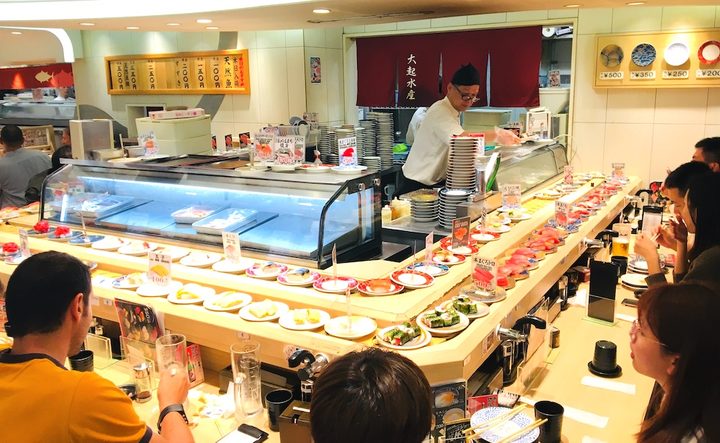
A conveyor-belt sushi restaurant in Japan.
A conveyor-belt sushi restaurant in Japan. Trevor Mogg / DT

Sushi fans in Japan were appalled last month when several videos emerged showing people performing vile acts such as putting their saliva on menu items at a conveyor-belt restaurant, leaving them for other unsuspecting diners to eat.

Recommended Videos

Apparently performed as stunts by a tiny number of attention-seeking social media users, the dangerous act has been dubbed “sushi terrorism.”

Now restaurants in the industry are scrambling to reassure customers that they’re doing all they can to ensure their food is safe to eat.

One chain, Kura Sushi, is planning to deploy cameras using artificial intelligence (AI) to scan diners for suspicious behavior, the Yomiuri Shimbun reported on Tuesday.

At the current time, Kura Sushi’s sushi plates appear on the conveyor belt with a cover, as this video shows. As you take the plate, the cover flips up and then back down again once a diner has fully removed the selected item. At the end of 2021, Kura Sushi started using AI cameras to monitor the opening and closing of the covers in an exercise aimed at counting plate usage.

Now the company says it’s going to update the camera system so that it will also be able to detect suspicious behavior, such as a cover being repeatedly opened and closed. “The head office will contact the chain store if it determines that there is a possibility of unwelcome behavior, and staff at the store will talk to the customer or report the incident to police,” the Yomiuri said.

Since last week, the industry’s largest sushi chain, Akindo Sushiro Co., has begun an order-only service to ensure items remain on the belt for the shortest time possible. It was at Sushiro that a customer videoed himself dabbing saliva onto sushi as it passed by on the belt.

Another chain, Kappa Sushi, is increasing security camera checks and has told its staff to be on the lookout for customers interfering with menu items.

Japan’s first sushi restaurant to deploy a conveyor belt opened in Osaka in 1958, though the design really took off when it appeared at the Osaka World Expo in 1970.

Many of today’s restaurants send the sushi out without a cover, but in light of recent events, this seems certain to change. Indeed, some fear the acts of so-called sushi terrorism have put the very existence of the conveyor-belt format at risk.

Trevor Mogg
Contributing Editor
Not so many moons ago, Trevor moved from one tea-loving island nation that drives on the left (Britain) to another (Japan)…
AI is finding Apple security flaws faster than Apple can sort through them
Apple has limited how many bug reports researchers can keep open as AI tools produce both genuine Mac vulnerabilities and a flood of questionable submissions
Lighting, Architecture, Building

Apple has capped the number of security reports researchers can keep open at once after AI bug hunting put its review process under pressure, according to the Financial Times.

Some submissions describe hallucinated or purely theoretical risks. Others uncover vulnerabilities serious enough to require patches. Bynario told the FT that it found more than 50 possible macOS flaws in three weeks, including a privilege-escalation chain that could give an attacker full control of a Mac.

Read more
Anthropic is paying $1.5 billion over pirated books, but it can still legally cut up purchased ones
The settlement addressed unauthorized ebook downloads, not the destructive scanning of lawfully bought physical copies, a distinction now alarming booksellers
Book, Publication, Indoors

A federal judge has approved Anthropic’s $1.5 billion settlement over nearly half a million pirated books. The same litigation also protected a more physical method of feeding its AI systems. Anthropic bought print books, removed their bindings, scanned every page and destroyed the originals.

The legal divide came down to acquisition. The settlement covers books downloaded from LibGen and PiLiMi, while the court treated Anthropic’s one-for-one conversion of purchased books into private digital files as fair use. Training AI models on lawfully acquired material was also considered transformative.

Read more
Google Earth’s AI misadventure lasted only a day. It was a tale of dangerous ignorance.
Nuclear reactors, tanks, and historical destruction on a life-like satellite map? Yeah, that's bad.
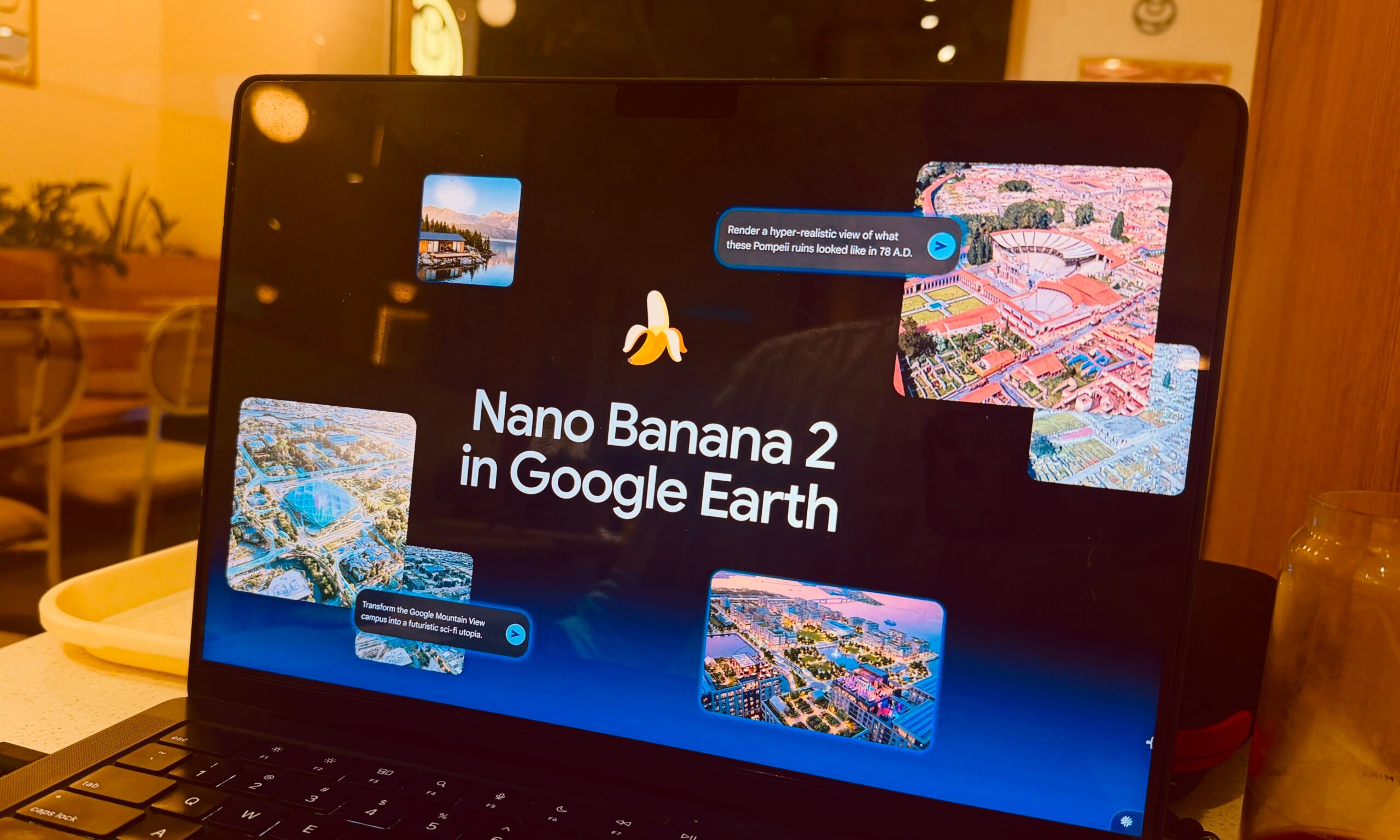
Nano Banana AI image generator representation.

Technology behemoths are clearly not reading the room, or they are just moving faster than they should when it comes to AI deployment. Google has already stuffed its Gemini AI in every corner of its software stack, from Android to daily productivity tools like Gmail that are used by hundreds of millions of users every day. AI is everywhere. Not all of it is bad, mind you. But in a few places, it just feels forced.

In its latest AI-fication experiment, the company targeted Google Earth. The idea was to let the audience use its Nano Banana 2 AI image generator and make images that can be placed on the map view. On paper, it's a cool idea. What would the Colosseum of Rome look like in your urban neighborhood? Yeah, fun stuff like that.

Read more