  1. Home
  2. Emerging Tech
  3. Mobile
  4. Legacy Archives

Stream TV to unveil ‘no glasses’ 3D tech for TVs, mobile and more at CES 2012

Add as a preferred source on Google

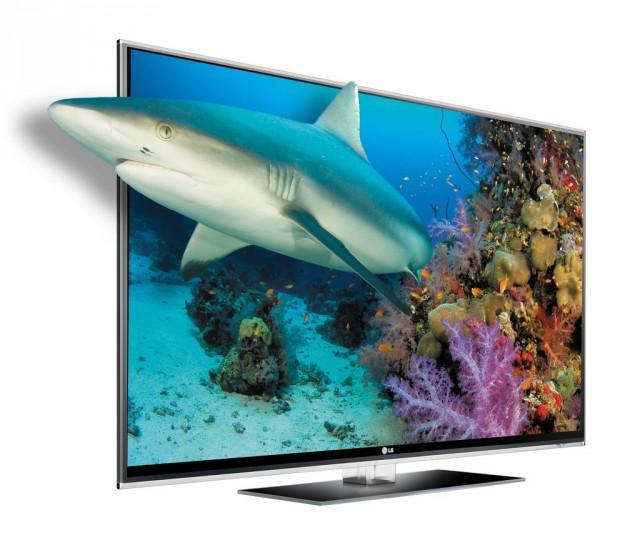
3d tv3D television with no glasses is the phrase being touted by Philadelphia-based Stream TV Networks which is promising to unveil a product during CES 2012, that will show off: “unprecedented autostereoscopic 3D imagery.”

The product has been branded as “Ultra-D,” and to go with the big name is big expectation. Stream TV claims that Ultra-D will make 3D television simple and accessible by converting 2D content into 3D autostereoscopic (without glasses), as well as taking any 3D stereoscopic content and making it watchable in 3D without glasses; though there hasn’t been much explanation as to how it will accomplish this.

Recommended Videos

The aim is to speed up 3D adoption. Rather than waiting for more 3D content to come to consumers, Stream TV wants the content to come to 3D tech. The unlimited, real time conversion supposedly works with all formats such as DVD, PC gaming, Blu-ray, cable and more. The company says there will be products for TVs as well as converter boxes, tablets, laptops, gaming devices, mobile phones and even digital picture frames.

“We are extremely proud of what we have been able to accomplish with our Ultra-D technology. It is capable of creating a significant shift in the way people view media, comparable to the transition from black and white to color TV,” said Stream TV’s CEO Mathu Rajan. “Our ultimate goal was to create a solution that addresses existing concerns impeding the adoption of 3D—consumer aversion to expensive glasses, viewer discomfort, variance in individual vision and preference and the slow creation of 3D content.”

Yes, aside from the “no glasses” tag, Rajan is also pushing the customization of 3D as a prominent feature which will address spatial perception by increasing or decreasing the 3D rendering; no more one-size-fits-all. A revolutionary product comparable to the transition from black and white TV? We’ll have to have to wait until the press unveiling at CES to find out more. The Ultra-D product launch will happen on January 9 at CES 2012.

Jeff Hughes
Former Digital Trends Contributor
I'm a SF Bay Area-based writer/ninja that loves anything geek, tech, comic, social media or gaming-related.
Anti-surveillance clothing is getting cheaper, but don’t expect an invisibility cloak
Affordable shirts now claim to confuse facial recognition, although their protection depends heavily on the camera and software watching you
Chart, Plot, Adult

Anti-surveillance clothing is starting to look less like an art-school experiment and more like something you could actually wear outside. Shirts designed to confuse facial recognition systems now cost about as much as ordinary streetwear, although buying one won’t make you disappear.

The Guardian reports that designers are using face-like prints, unusual cuts and infrared lights to interfere with computer vision. These techniques target specific weaknesses, so their success depends on what happens to be watching you.

Read more
This spinning drone hides in plain sight using a visual illusion
This drone doesn't turn invisible. It tricks your brain into thinking it has.
Phantom Twist

For decades, engineers have chased the dream of an invisible drone. The usual approaches have involved transparent materials, camouflage coatings, or complex optical systems that bend light around an object. Researchers at Northwestern University decided to take a completely different route. Instead of hiding the drone itself, they chose to fool the human eye.

The result is Phantom Twist, an experimental drone that spins so rapidly it almost disappears into the background. It's not technically invisible, but to anyone watching, it looks more like a faint blur than a flying machine.

Read more
This smart knitted fabric can flip switches, count your steps, and even change shape
Grandma's knitting just entered its Iron Man era
Representative Image

For most of us, knitting brings to mind sweaters, scarves, and perhaps an ambitious grandmother determined to make winter more fashionable. Researchers at Harvard University, however, have a far more futuristic vision. They've transformed ordinary knitted fabric into a programmable material capable of changing shape, acting as an electrical switch, sensing movement, and potentially forming the foundation of tomorrow's wearable technology.

The research, published in Advanced Functional Materials by scientists at the Harvard John A. Paulson School of Engineering and Applied Sciences (SEAS), demonstrates how machine-knitted textiles can "snap" between multiple stable shapes without relying on motors or rigid mechanical parts.

Read more