Wireless headphones (and wireless earbuds) have been hugely popular because of their wire-free convenience and handy features like active noise cancellation (ANC), but audiophiles have never been big fans of the way they sound. Thanks to a new partnership between PSB Speakers, MQA, and Sonical, that could be about to change in a big way: the threesome is planning to launch the world’s first set of wireless headphones that use ultra-wideband (UWB) technology instead of Bluetooth, in the first quarter of 2024.
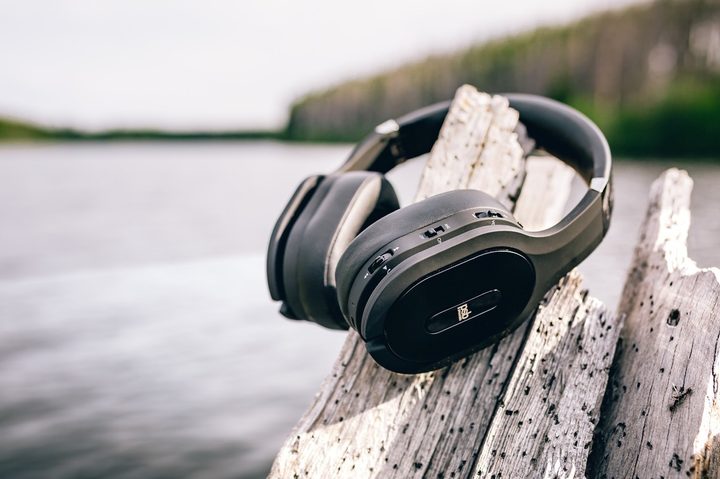
Bluetooth, which has been the standard technology for wireless, portable audio for years, has always suffered from a limited amount of bandwidth. And even though recent improvements in Bluetooth codecs from Qualcomm have managed to push the technology far enough to support CD-quality lossless audio, it’s unlikely Bluetooth will ever be capable of much more.
UWB — the same wireless technology that Apple uses in its iPhones, AirTags, and the new AirPods Pro 2 charging case — has a very limited range as compared to Bluetooth (about 10 feet versus up to 100 feet), but within that range, it offers a huge amount of bandwidth. More than enough to supply a set of headphones with the highest quality lossless hi-res audio of up to 24-bit/192kHz and beyond.
UWB is a very low-power wireless technology, which could mean huge amounts of battery life for any headphones that incorporate it. The planned headphones will make use of Antennaware’s UWB antenna, which the partnership says can address any issues associated with body blocking, which could occur with wireless wearable devices.
Canada-based PSB Speakers will make the headphones, and they will come embedded with an operating system known as CosmOS from Sonical. Audio will be transported over the UWB link using MQair (also known as SCL6), the recently announced wireless audio codec from MQA, the digital audio company founded by Bob Stuart of Meridian Audio fame.
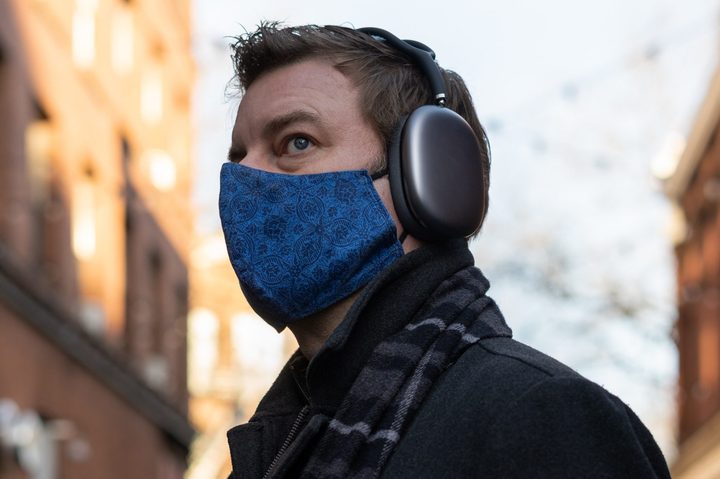
As with Qualcomm’s advanced aptX Bluetooth codecs, any UWB headphones or earbuds will need a compatible phone or another device that has a UWB radio built-in. While there aren’t a lot of smartphones that do, the ones that already have it represent a huge chunk of the mobile market: UWB is onboard every iPhone 11 and newer, and every Samsung Galaxy S21 Plus and Ultra models and newer, and both the Google Pixel 6 Pro and 7 Pro.
“Our use of the CosmOS platform to make the world’s first software-defined wireless headset and the inclusion of MQA’s adaptive wireless codec helps set a new benchmark for a high resolution, mobile high-fidelity product,” said Gordon Simmonds, President and CEO of Lenbrook Industries, PSB Speakers’ parent company, in a press release. “We believe this product underscores what Paul Barton and the PSB team have accomplished over the brand’s 50-year history in the pursuit of audio excellence for listeners at home and now on the move.”
“MQA was founded by one of the great innovators in audio,” said Mike Jbara, CEO of MQA. “We design by thinking of the consumer experience first which means we are comfortable challenging the status quo. The vision shared by our partners at PSB Speakers and Sonical, bringing together superior audio quality and the next generation of consumer convenience, makes this a perfect fit for our latest technology SCL6.”