The iPhone 14 Pro Max is — without a doubt — an incredible smartphone. It’s easily one of the best phones you can buy in 2023, touting hardware and software that are nearly perfect on every level. It’s the phone I’ve carried with me every day since it launched last October, but after living with it for about five months, I’m worried I made a big mistake in choosing it to be my primary iPhone.
There’s nothing wrong or bad about the iPhone 14 Pro Max. It’s the most capable and technically impressive iPhone currently on the market. But even with that being the case, I can’t use it anymore — and I’m moving on to something else.
My biggest issue with the iPhone 14 Pro Max
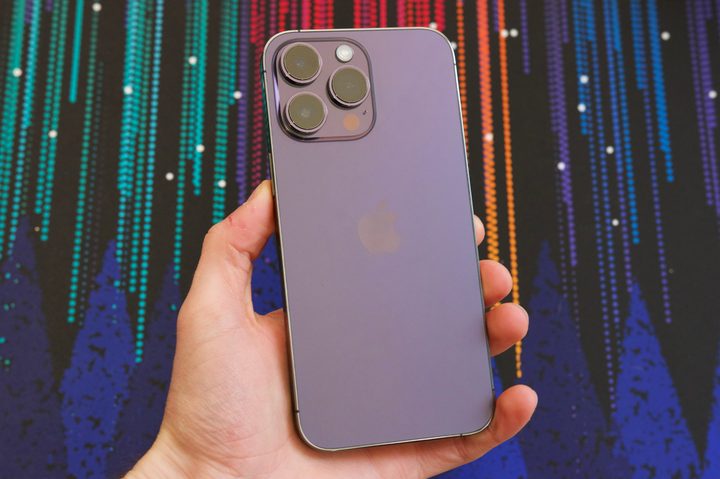
Prior to getting the iPhone 14 Pro Max, one of my biggest reservations was the phone’s gargantuan size. At the time, Digital Trends’ Andy Boxall talked about how the large footprint was one of the main things that stopped him from getting an iPhone 14 Pro Max in the first place. But unlike Andy, I threw caution to the wind and went the Pro Max route anyway. I said to myself: “The size won’t be a problem! I’ll get used to it just fine!” That’s what I naively talked myself into believing anyway.
But as the weeks and months progressed, I gradually found neither of those things to be true.
There wasn’t one single tipping point in which the iPhone 14 Pro Max’s size became too much to handle, but rather a lot of little things I’ve had to deal with along the way. If I’m typing long messages on the keyboard, I have to rest the iPhone 14 Pro Max on a table or pillow. If I sit down with the phone in my front pocket, the top half pops out and jabs me in my waist.
And any kind of one-handed use is guaranteed to be awkward. It’s not impossible, but it always requires advanced hand gymnastics that are uncomfortable and put the iPhone 14 Pro Max in danger of being dropped. As much as I appreciate the added screen size and long battery life, I often feel like I’m begrudgingly putting up with the iPhone 14 Pro Max to get those things, rather than simply enjoying them.
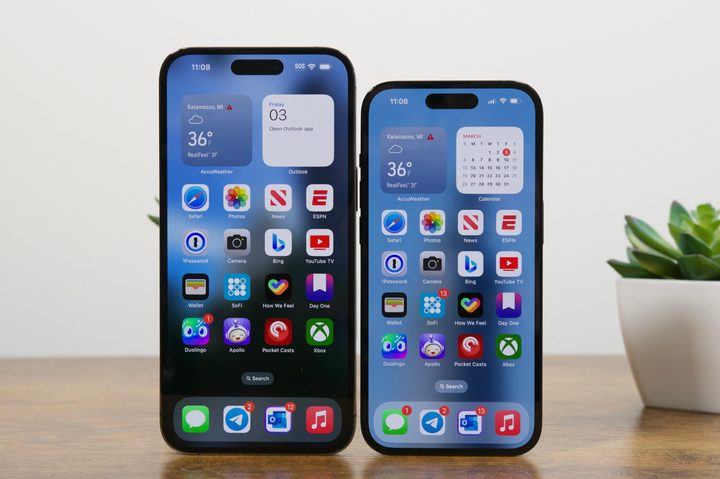
The iPhone 14 Pro Max’s size was far from a surprise going into it; I knew the phone was big and bulky. And while I prefer smaller phones, I don’t mind using other large Android phones. I’ve used the Pixel 7 Pro, OnePlus 11, and Galaxy S23 Plus — all big phones — without their size being a nagging issue. So, what about the iPhone 14 Pro Max really did me in?
For one thing, it’s markedly heavier than any of those other phones mentioned above. Compared to the 212-gram, 205g, and 196g weights of those three Android phones, respectively, the iPhone 14 Pro Max clocks in at a hefty 240g. And that’s despite its height and width being within 3 millimeters of its Pixel, OnePlus, and Galaxy competition.
It’s one thing to look at those numbers on a spec sheet online, but it’s another thing entirely when you’re actually lugging around a 240g smartphone with you on a daily basis.
Other big phones do it better
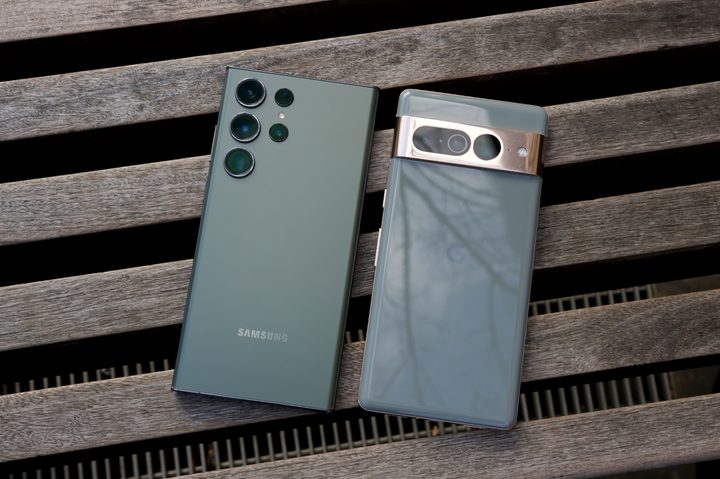
Combined with my growing frustration with the iPhone 14 Pro Max’s awkward size, things really came to a head when I got the Galaxy S23 Ultra last month. The S23 Ultra really isn’t smaller than the iPhone 14 Pro Max — weighing a hefty 234g and measuring a couple of millimeters taller and wider. But I’ve found myself enjoying it more than the iPhone.
One of the main reasons for this is the in-hand feel. Along with being a few grams lighter than the iPhone 14 Pro Max, the Galaxy S23 Ultra has a rounded frame compared to the totally flat design of the iPhone. It’s a subtle difference, but it’s one that allows the S23 Ultra to feel more ergonomic and comfortable to hold. I never feel like I have a great grip on the iPhone 14 Pro Max, and when you add that with the sharp edges of its flat frame, the end result is a phone that’s mighty tricky to wrangle — especially compared side by side with the S23 Ultra.
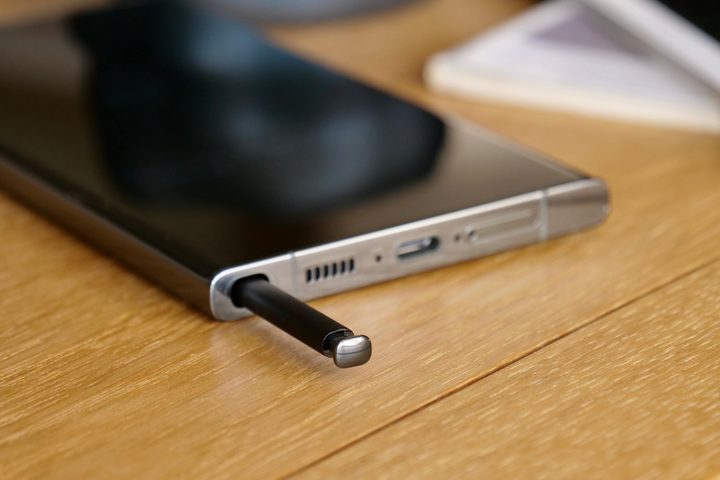
But it’s not just a weight and design thing. Samsung also does more with the Galaxy S23 Ultra’s size than Apple does. Compared to the smaller S23 and S23 Plus, the S23 Ultra gives you a vastly superior camera system, a gigantic battery, faster charging, more storage, and even a built-in S Pen stylus.
What am I getting with the iPhone 14 Pro Max that I couldn’t get with the regular iPhone 14 Pro? A larger display and a bigger battery. But that’s it. The camera, charging, storage, and other specs are identical. That creates a strong argument in favor of the smaller iPhone 14 Pro, while making it harder to justify why I’m still using the 14 Pro Max.
Downgrading to the regular iPhone 14 Pro

It’s because of those reasons that I switched from the iPhone 14 Pro Max to the iPhone 14 Pro a couple of weeks ago. And you know what? I’m really glad that I did. It’s just as fast, the camera experience is identical, all of my apps work the same, and the Dynamic Island is still there … for better or worse.
The best part? I get that same experience on a phone I can use without constantly thinking about how heavy or bulky it is. I can use the iPhone 14 Pro one-handed, throw it in a tight pocket with ease, and type without a pillow to prop it up on — it’s great.
It hasn’t been a perfect experience, though. Battery life is noticeably worse than on the iPhone 14 Pro Max, and I’m regularly looking for a charger by late afternoon. It’s a big sticking point, and why I still think the iPhone 14 Pro Max is the better iPhone for folks who can stomach the price and size.
But if you’re like me and are hypersensitive toward the latter, I’d suggest opting for the regular iPhone 14 Pro if you’re torn between the two. I know I’m glad I finally did, and it’s the iPhone I’ll keep rocking for the foreseeable future — until it’s time for the iPhone 15, that is.