  1. Home
  2. Mobile
  3. Legacy Archives

Deutsche Telekom looking for ways to keep T-Mobile going

Add as a preferred source on Google
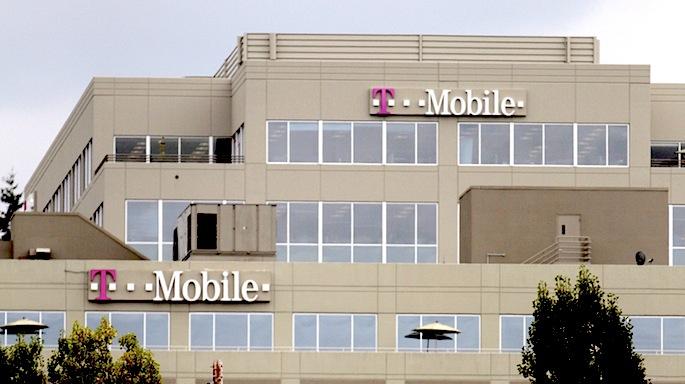
T-Mobile-HQ-Bellevue
Image used with permission by copyright holder

In the wake of the abandoned merger effort from AT&T, T-Mobile USA parent company Deutsche Telekom is looking for ways to keep the number-four U.S. mobile operator afloat—and, according to the Financial Times (registration required) that could include issuing new bonds and selling off cell towers—although the company does not expect to announce its strategy for T-Mobile USA until after its next financial results in February.

Deutsche Telekom will be receiving a sweet break-up fee from AT&T in the wake of the failed deal, including $3 billion in cash and a combination of roaming rights and wireless spectrum licenses with a book value of another $1 billion. However, while those assets will help T-Mobile towards a soft landing, they don’t solve T-Mobile’s fundamental problem: they have absolutely no path forward towards 4G LTE technology. Although T-Mobile ostensibly operates the broadest “4G” networking in the United States, it’s based on a unique flavor of HPSA+ technology particular to T-Mobile. The rest of the mobile world is focused on deploying 4G services via LTE. T-Mobile USA does not have the spectrum licenses to roll out LTE on its own, so it will either need a partner or some way to acquire sufficient spectrum licenses to offer LTE. Even if the licenses were available, the funds its receiving from AT&T aren’t enough to buy enough airspace, let alone deploy a new 4G network. A report in Reuters cites Jeffries analyst Ulrich Rathe as putting the potential cost of T-Mobile building out an LTE network at around $9 billion.

Recommended Videos

According to the Financial Times, T-Mobile is considering a strategy that would have the company selling its network of cell towers and transmission stations to other companies, then retaining access to the towers and equipment via long-term leases. Such a deal could reportedly net T-Mobile as much as $1 or $2 billion in additional cash. The company may also offer additional bonds to investors: if there’s serious interest, it would help Deutsche Telekom placate its core investors by showing T-Mobile USA can operate as a separate entity that won’t leach funds (and profits) from the company’s European operations.

Other options might include partnerships with Dish Network—which could use a mobile carrier as a partner for its planned satellite-assisted LTE service or Sprint, which would likely welcome T-Mobile’s additional facilities and spectrum as it tries to build out its own LTE network. However, an outright merger with Sprint seems like a longshot, for many of the reasons Sprint outlined in its suit to stop the AT&T/T-Mobile deal (reducing competition from four carriers to three)—Sprint may be more interested in having T-Mobile as a customer, rather than an acquisition. T-Mobile could also be looking at partnerships with regional wireless operators like C-Spire, Leap, and MetroPCS, although it’s not clear how those arrangement would work out for anything but LTE.

Geoff Duncan
Former Contributor
Geoff Duncan writes, programs, edits, plays music, and delights in making software misbehave. He's probably the only member…
The best phones in 2026: our 14 favorite smartphones right now
We tested phones across all price brackets so that you can make the best pick based on your needs and budget.
Google Pixel 10 Pro Fold vs Galaxy Z Fold 7 cameras

Choosing the right smartphone in 2026 is no easy task. Apple and Android manufacturers now have strong options at almost every price, while better cameras, longer battery life, improved software support, new AI features, and more refined foldable designs have made the market more competitive than ever. But picking one is not easy, especially if your budget is tight, or you are just legitimately concerned about getting the best value for your money and need a reliable daily driver for long-term usage.

We have tested and compared the leading smartphones available today, looking beyond the spec sheet to see how they actually perform in daily use. Camera quality, battery life, performance, display quality, software, design, and long-term value all play a part in our recommendations. Whether you are looking for a powerful flagship, a dependable budget phone, a compact device, or a foldable, this guide should help narrow down your choices.

Read more
Snapchat Planets Meaning: Order, Rankings, and How Friend Solar System Works
Snapchat Planets turns your best friends list into a solar system, and yes, your orbit says a lot
Snapchat Planets being shown on the Snapchat app on iPhone.

Snapchat+ includes several exclusive features, but few have generated as much curiosity as Snapchat Planets. Part of the app's Friend Solar System, it transforms your Best Friends list into a planetary ranking, assigning each of your top eight friends a planet based on how often you interact.

From Mercury, which represents your closest friend, to Neptune, which represents your eighth closest, the system offers a quick visual snapshot of your interactions. But what do the different planets actually mean, and how does Snapchat decide who gets which one?

Read more
How to use WhatsApp Web
We'll show you how to use WhatsApp on your desktop or laptop
WhatsApp Web

As one of the most popular messaging services, you’ve already heard of WhatsApp. From its humble beginnings in 2009—two years before Apple introduced iMessage—to its acquisition by Facebook (now Meta) in 2014, WhatsApp has become the dominant messaging platform around the globe.

In recent years, it's grown even more potent with new features like video messages, self-destructing voice messages, the ability to edit sent messages, and more. We even finally got an WhatsApp iPad app in May 2025.

Read more