As long as I’ve been a gamer, I’ve always stuck with home consoles. From the NES to the PlayStation 5, consoles were always my gaming home base, and I was happy with the convenience of it. When it comes to PC gaming, though, I’ve always watched from afar, jealous of the buttery-smooth frame rates and graphics, but intimidated by the parts, drivers, settings, and prices.
But the time had come. I needed a new PC anyways, and I was ready to see if everything the PC Master Race folks preached really lived up to the hype. As it turns out, being told what PC gaming had to offer didn’t make me a believer — but feeling it for myself did the trick.
Ready Player 2
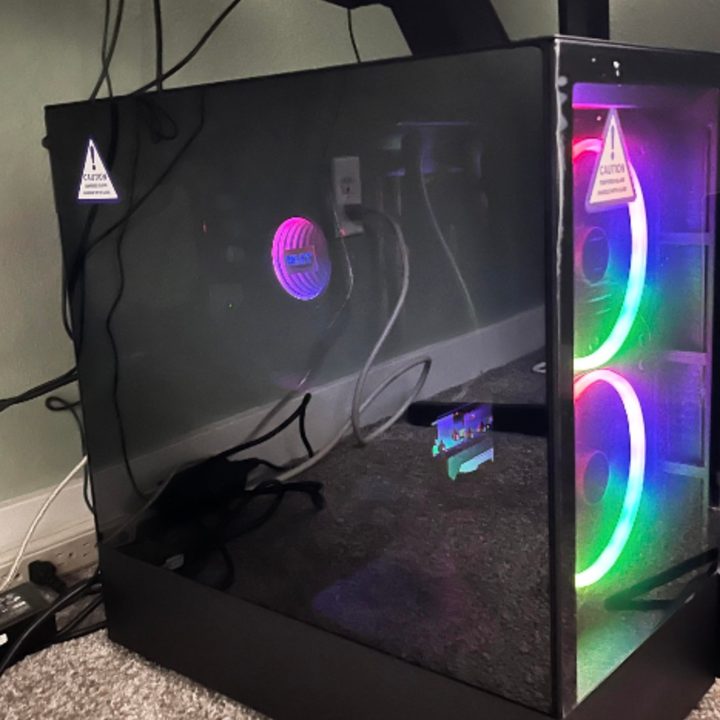
My first step into the wider world of PC gaming started with some research. Knowing my technical limits, I immediately skipped over the custom-built or build-it-yourself models and looked at what prebuilt gaming PCs were available. In theory, these should be just as intuitive to get going as a console and allow me to get comfortable with the platform itself before deciding whether or not to go deeper and begin tinkering on my own.
After some research, but mostly relying on recommendations, I ultimately went with the Player 2 Prime from NZXT. This model, I was told, would easily match or surpass what my PS5 could do. The product’s page was partially indecipherable to me, which I expected, beyond the type of graphics card and amount of memory (which happens to be an Nvidia RTX 4070 Ti and 32GB of RAM).
The Key Specs section ended up being the most helpful to me as a newcomer to PC gaming, especially the box that estimated how many frames per second (fps) I would get running games like Call of Duty: Modern Warfare and Fortnite at different resolutions. I had never experienced triple-digit fps before, so that alone got me excited to make this jump.
Technical setup problems were half of what kept me away from PC gaming all these years.
As advertised, the Player 2 Prime arrived and was as simple to set up as a console. All I had to do was take it out of the box and plug it, my monitors, and keyboard and mouse in, and I was able to get started. At least, that’s what I was sold on.
Immediately, I was hit with an issue that felt like a bad omen. I’m not sure how or why, but the Bluetooth range on my particular unit seemed to be comically short. I’m talking about not being able to use headphones more than a foot away from the tower levels of bad. Thankfully, I have wired options, but if I was someone who only used wireless accessories via Bluetooth, this would be a massive issue.
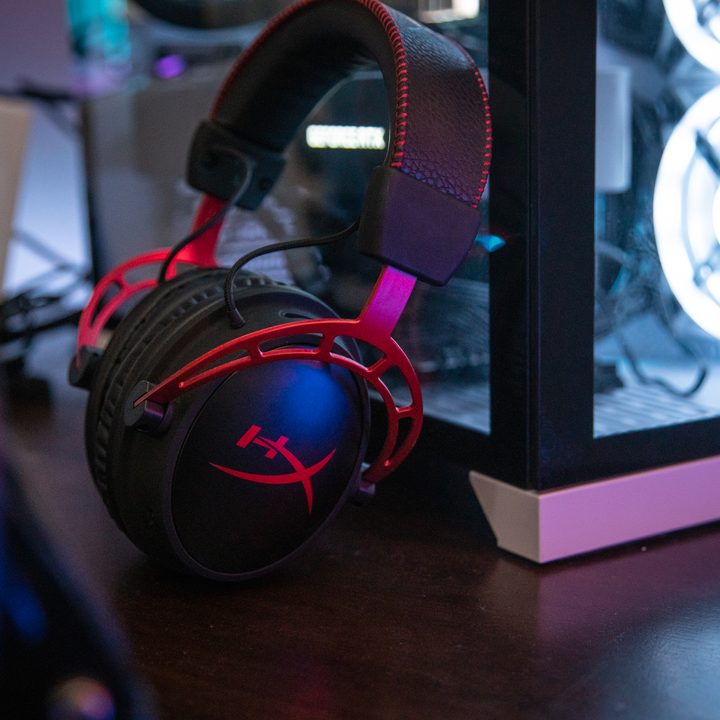
Setup problems like these were half of what kept me away from PC gaming all these years. Determined to not lose heart, though, I pressed on. If this PC could live up to the promise of high fps counts and eye-watering graphics, I could forgive some technical issues along the way.
Maxing out
I wasn’t confident enough to start investing heavily into games for this new PC. After all, I still wasn’t completely sold yet on committing to the PC platform. Luckily, there are tons of free PC games that are more than capable of showing me what this new rig could do. Since I played thousands of games of Halo 2 and Halo 3 before converting back to PlayStation, I figured Halo Infinite would be an appropriate place to start since I knew what to expect. One download later, I was in the settings menu.
My first order of business was setting everything to the maximum. Graphics, shadows, texture quality — the whole nine yards — were set as high as possible. I also hit the handy fps display option since, especially coming from a console, my eye for frame rates above 60 isn’t all that sharp. With that done, I loaded up into a match. All it took was that one game to make me question whether I would ever go back to consoles again.
Locked, and I mean locked, at 120 fps, I had never felt so in control of a first-person shooter before. My aim was snappy, the controls were responsive, and everything just felt better in a way that I had always heard about, but couldn’t understand until I experienced it. This is all despite my unfamiliarity with keyboard and mouse controls. Nevertheless, that one match was it — I was converted. If that was what games could feel like, how could I ever go back to the way I was playing before? It would be like going back to standard-definition TVs after experiencing 4K.
I know I’m in the honeymoon period right now, but I’m going all-in on PC gaming.
Still, Halo Infinite is a couple of years old now and by no means pushing graphical limits. If my PC was as modern as advertised, it would obviously have no problem handling whatever that game was throwing at it. My next test would be something new, or better yet, upcoming. I chose the demo for the Resident Evil 4 remake.
Booting this demo up, I found myself actually excited to go into the settings menu to see what all I could crank up, and I again pushed everything to the limit — even adding in ray tracing. Instead of a maximum fps, though, this time I left it at variable. According to the counter, this resulted in frame rates above 160 fps. Once again, that blissful responsiveness swept over me and, without really noticing, I completely forgot to keep an eye on the frame counter. I’m sure I would’ve noticed if it dropped significantly, but this is what I would call the best-case scenario: I was fully engrossed and immersed in the game. No technical hiccups or “PC problems” reared their head.
I know I’m in the honeymoon period right now. More technical issues are sure to arise, but there’s also a huge community of players with years (or decades) worth of experience I can turn to. Knowing that, I’m surprised to say this, but I feel way more comfortable going all-in on PC gaming than I thought I would.
No, I haven’t sold my PS5 just yet, but I know which platform I’ll be spending more of my gaming time on in the future.