1. Home
  2. Audio / Video
  3. Features

The one notification AirPods and the iPhone sorely need

Add as a preferred source on Google

AirPods are a technical marvel. But they’re also a fickle beast that at times seem to have a life of their own. That’s perhaps true for most wireless earbuds, but maybe more so for Apple’s given their close relationship to Apple’s hardware and software.

In other words, mine have been driving me nuts this week. The problem isn’t necessarily a new one. It’s definitely not unheard of for my AirPods Pro to go a little wonky from time to time, to the point where I’ve made a habit of making sure they actually, ya know, work, before leaving my case in the car and heading into the gym in the morning.
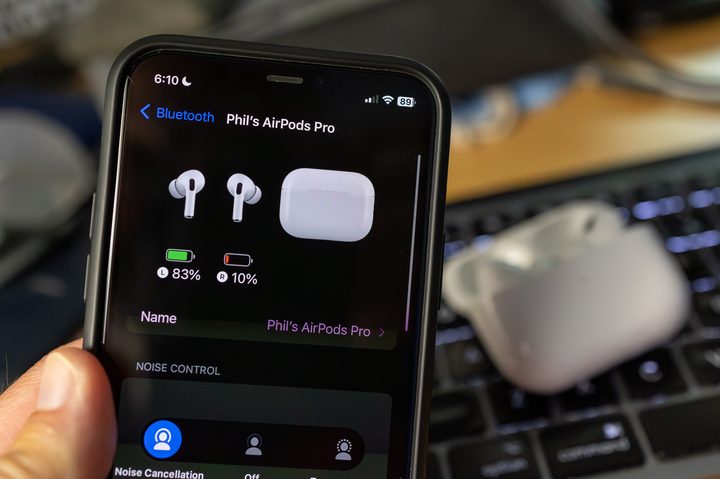
An iPhone showing one nearly dead AirPod Pro.
Phil Nickinson/Digital Trends

I’m willing to chalk up the occasional connection problem — or even a relatively consistent problem — to the fact that these are tiny, low-powered devices in a world of tiny, low-powered devices. Things happen. If I pop in my buds and discover that Righty isn’t working, I’ll just pop it back in the case to try to get things going. I might have to do it twice. It’s annoying, but at least it’s obvious when one of the buds simply hasn’t turned on. (Did I hold it funny? Did I cram it in my ear wrong?)

But that’s not the one that really gets me.

Recommended Videos

It’s when you’re halfway through a workout, drenched with sweat, and you hear the little descending bloop-bloop-bloop sound that indicates one of your AirPods is soon going to die. That should be impossible, right? They’d been in the case all night. And the case was on the charger. And I’d had plenty of time in which to properly charge said dead bud on the 15-minute drive downtown to the gym.

If only I’d known something was wrong. And to be clear, my iPhone knows darn well the charge state of my AirPods — it says so right in the widget. It just couldn’t be bothered to tell me.

It’s not like iOS has a dearth of notifications. It’s quick to tell me when there’s something new on Apple TV+. Or when an MLS match is close. (Someone really needs to tell Apple that most soccer games are close.) But when it comes to something actually important — like an AirPod being precariously close to perishing — there’s nary a word.

It’s not like this sort of warning is unprecedented, either. My Apple Watch tells me to charge it each evening after around 12 hours of wear. The iPhone, of course, will tell you when it’s close to the end and offer up its low-power mode. Or, if the total battery capacity is down to an unfun level, and it might be time to consider a replacement.

That’s all table stakes, though. That’s exactly what you’d expect from devices that cost this much when they run into a completely predictable problem. Why, then, does Apple’s iPhone not tell you when Apple’s AirPods are in some sort of sub-optimal state?

Who knows. Maybe I’m charging it wrong.

Phil Nickinson
Former Section Editor, Audio/Video
Phil spent the 2000s making newspapers with the Pensacola (Fla.) News Journal, the 2010s with Android Central and then the…
Proton reveals how smart TVs track you and the escape situation is pretty grim 
Modern smart TVs fingerprint your screen content at the chipset level.
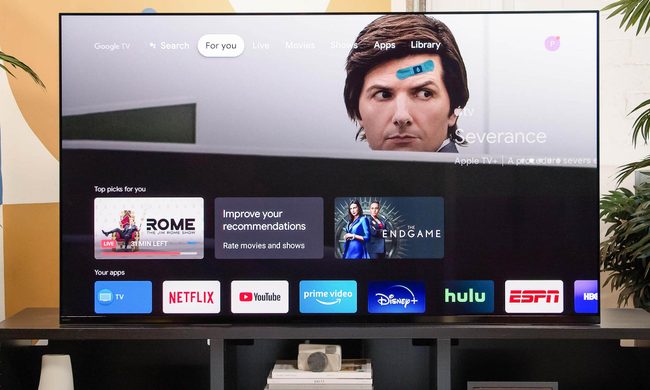
Google TV applications on the Sony A95K TV.

Your smart TV may know far more about your viewing habits than you realize, even if you rarely use its smart features. In a new privacy explainer, Proton warns that many modern TVs quietly collect data about everything displayed on the screen and share it with manufacturers, advertisers, and analytics companies.

The worrying part is that escaping this tracking is becoming increasingly difficult because many privacy controls are buried deep in settings or enabled by default. Proton argues that buying a smart TV today often means accepting a level of surveillance that most people never knowingly signed up for.

Read more
LG is cracking down on smart TV apps that quietly turn your TV into a secret proxy
LG OLED Settings

If you own an LG smart TV, there's a chance one of your harmless-looking apps has been moonlighting as an internet relay for someone else's traffic. According to a report from KrebsOnSecurity, LG says it's finally stepping in to stop this menace. This week, the company confirmed it plans to suspend any webOS app that turns a TV into what's called a residential proxy node.

The move follows a report from security firm Spur, which found that more than 42 percent of apps on LG's webOS store include SDKs that quietly reroute internet traffic through your TV, indefinitely. Samsung isn't spared either, with over a quarter of Tizen apps carrying similar code.

Read more
The LG C6 OLED is great out of the box. These settings make it even better.
From Filmmaker Mode to shadow detail and AI Sound Pro, these are the settings that made the biggest difference after a month of testing the LG C6 OLED.
LG OLED Settings

The LG C6 OLED is one of the best mid-range OLED TVs you can buy right now. After spending the past month testing and using it every day, one thing became clear: straight out of the box, you're leaving picture quality on the table.

The good news is that getting more out of the TV doesn't require professional calibration or hours spent digging through menus. A handful of small adjustments can make movies look more cinematic, improve shadow detail, smooth out motion and even make the built-in speakers sound noticeably better. Here are the exact settings I've been using after living with the LG C6.

Read more