  1. Home
  2. Computing
  3. News

You can now try out avatars and virtual spaces in Microsoft Teams

Add as a preferred source on Google
Image used with permission by copyright holder

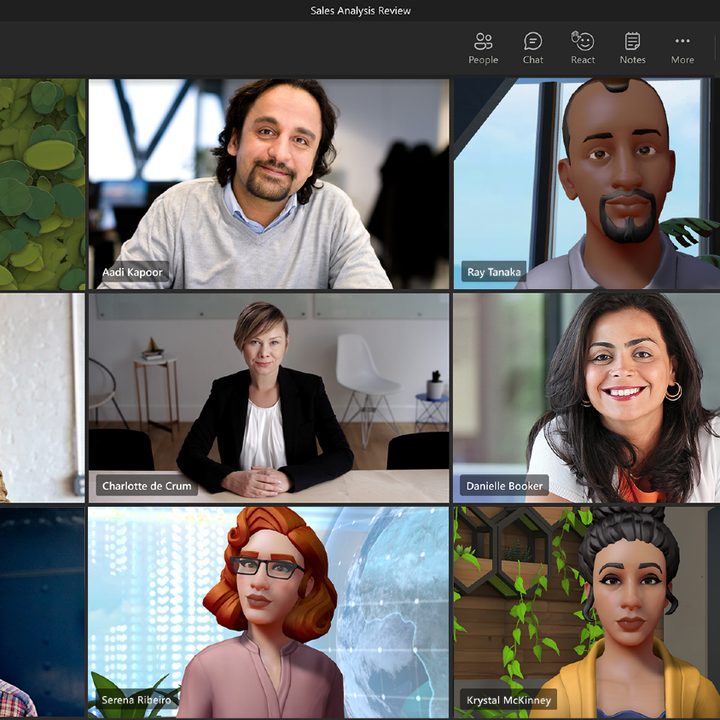
Microsoft has announced the rollout of several anticipated features for Teams, including avatar support and immersive spaces.

The company is showcasing the new features during its annual Build developer conference, which is currently taking place from May 23 through May 25.

Recommended Videos

Reports from March indicated that Microsoft’s product road map contained plans to roll out a new feature for Teams and Zoom that would allow users to substitute their live camera feed for a 3D avatar when on a video call.

Instead, the feature will be available starting this week with support for the Microsoft Teams desktop app on Windows and Mac, particularly for all Microsoft 365 Business and Enterprise licenses, the company said. The feature will allow you to use avatars as an alternative to video or no video with a host of customizable specifications; however, it does not specify whether the avatars will be 3D.

Even so, the brand also showcased its new immersive spaces powered by Microsoft Mesh for Teams, a feature, which will work in private previews within the communications app, Microsoft said.

Immersive spaces is intended to allow people in group communication within Teams to break off into more personal interactions that simulate in-person meetings. This feature will have a 3D aspect to it as you will be able to use it with a virtual reality (VR) headset, in addition to spatial audio, though you also have the option to use it solely via a PC. Immersive spaces will be available for Microsoft Teams starting this week.
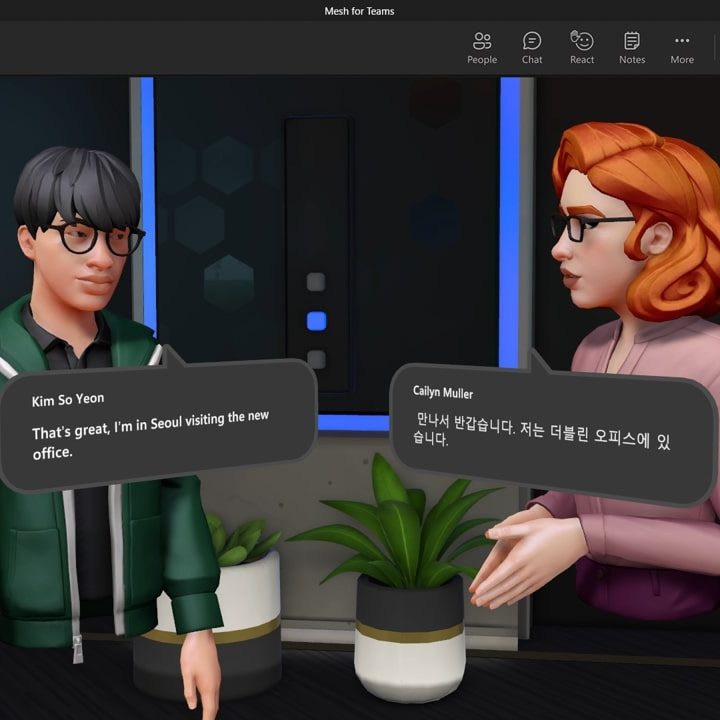
Two avatars communicating in Microsoft Teams.
Image used with permission by copyright holder

Microsoft is hosting a session during its Build conference demonstrating how Mesh works, and how workspaces can use the feature to build a virtual workspace.

Microsoft Mesh has had several false launches. The brand first announced the concept in late 2021 when several companies were invested in the metaverse. It was intended not only as a method for showcasing 3D avatars in Teams but also for users to interact in VR workspaces with other colleagues. Microsoft said at that time that the avatars were supposed to move only when users spoke, but the brand scrapped plans to have the avatars match the user’s real-time movement with their webcams.

Microsoft then intended to release Mesh in 2022, but the launch was delayed by the burgeoning interest in artificial intelligence (AI) across the industry. However, its resurgence at Build is a good sign that the brand has not given up on this technology.

Fionna Agomuoh
Fionna Agomuoh is a Computing Writer at Digital Trends. She covers a range of topics in the computing space, including…
I let Radial menu take over my Mac, and I’m never going back
One mouse jiggle, endless shortcuts. My Mac has never felt this fast.
Radial app running on Mac

I have been testing Radial for the past week, and it's quickly become one of those apps I didn’t know how I could live without. It's a radial menu for macOS that puts your shortcuts, scripts, and automations right where your cursor is, so you never have to go hunting through menus to find what you need.

The app just received its 5.0 update, adding AI actions powered by Claude, window layouts, variables, a redesigned settings interface, a new Atmosphere background effect, and a squircle menu shape. I got to try most of these, and here's what I found.

Read more
Android desktop mode made me miss my laptop in record time
I tried writing and publishing from Google’s phone-to-monitor setup, and the future of mobile computing immediately started sweating.
Computer, Electronics, Laptop

Android 17 desktop mode has a very simple pitch. Plug your phone into a monitor, add a keyboard and mouse, and watch the slab in your pocket pretend to be a computer. I wanted to give that pitch a fair shot, so I tried using it for an actual workday instead of a cute demo.

The goal was boring on purpose: write an article, edit it, build the page in WordPress, upload whatever needed uploading, and publish the thing without running back to my laptop like a coward.

Read more
As AI turbocharges digital abuse, UK agencies urge parents to limit who sees kids’ photos online
The National Crime Agency and Internet Watch Foundation are asking parents to tighten privacy settings as AI-generated abuse material rises.
Social Media

Parents who post pictures of their kids online are being told to rethink the habit. The UK's National Crime Agency and the Internet Watch Foundation have issued new guidance urging families to lock down their social media accounts, warning that publicly shared photos are increasingly being pulled and altered by AI tools to create child sexual abuse material.

The two organizations say most parents have no idea this is happening. Criminals no longer need to contact a child directly to generate such material. They can scrape an ordinary photo and run it through widely available nudify apps.

Read more