1. Home
  2. Space
  3. News

See a postcard from Mars taken by the Curiosity rover

Add as a preferred source on Google

Today, you can enjoy a stunning new view of Mars, thanks to a postcard from the Gale Crater taken by the Curiosity rover. The image combines two different views of the same area and is colorized to show off the undulating martian landscape in a region called the Marker Band Valley.

The image, shared by NASA’s Jet Propulsion Laboratory (JPL), shows the back of the rover and views of the tire tracks it has left across the martian surface as it has driven. The view on the left side of the image was taken in the morning of April 8, at 9:20 a.m. local Mars time, while the image on the right side was taken on the same day but in the evening, at 3:40 p.m. local Mars time. The two images have been blended together to show how the landscape looks different throughout the day.
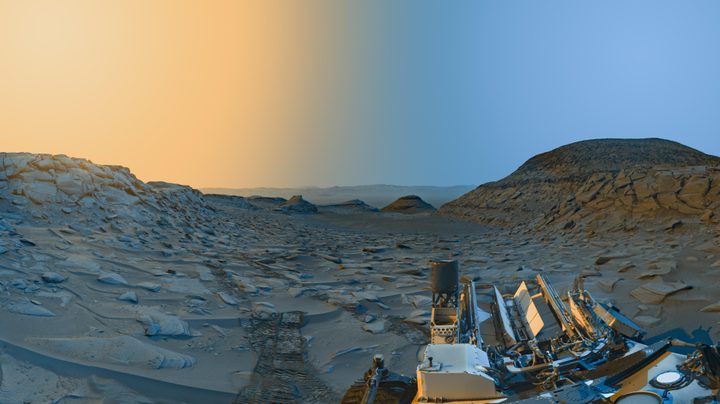
NASA’s Curiosity Mars rover used its black-and-white navigation cameras to capture panoramas of “Marker Band Valley” at two times of day on April 8. Color was added to a combination of both panoramas for an artistic interpretation of the scene.
NASA’s Curiosity Mars rover used its black-and-white navigation cameras to capture panoramas of “Marker Band Valley” at two times of day on April 8. Color was added to a combination of both panoramas to create an artistic interpretation of the scene. NASA/JPL-Caltech

“Anyone who’s been to a national park knows the scene looks different in the morning than it does in the afternoon,” said the person who processed the images, JPL Curiosity engineer Doug Ellison, in a statement. “Capturing two times of day provides dark shadows because the lighting is coming in from the left and the right, like you might have on a stage – but instead of stage lights, we’re relying on the sun.”

Recommended Videos

The image was taken by Curiosity’s navigation cameras, which take lower-resolution images that are used to help the rover drivers navigate around the terrain. Unlike the color images captured by the rover’s science cameras such as the Mastcam instrument, the navigation camera captures images in black-and-white, so this image had to be colorized to show the morning and evening colors. NASA does make all of the images taken by Curiosity publicly available, so if you want to know what the navigation camera images looked like before they were processed, you can check out this gallery.

The striking image is a combination of raw data from the rover and human adjustment to give it an aesthetic flair, but it was also helped along by the current weather conditions on Mars. In this region of the planet, it is currently winter, which means there is less dust in the air than at other times. That helps to give the image its sharp, crisp look. “Mars’ shadows get sharper and deeper when there’s low dust and softer when there’s lots of dust,” Ellison explained.

Georgina Torbet
Georgina has been the space writer at Digital Trends space writer for six years, covering human space exploration, planetary…
Space is becoming Bezos and Musk’s next data center site, and we have every reason to worry
The AI boom is coming for the night sky
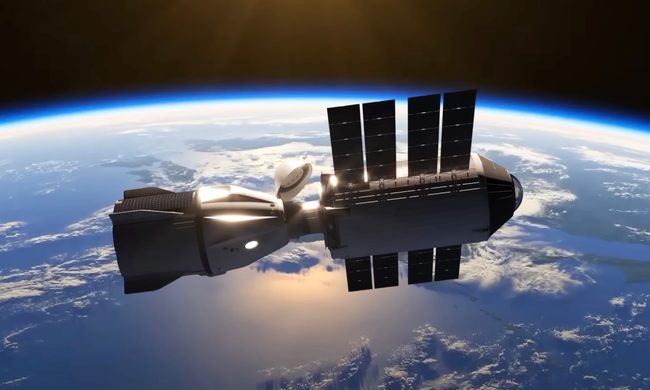
How Vast's space station will look in orbit.

AI data centers already consume vast amounts of electricity and water on Earth, so Silicon Valley has begun looking somewhere considerably more spacious... literally.

Elon Musk's SpaceX and Jeff Bezos' Blue Origin, along with several other companies, have proposed enormous constellations of satellites designed to operate as orbital data centers. However, environmental groups and former space officials are now warning that putting them into orbit at the proposed scale could have severe consequences for Earth's atmosphere and the night sky.

Read more
The first possible exomoon is here, and it makes our Moon look hilariously tiny
Scientists may have found the first exomoon, except this one is the size of Jupiter
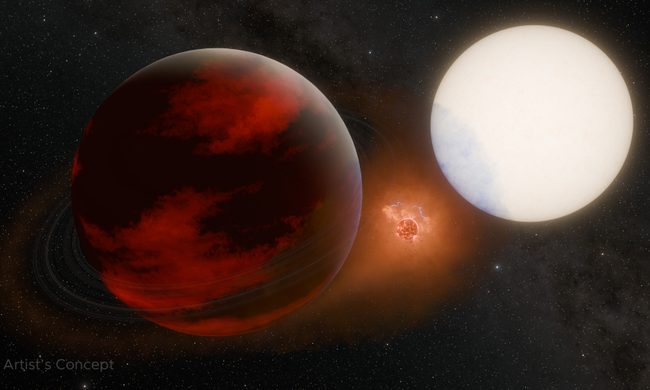
This artist’s concept depicts a potential volcanic moon between the exoplanet WASP-49 b, left, and its parent star. New evidence indicating that a massive sodium cloud observed near WASP-49 b is produced by neither the planet nor the star has prompted researchers to ask if its origin could be an exomoon.

We have already discovered more than 6,000 planets outside of our immediate neighborhood. Yet, finding a moon orbiting one of those distant worlds has proved considerably harder. Astronomers may finally have something close to the real deal, but this particular object stretches the word “moon” almost beyond recognition.

Using the European Southern Observatory’s Very Large Telescope in Chile, researchers detected strong evidence for a moon-like object in the CD-35 2722 system. Further observations are still necessary to confirm the discovery, but it could become the first confidently detected natural satellite outside our solar system. There is still one tiny complication though. This moon is apparently massive.

Read more
China’s answer to SpaceX’s reusable rockets literally catches boosters in a net
SpaceX catches boosters on legs. China just used a net.
Ammunition, Missile, Weapon

SpaceX's playbook for recovering a rocket booster generally involves legs, a precisely controlled vertical landing, and either a concrete pad or a drone ship. 

China just managed to pull off something similar, but in a slightly different way, and on July 10, it tested the method as well.

Read more