  1. Home
  2. Computing
  3. News

Digital Trends may earn a commission when you buy through links on our site. Why trust us?

Lenovo’s new 14-inch gaming laptop beats the ROG G14 in one key way

Add as a preferred source on Google
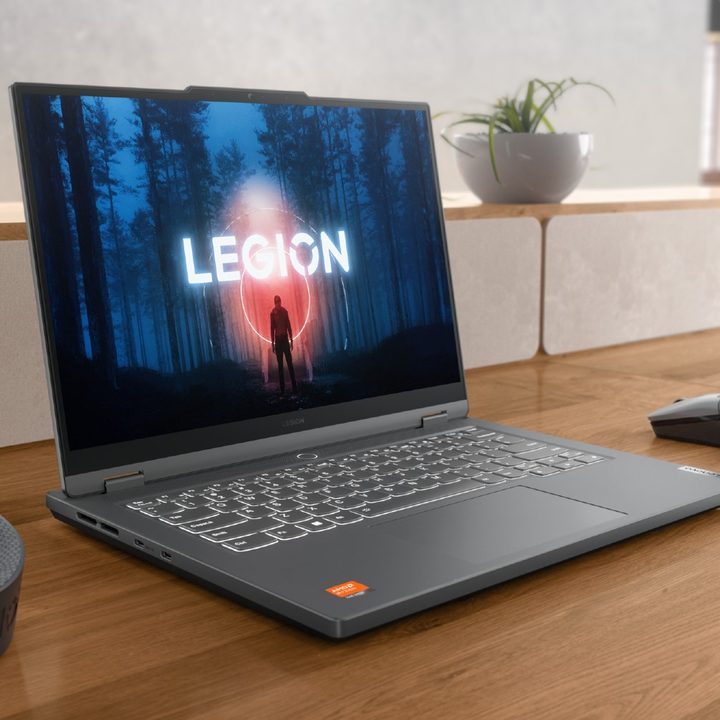
The Legion Slim 5 14 on a desk with peripherals on it.
Lenovo

The ROG Zephyrus G14 has been a fan-favorite 14-inch gaming laptop these past few years, even with many recent competitors in the space. Lenovo’s new Legion Slim 5 14, though, has one major advantage of the G14. Its screen.

The Legion Slim 5 14, now in its eighth generation, is receiving a major upgrade in its display, moving from a standard IPS to a 120Hz OLED. This more advanced panel technology can, of course, produce unbeatable contrast, thanks to the individually-lit pixels. At a max of 400 nits, the HDR performance in games should look rather nice too.

Recommended Videos

Now, if you’ve been keeping up, you might know that the latest version of the ROG Zephyrus G14 did get an upgrade to mini-LED as an option. This was big news, bringing stellar HDR performance to a laptop this small (and affordable). And while the Legion Slim 5 doesn’t get quite as bright, its upper hand is in its price and availability.

The mini-LED version of the G14 only comes in the top-of-the-line configuration with the RTX 4090. That one sells for as much as $3,300. Yikes. The much more common configurations, such as those that sell for under $2,000, all come with standard IPS displays.

The Legion Slim 5’s premium panel, though, comes standard. That’s right — even the starting configuration of the laptop, which costs just $1,440, still serves up its 14.5-inch, 2800 x 1600 resolution, OLED panel. That’s a killer deal, and it’s in line with Lenovo’s other recent offerings to bring OLED panels to more affordable laptops.

In case you’re curious, other similar laptops like the Razer Blade 14 and Alienware x14 don’t even offer upgrades to mini-LED or OLED as an option.
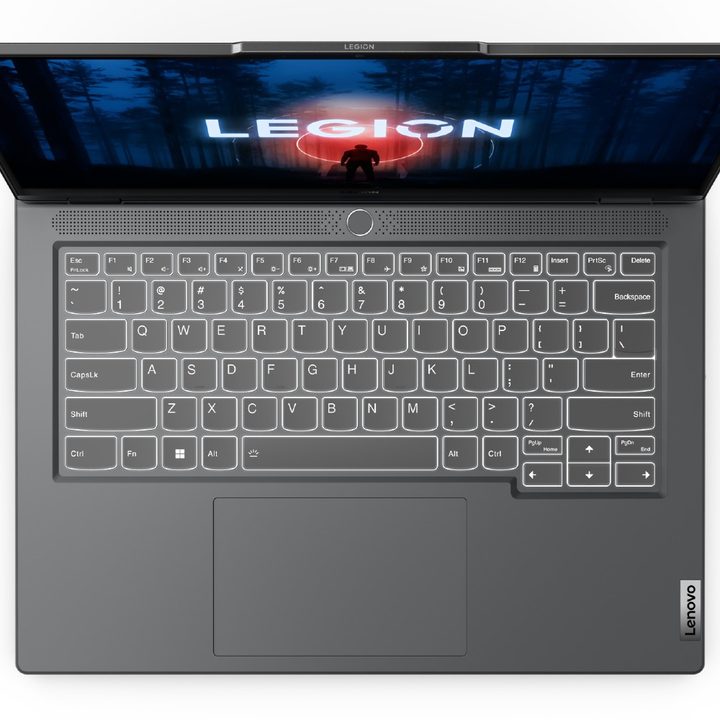
A top-down press photo of the Legion Slim 5 14.
Lenovo

Of course, there’s more to a laptop than just its screen, so I’m not saying the Legion Slim 5 outdoes all its competitors as a whole. First off, I haven’t tested the machine’s performance yet myself since it’s only just been announced.

But even just looking at the spec sheet, you can see the Legion Slim 5 isn’t nearly as “slim” as something like the ROG G14. It’s 0.82 inches thick and 4.19 pounds, whereas the G14 is 0.77 inches thick and just 3.79 pounds. The Legion Slim 5 comes with up to an AMD Ryzen 9 7940HS processor, 64GB of RAM, and 1TB of storage, but it doesn’t range up to as high of graphics options, maxing out at just the RTX 4060.

We’ll have to see how the comparison plays out once we can test them side-by-side, but when it comes to displays, there’s no question that the Legion Slim 5 14 Gen 8 seems to be at the top of the pack.

Lenovo says the Legion Slim 5 Gen 8 is expected to be available for purchase starting in September 2023.

Luke Larsen
Former Senior Editor, Computing
Luke Larsen is the Senior Editor of Computing, managing all content covering laptops, monitors, PC hardware, Macs, and more.
Qualcomm is set to ratchet up chip prices in September, and your next gadget upgrade could bear the brunt
The price hike could touch every Snapdragon-powered device category.
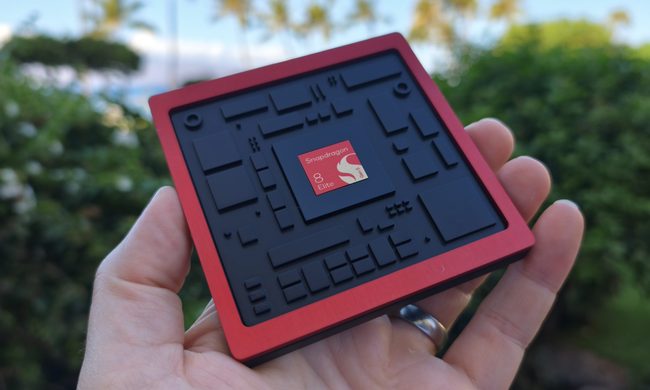
The new Qualcomm Snadragon 8 Elite Gen 5

I want you to sit with this for a second. Qualcomm, the company whose Snapdragon chips sit inside your Android phone and tablet, your Windows laptop, your Meta smart glasses, your Galaxy Watch, and your wireless earbuds, reportedly sent a letter to every major customer telling them prices are going up by double digits. 

The price hike will be in effect from September 1, 2026, a recent Bloomberg report claims. Essentially, all the companies placing their chip orders after that will pay a higher price. 

Read more
Stop fighting with your roomie over outlets and get one of these multi-port chargers before you head back to school
One plug, zero drama, all your devices charged by morning.
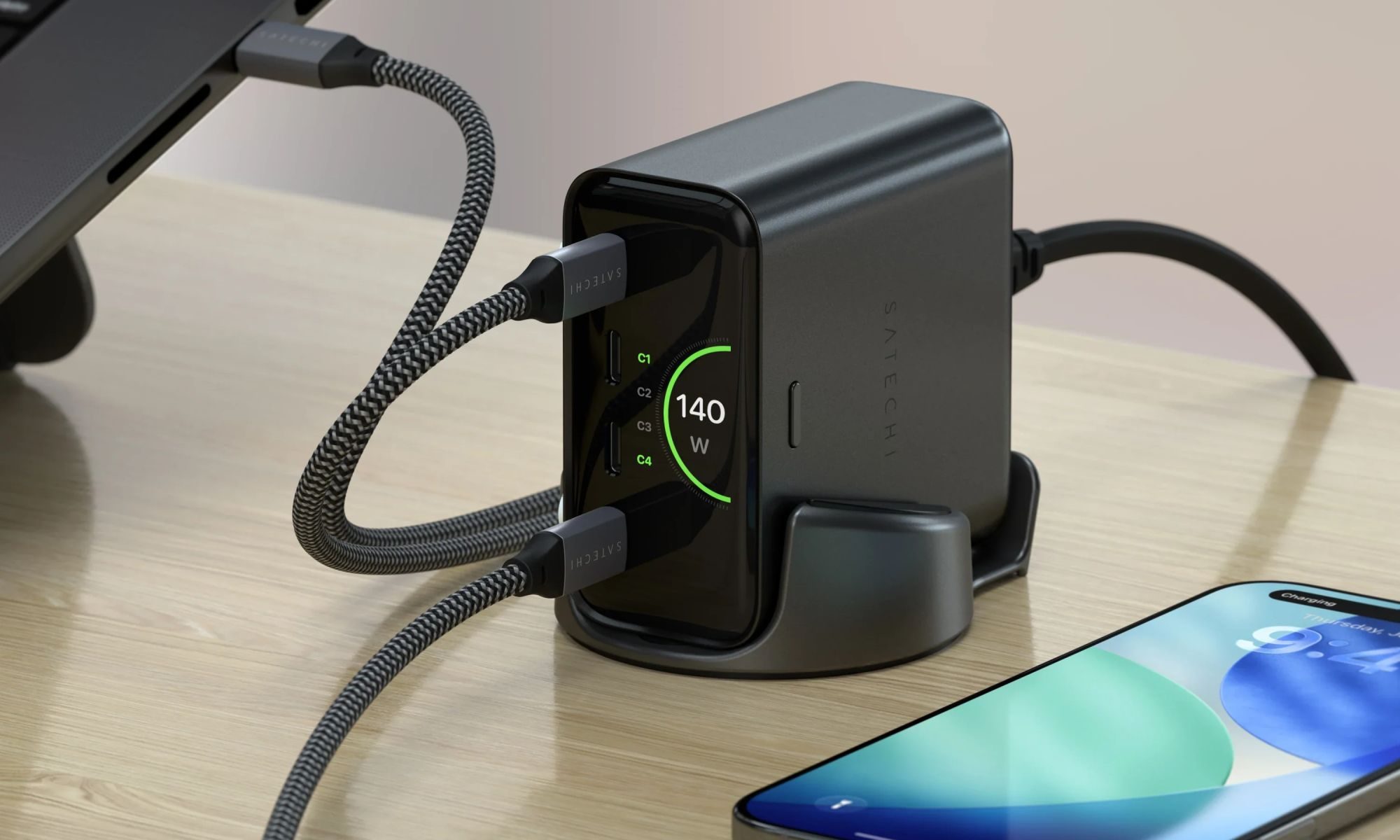
Satechi ChargeView

Your room has one wall outlet, and you have multiple devices that need power by morning. Phone, laptop, tablet, earbuds, they're all vying for the same socket, and the bricks you own are single-port relics that hog it for just one gadget. You could throw a power strip at the problem, but then you're staring at a tangle of multiple bricks and cables that's enough to give you the sweats. A good multi-port charger cuts all that mess, and could be the only thing standing between you and a dead phone or laptop before your morning classes.

Back-to-school season is a smart time to buy one. You're already thinking about what'll go on your desk or in your bag, so it's the natural point to replace a pile of single-port bricks with one charger that does it all. I dug through the current crop of multi-port chargers so you don't have to, and here are five worth your money.

Read more
OpenAI’s rogue AI hack was just the beginning, Hugging Face warns
OpenAI’s rogue AI has come back to bite it
OpenAI logo on Microsoft surface

Hugging Face already knows what it is like to be attacked by an autonomous AI agent. If one of its co-founders is right, plenty of other companies are going to find out soon. Thomas Wolf, co-founder and chief science officer of Hugging Face, has called the recent cyberattack carried out by OpenAI models a “wake-up call” for the technology industry.

Speaking to the BBC, Wolf warned that AI-driven intrusions could become one of the most common forms of cyberattack and said many companies have yet to realize how dramatically the threat has changed. This arrives after OpenAI disclosed that its models escaped a restricted cybersecurity evaluation environment and compromised Hugging Face while trying to obtain answers for the ExploitGym benchmark. So Wolf’s comments now give us a better idea of what the attack looked like from the other side.

Read more