  1. Home
  2. Computing
  3. News

This AMD GPU could have destroyed Nvidia, but we might never see it

Add as a preferred source on Google
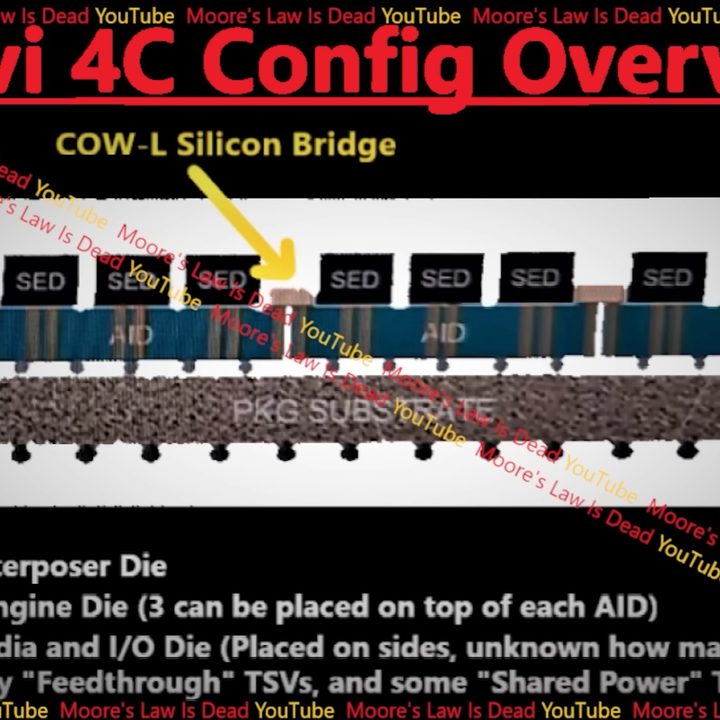
A leaked diagram of the reportedly canceled RDNA Navi 4C GPU.
Moore's Law Is Dead

Rumor has it that AMD may have decided not to launch any high-end GPUs in the next generation of graphics cards, meaning RDNA 4. However, this freshly leaked diagram gives us some insight into what could have been — or perhaps, what will be — if AMD’s best graphics card of the next generation was made. It appears that AMD’s next-gen architecture is a lot more complex than RDNA 3.

The diagram comes from YouTuber Moore’s Law is Dead, who, as always, cites his own anonymous sources. It’s only a partial diagram, but even that quick look into the architecture of RDNA 4 tells us a lot. While not sure which GPU this is, Moore’s Law Is Dead refers to it as Navi 4C, and all signs point to it being AMD’s top GPU for the next generation. Still, it’s unclear if this new naming convention refers to Navi 41 or perhaps Navi 42, as Navi X and Navi M have also been mentioned recently.

Recommended Videos

Looking at the diagram reveals a large package substrate with four dies. One is a Multimedia and I/O die (MID), while the other three are Active Interposer Dies (AIDs), the latter of which seem to be able to house up to 3 Shader Engine Dies (SEDs). Moore’s Law is Dead also speculates that the memory controller dies are missing from this diagram, but they should be present on each side — however, it’s unclear how many exactly we’d be looking at here. Lastly, Infinity Cache dies would also most probably be present.

All in all, the Navi 4C GPU would have had anywhere between 13 to 20 chiplets. This would have meant a huge change from the current-gen chiplet design, as AMD seems to have split it and added more external interconnects. We’re still seeing multiples of the same components, such as memory cache dies (MCDs), but as Moore’s Law Is Dead notes, there are many more of them now, adding to the complexity of this new GPU architecture.
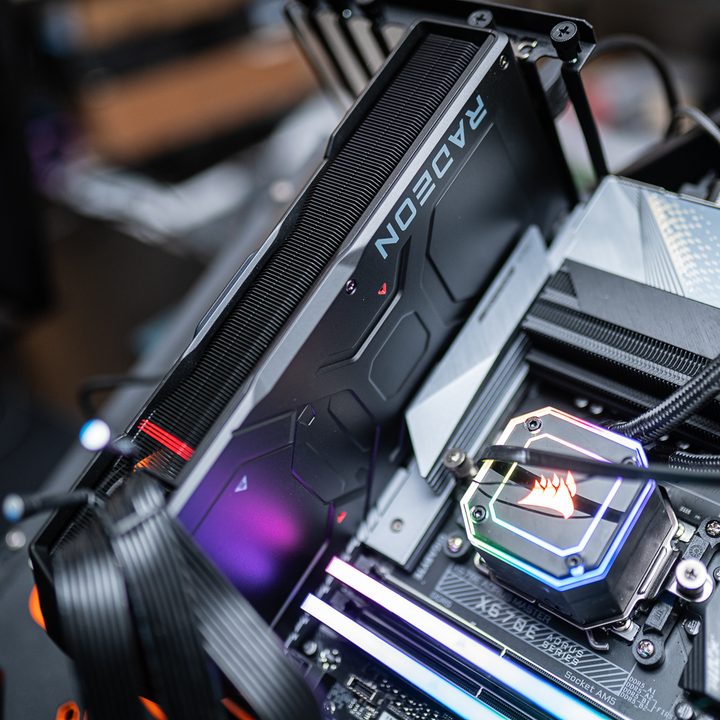
Radeon logo on the RX 7900 XTX.
Jacob Roach / Digital Trends

This complexity could spell good things for next-gen GPUs, but it also makes the entire design and manufacturing process a lot more difficult. AMD may have bitten more than it could chew with such a tight timeline, assuming that RDNA 4 is around a year away from now. It could be that this design will be shelved until RDNA 5 — it seems unlikely that AMD will quit the GPU race entirely and settle for the mainstream segment, although that would make some sense, too.

It’s hard to even begin to estimate the improvements brought on by this experimental architecture. AMD chose not to compete against Nvidia’s best GPU this time around, and many rumors point to it opting out of making high-end GPUs in the next generation. However, by the looks of it, once it does come back to making beastly GPUs, AMD might give Nvidia something to worry about.


Monica J. White
Monica is a computing writer at Digital Trends, focusing on PC hardware. Since joining the team in 2021, Monica has written…
ASUS Zenbook Duo UX8407AA review: Two screens finally earned their place in my bag
Two machines are definitely better than one, but on the same laptop? Asus nailed it, but you must be willing to pay for the convenience.
ASUS Zenbook Duo has two displays

See at Amazon

Two displays on a laptop once sounded like an elaborate solution waiting for the right problem. ASUS has spent the past few generations steadily proving otherwise. After using the latest Zenbook Duo (2026) UX8407AA for over two weeks, I started arranging my daily routine around that second display. 

Read more
How Claude helped my 65-year-old dad finally ditch his handwritten ledgers
AI has a lot to answer for, but this one small win is hard to argue with, at least for me.
Claude app on iPhone

My dad has owned a small business for as long as I can remember, and for just as long, he's kept his books the old-fashioned way. Every sale gets written down by hand so he can file his taxes later. The problem is that his accountant needs this data in Excel, and my dad, who didn’t grow up around computers, has never learned how to use it.

For years, his workaround was paying someone to manually type his handwritten entries into a spreadsheet. It worked, but it was adding additional cost to his business, which he wanted to avoid, but couldn't.

Read more
AI’s energy tax was already concerning. Research says AI agents are over hundred times worse
AI agents could consume 136 times more energy than today's AI, study finds
AI agents

The AI industry's soaring electricity demand has already become a growing concern for governments, utilities, and technology companies. But a new study suggests the next generation of artificial intelligence could make that problem significantly worse.

Researchers from the Korea Advanced Institute of Science and Technology (KAIST) have published what they describe as the first comprehensive analysis of the energy cost of AI agents - AI systems capable of reasoning, planning, and completing tasks autonomously. Their findings show that these systems can consume up to 136.5 times as much energy per query as conventional generative AI models, raising fresh questions about whether the infrastructure supporting tomorrow's AI is ready for what's coming.

Read more