
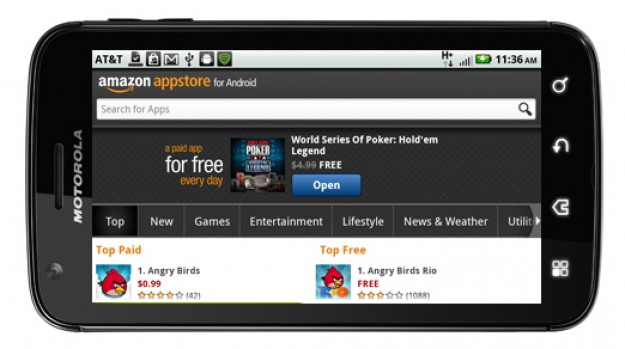
Apple’s iTunes store set the pace for Google’s foray into developing an in-app purchasing solution for Google Play and Microsoft opening the doors to its Marketplace. While much of the success of freemium models has been reliant on advertising, more developers have been looking for solutions that would allow app users to purchase updates, virtual items and subscriptions. Today, Amazon has joined the pack with an in-app purchasing system for developers through its Appstore for Android.
Before today’s official announcement, there were hints that the in-app payment feature would be appearing in the App store. A week ago, Bloomberg reported that Amazon’s mobile in-app payment system was being tested by Skimble, a physical fitness selling program. According to IHS, with revenues from in-app purchases on track to rise to $5.6 billion and 64 percent of all app-related revenue in 2015.
“Amazon Appstore’s In-App Purchasing service enables developers to generate more revenue from their apps,” Aaron Rubenson, Director of Amazon Appstore, said in a statement.
Amazon will likely use its “1-click” purchasing system to make it easy for customers to purchase apps, upgrades, and in-app currencies. Like iTunes, shoppers will have will have their credit card information saved on Amazon, and purchases of any virtual good will require just a single click of a button.
“In-App Purchasing is simple to integrate and gives developers access to millions of Amazon customers who are already familiar with Amazon’s 1-Click payment system. Many of Amazon Appstore’s customers have shopped with Amazon before and they trust Amazon’s easy payment process, which leads to higher conversion of developers’ in-app content and subscriptions,” Rubenson added.
Amazon’s Appstore was launched back in March 2011, and currently boasts over 31,000 apps and games, but the service hasn’t been met with fanfare. Last year, IDGA had released an official statement asking developers to avoid Amazon’s Appstore due to Amazon’s self-benefiting terms that enabled Amazon to set its own discounts, and dissuade developers from promoting their apps on another marketplace. Bithack also disclosed its own issues with the Appstore ranging from a slow review process, a failure to take action for trolls publishing unfair app reviews. On the other hand, there have been other developers who have loved their experience with the Amazon Appstore.
Like the revenue model that all major app stores appear to have adopted thanks to Apple, all revenue from in-app purchases will be split with 70 percent of the revenue will go to the developer and 30 percent going to Amazon.


