  1. Home
  2. Space
  3. News

Euclid’s navigation problems have been fixed with new software upload

Add as a preferred source on Google

The Euclid space telescope, recently launched by the European Space Agency (ESA), has been having some problems during its commissioning phase. Issues with its Fine Guidance Sensor were preventing the telescope from locking onto the stars it needs to use as guides to make sure it is pointed in the right direction, requiring engineers on the ground to come up with a new software version.

The new software has been uploaded to the telescope and the navigation system is now working as intended, according to ESA. After the new software was uploaded, the telescope was tested for 10 days, and was able to find its guide stars as hoped.
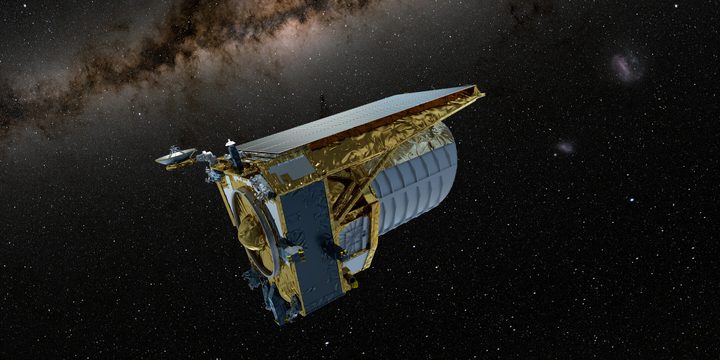
Artist's impression of the Euclid mission in space.
Artist’s impression of the Euclid telescope in space. ESA; Acknowledgement: Work performed by ATG under contract for ESA

The telescope is in orbit around the sun at Lagrange point L2, and is designed to study the dark universe — that is, dark matter and dark energy. To do that, it observes the entire night sky to measure the shapes of galaxies and to create a 3D map of dark matter across the universe. For this, it needs very high accuracy that requires high precision and stability, which is part of why the Fine Guidance Sensor is so important.

Recommended Videos

The image below shows the loops of star trails from when the Fine Guidance Sensor was not working correctly and Euclid was intermittently losing its lock on its guide stars:
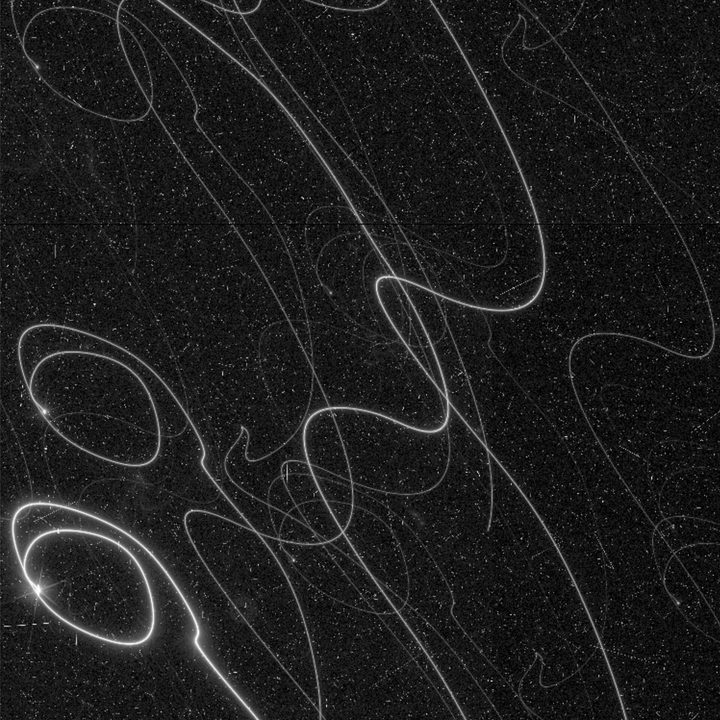
Loopy star trails show the effect of Euclid's Fine Guidance Sensor intermittently losing its guide stars,
Looping star trails show the effect of Euclid’s Fine Guidance Sensor intermittently losing its guide stars. ESA / Euclid Consortium / TAS-I, CC BY-SA 3.0 IGO

With the new software patch in place, the starfield images collected now should be sharp and accurate.

“Our industrial partners – Thales Alenia Space and Leonardo – went back to the drawing board and revised the way the Fine Guidance Sensor identifies stars. After a major effort, and in record time, we were provided with new onboard software to be installed on the spacecraft,” said Micha Schmidt, Euclid spacecraft operations manager, in a statement. “We carefully tested the software update step by step under real flight conditions, with realistic input from the Science Operations Centre for observation targets, and finally the go-ahead was given to restart the performance verification phase.”

Now the spacecraft will move onto the final phase of commissioning before it can begin its science operations.
Georgina Torbet
Georgina has been the space writer at Digital Trends space writer for six years, covering human space exploration, planetary…
Dimming the sun sounds unhinged, but this new study on El Niño makes a surprisingly good case for it
A natural test case, Australia's worst-ever wildfire season, suggests the idea deserves serious consideration.
Nature, Outdoors, Sky

When I first saw "scientists propose dimming the sun," I rolled my eyes. It sounds like a science fiction movie cooked up after watching many climate documentaries. But a new study, published on July 8, 2026, in the journal Science Advances, seems to have a genuinely compelling argument.

A Super El Niño is currently forming in the Pacific, feared to be the most intense in decades. It could escalate floods, wildfires, and extreme heat events worldwide. However, Researchers at UC San Diego's Scripps Institution of Oceanography, led by climate scientists Kate Ricke and Jessica Wan, are now proposing one of the most interesting solutions I’ve come across.

Read more
You can now walk through space and gaze into a black hole at this VR exhibit
Smithsonian Starstruck lets you drift past dying stars and see the origin point of the universe for as little as $18 a person.
Smithsonian Starstruck featured

Most planetarium shows ask you to sit still and look up. The Smithsonian's new VR exhibit takes a different approach, letting visitors walk through the vast expanse of the universe, drifting past stars, planets, and a black hole to get a physical sense of its true scale.

A $29 ticket to the edge of the galaxy

Read more
Scientists warn Elon Musk’s orbital data centers could blind Earth’s biggest telescopes
A new ESO study suggests millions of satellites could make parts of the night sky effectively unusable for astronomy.
One hour of satellites over the northern Atacama Desert in Chile (October 2025)

The race to blanket Earth with satellite internet has unlocked faster connectivity for millions. But according to the European Southern Observatory (ESO), it could also make one of humanity's oldest hobbies, and one of its most important sciences, a whole lot harder. The organization warns that the rapid growth of satellite mega-constellations could severely disrupt observations made by some of the world's most powerful telescopes.

Astronomers say the night sky is reaching its limit

Read more